
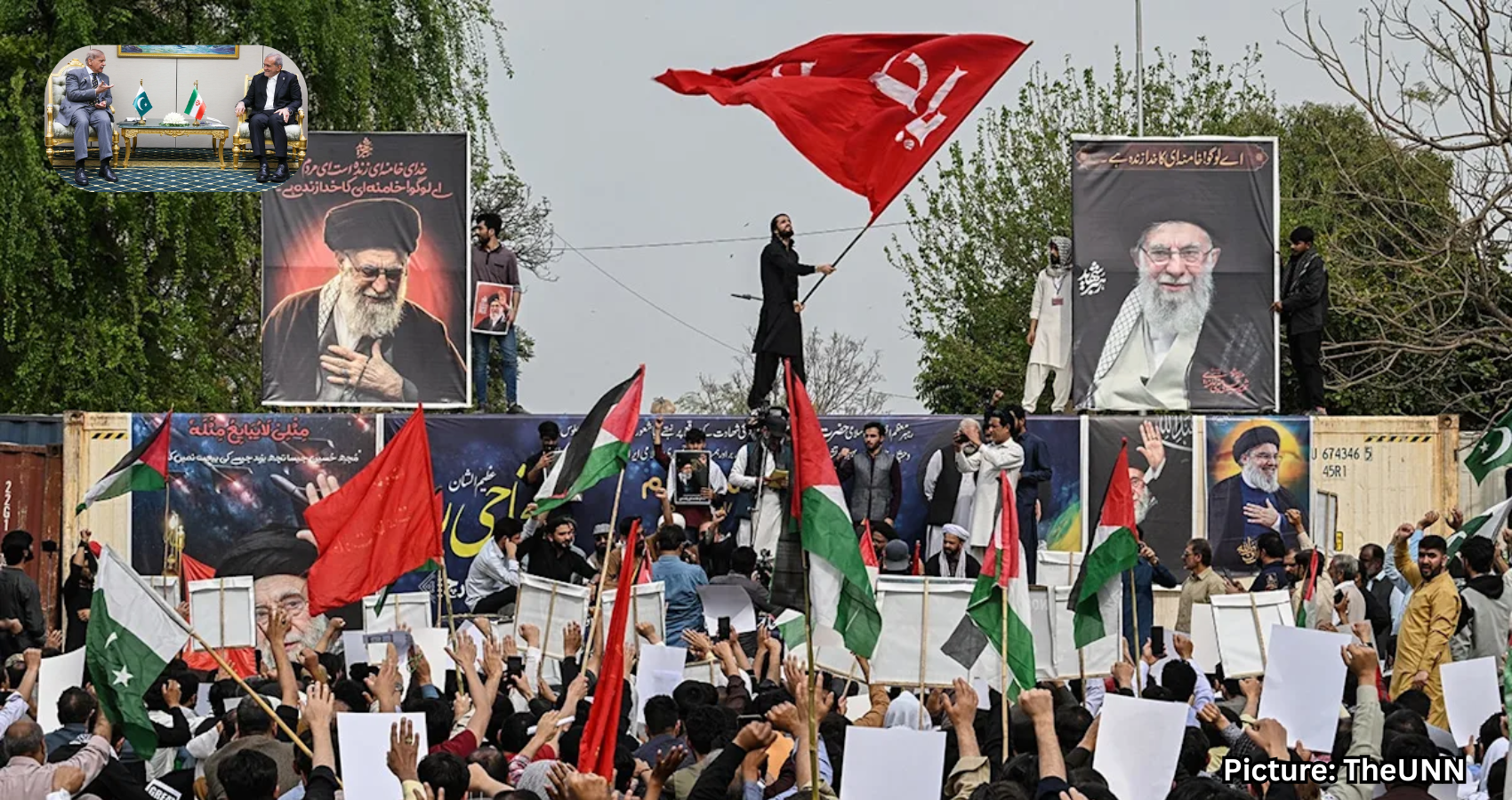
As the conflict in Iran escalates, Pakistan faces increasing pressure to navigate its complex relationships with both Saudi Arabia and Iran while positioning itself as a mediator in regional tensions.
Pakistan, the only nuclear-armed Muslim state, is currently navigating a precarious diplomatic landscape as the conflict in Iran intensifies. The nation is attempting to balance its commitments to Saudi Arabia, with which it has a new defense pact, against its longstanding ties with Iran. This balancing act is becoming increasingly challenging as regional tensions rise.
Islamabad has adopted a cautious diplomatic approach, condemning the strikes on Iran while simultaneously calling for de-escalation. However, analysts caution that Pakistan cannot remain insulated from the competing pressures it faces. “Pakistan is putting itself forward as a mediator between the U.S. and Iran, but unconvincingly,” said Edmund Fitton-Brown, a senior fellow at the Foundation for Defense of Democracies. “Its own record of staying out of military entanglements is unimpressive.”
At the heart of the tensions is a new defense agreement with Saudi Arabia, which stipulates that aggression against one nation will be considered a threat to both. This agreement is viewed as one of Pakistan’s most significant defense commitments, aligning it closely with Riyadh while risking confrontation with Tehran. Pakistan already has troops stationed in Saudi Arabia for training and defense support, and officials have stated there is “no question” of coming to the kingdom’s aid.
Pakistan’s geographical position places it at the crossroads of South Asia, Central Asia, and the wider Gulf/MENA region. The nation has historically pursued peace and dialogue, understanding the devastating consequences of war. “Remember, Pakistan is geographically part of both South Asia and Central Asia, as well as the wider Gulf/MENA region too. Pakistan has always pursued peace, dialogue and order because we know what war does to our region,” said Mosharraf Zaidi, spokesperson for foreign media to the Pakistani prime minister.
In the early days of the conflict, Pakistan’s army chief, General Asim Munir, made an emergency visit to Saudi Arabia to discuss joint responses to Iranian strikes, marking the first true test of the defense pact. Relations between Pakistan and Saudi Arabia are strong, with Riyadh serving as a crucial economic lifeline for Islamabad. Saudi Arabia has been making arrangements to support energy supplies as war-driven fuel disruptions impact Pakistan, which is heavily reliant on imports.
However, Pakistan’s relationship with Iran is equally vital. The two countries share a 565-mile border and have deep trade ties, along with significant religious connections, as Pakistan is home to the world’s second-largest Shiite community after Iran. Following the assassination of Supreme Leader Ayatollah Ali Khamenei, protests in support of the Iranian regime turned deadly, prompting military intervention and curfews in Pakistan.
Maintaining ties with Tehran is essential for Pakistan to manage domestic tensions and prevent an insurgency from the minority Baloch community. Iran is also an important economic partner, particularly as Pakistan grapples with a severe economic crisis. The two nations aim to increase their trade to $10 billion by 2028.
Throughout the ongoing conflict, Pakistan’s foreign minister has engaged in “constant conversations” with his Iranian counterpart. Recently, a Pakistani oil tanker successfully transited the largely blockaded Strait of Hormuz, marking the first non-Iranian cargo ship to do so since tensions escalated. Analysts suggest that this indicates safe passage may have been negotiated, with more Pakistan-bound oil tankers expected to follow suit.
Most of Pakistan’s crude and LNG imports pass through the Strait of Hormuz. However, as the conflict continues, analysts warn that Pakistan’s ability to maintain neutrality is diminishing. Recently, Pakistan backed a Gulf-led resolution at the United Nations condemning regional aggression, a move that goes against Iran’s interests. Russia and China abstained from the vote.
In parallel, Iran’s foreign minister has called for regional coordination in discussions with Pakistan, Turkey, and Egypt. Islamabad must also navigate its relationship with Washington, another key partner. Under former President Donald Trump, Pakistan sought closer ties with the U.S., even suggesting his name for the Nobel Peace Prize.
Questions have arisen in Washington regarding Pakistan’s stance. During a White House briefing, Press Secretary Karoline Leavitt stated that the administration is coordinating with the Pentagon to assess whether Pakistan is supporting Iran, while describing India as a “good actor.” India’s positioning has added further pressure, particularly following Prime Minister Narendra Modi’s recent visit to Israel.
Zaidi emphasized that there is no contradiction in Pakistan’s commitment to peace and dialogue. “The strong relationships Pakistan has with the United States, with Saudi Arabia, with Iran, and with China are a testament to Pakistan’s commitment,” he said.
So far, Pakistan has effectively positioned itself as a mediator in the ongoing conflict, leveraging its relationships with all three major powers. Reports indicate that high-level talks between the U.S. and Iran may take place in Islamabad as early as this weekend.
Fitton-Brown noted that Pakistan aims to enhance its significance to the U.S. and to be perceived as a better partner than India. The fallout from the Afghan Taliban’s actions since 2021 has left few sore points between the U.S. and Pakistan, allowing Islamabad to present itself as an ally against terrorism. “Most regional parties want to see the crisis end sooner rather than later. But nobody wants to see the Islamic Republic strengthened in Iran,” he added.
The ongoing conflict poses significant challenges for Pakistan, which is already managing tensions along its eastern border with India and its western frontier with Afghanistan. Recent border clashes, airstrikes, drone attacks, and rising civilian casualties have become increasingly common, particularly following escalated violence with Afghanistan, which has seen both nations plunge into an “all-out war.”
Zaidi reiterated Pakistan’s stance against India’s efforts at regional hegemony and its commitment to ending the Afghan Taliban’s support for terrorist groups. “We seek a complete cessation of terrorism emanating from territory currently controlled by the Afghan Taliban,” he stated.
As Pakistan grapples with the complexities of its relationships and the impact of regional instability, the potential destabilization of Iran could further strain its already stretched military resources. “If Islamabad is destabilized, it will be extremely bad news regionally and globally,” Fitton-Brown warned. “The idea of a nuclear power under jihadi rule doesn’t bear thinking about.”
According to Fox News Digital, the situation remains fluid as Pakistan attempts to navigate these tumultuous waters.