
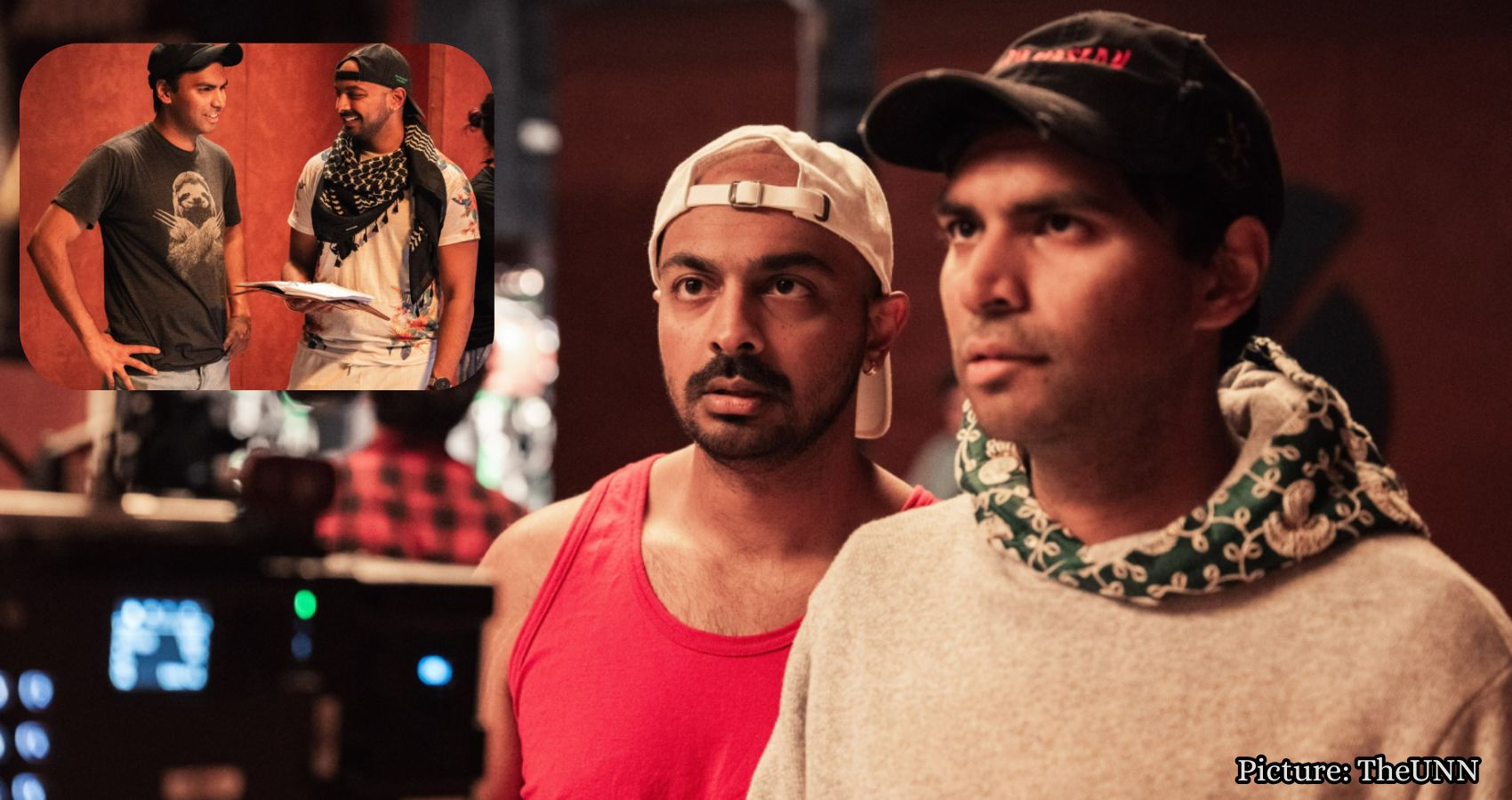
Brothers Rish and Kanish Arhant-Sudhir are redefining the masala movie genre with their horror-satire film, Namaslay, challenging stereotypes and promoting authentic South Asian narratives in Hollywood.
Long before they ventured into writing and directing their horror-satire masala movie, Namaslay, brothers Rish and Kanish Arhant-Sudhir were navigating the challenging landscape of Hollywood as actors. They often found themselves at auditions that perpetuated stereotypes of the South Asian experience, roles they described as “lackluster” and “downright insulting.”
It was in these casting rooms that the brothers developed an “iron will” to take control of their own narratives. “We felt really motivated that if these scripts are getting made, surely we can write our own scripts and make them better and have our own thumbprint on it,” Rish explained.
Determined to see authentic South Asian characters represented on screen, Rish and Kanish founded Junghal Studios. They recognized that standing up to the corporate Hollywood machine, which they view as “enemies of art,” was essential to ensure their voices would not be diluted.
“Working independently protects unique ideas,” Kanish noted, emphasizing that history shows some of the most original and successful concepts have emerged from individuals who believed in their vision and pursued it on their own.
The brothers’ love for cinema began in their childhood. “My dad would take us to the movies like two or three times every weekend,” Rish recalled, highlighting their exposure to both American and Indian films. Growing up in the Bay Area, they had easy access to Indian films in local theaters and subtitled DVDs available at grocery stores.
“It used to be $1 to rent and $2 to buy DVDs,” Rish said, recalling how this accessibility helped shape their cinematic upbringing. Their early experiences at Leland High School in San Jose, where they participated in speech and debate, laid the groundwork for their storytelling and comedic sensibilities.
After Kanish joined Rish in Los Angeles in 2018, they began writing scripts and auditioning. However, Rish noted that many characters they encountered were “low-hanging fruit versions of what you would think is like an ethnic minority character.”
Building Junghal Studios was no easy feat, but their commitment to maintaining creative control propelled them forward. “We really retain our own creative agency with, I can say pretty confidently, an iron will,” Kanish asserted. This principle has been the foundation of their collaboration and the establishment of their studio.
They penned the first draft of Namaslay in 2019, and as the script evolved, a key theme emerged: the tokenization prevalent in diversity initiatives. The film serves as a “masala” manifesto aimed at dismantling the “white lens” of Western cinema, drawing inspiration from Rish’s experiences with yoga, which he discovered through YouTube videos after an injury.
“The overwhelming majority of these videos are made by white women,” Rish pointed out, noting the commercialization of yoga that his mother, a yoga teacher, also experienced. “The lens is the medium through which we see a story,” Kanish added, emphasizing how perspective shapes narrative understanding.
Namaslay seeks to reclaim the narrative of yoga from a commercialized “industrial complex” that has historically favored superficial representations over genuine spiritual authenticity. The brothers believe that the pervasive white lens often goes unnoticed by audiences, making their mission even more critical.
Pursuing their cinematic dreams has not been without challenges. “It can also be really lonely and isolating for people, I think, to pursue a path in the arts,” Kanish admitted. Like many immigrant parents, their parents initially worried about their sons’ pursuit of an uncertain career in the arts. However, they ultimately supported their sons wholeheartedly.
“Our parents knew how much we mean to each other and how effective we can be when we work together,” Kanish shared. Their grandmother, an acclaimed writer, recognized the same drive in her grandsons that their father had for cardiology, leading her to believe there was never any other path for them than the film industry.
The brothers take pleasure in collaborating on their writing, whether it’s scripts, emails, or texts. “We talk about the vocabulary and the syntax and the flow of the language,” Kanish said. They view language as a tool to be wielded with precision, as each word in their script carries significance.
Their commitment to authenticity is evident in Namaslay, particularly in the character of Gayatri, who is portrayed as dark-skinned. “This is extremely important to her character and to the movie,” Kanish explained, noting that her grandmother affectionately calls her “mustard seed” or “kadugu.”
Rish and Kanish are strong advocates for independent filmmaking, challenging the notion that legitimacy comes only from major studios. “It just comes down to sticking to the specificity of your own experience and believing that if you tell your story with enough specificity, then it will become universal and that people will relate to it,” Rish emphasized.
The brothers describe themselves as both classicists and futurists in their approach to filmmaking. They made a conscious decision to hire a young crew, which they refer to as “young masters.” Rish noted that their youth allows for greater creative freedom, as they are less constrained by traditional filmmaking norms.
The team included South Asian department heads, fostering a shared language on set. “They would call out certain things in the script that were references to aesthetics or themes in Indian cinema,” Rish explained, allowing for a deeper understanding of the material.
Inspiration for Namaslay came from a variety of Indian and American films that shaped their childhood, including Lagaan, the original Karate Kid, and Tamil movie Nayakan. More recent influences include M. Night Shyamalan’s Sixth Sense, the Korean film Parasite, and Black Panther, which Kanish cited as a significant inspiration due to its representation of principal characters of color.
The brothers liken their filmmaking journey to a David and Goliath scenario, where they often find themselves at the mercy of studios that dictate terms to theaters. “Studios and executives do not care at all about art,” Kanish stated, highlighting the challenges independent filmmakers face.
Despite these obstacles, Rish and Kanish remain committed to preserving the artistic traditions of filmmaking, including the belief that a film’s poster should be a piece of art. Their aunt Swati hand-painted the poster for Namaslay, which became a valuable marketing tool.
Kanish believes that one of the defining characteristics of Indian culture is its embrace of diversity and coexistence. “Filmmaking is the art form that combines all of the other art forms,” he noted, suggesting that there is a growing opportunity for Indian cinema to be appreciated by Western audiences.
As they prepare for the release of Namaslay in theaters in Los Angeles and New York City on August 6th, followed by a nationwide release on August 13th, the brothers hope their film will encourage audiences to explore the rich history of Indian cinema.
Namaslay is set to challenge perceptions and invite viewers to engage with a narrative that is both specific and universal, reflecting the multifaceted nature of South Asian culture.
According to India Currents.