
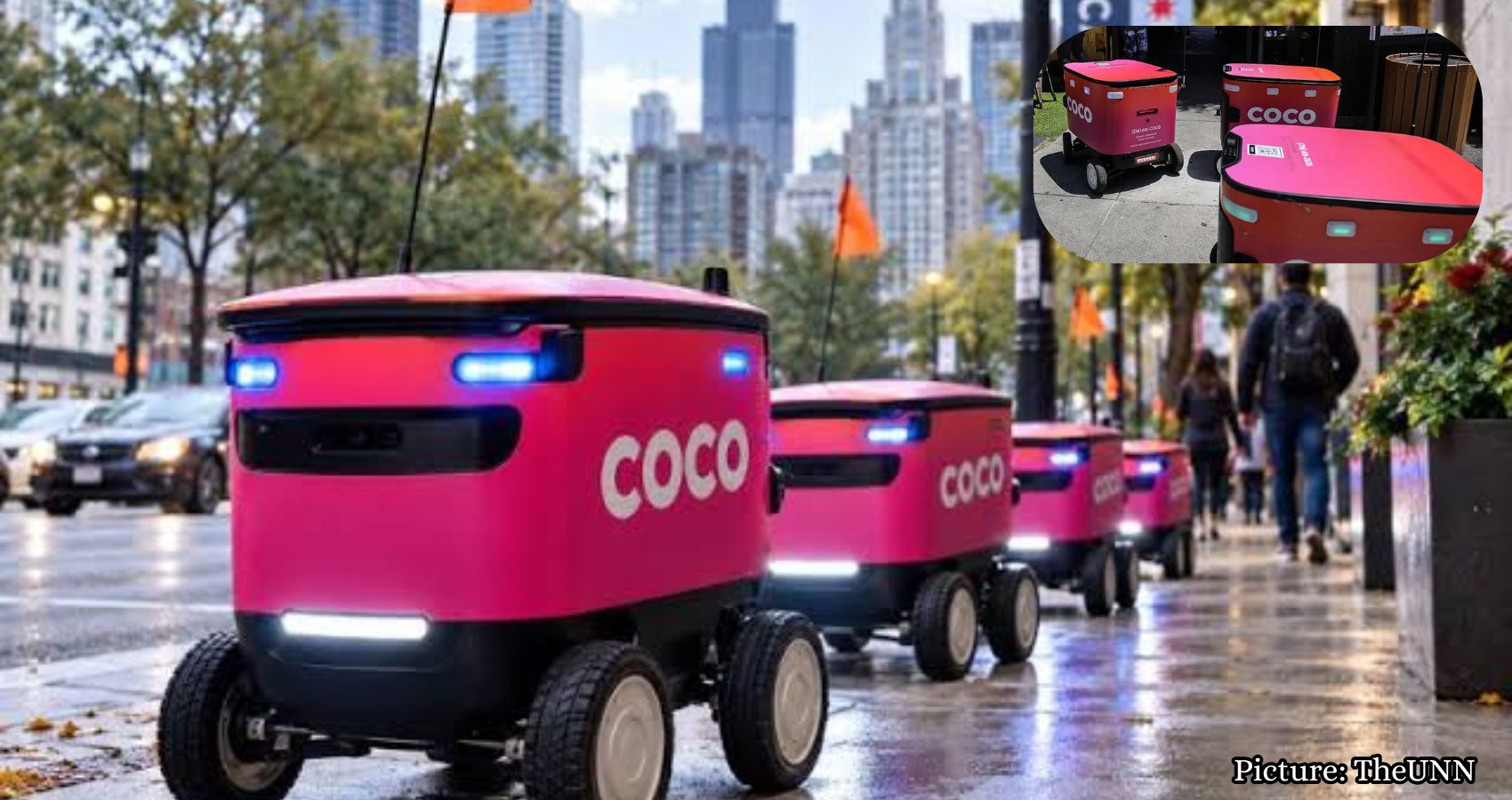
A viral video captures a swarm of Coco Robotics delivery robots on a Chicago sidewalk, raising concerns about pedestrian accessibility and the challenges of integrating autonomous technology into urban environments.
A recent viral video has drawn attention to a peculiar scene on the sidewalks of Chicago, where a cluster of Coco Robotics delivery robots created what appeared to be a traffic jam near Lincoln Park. The incident highlights broader concerns about the increasing presence of delivery robots in urban areas and their impact on pedestrian accessibility.
Runner Becca Ostien encountered the unusual sight during her morning run along North Clark Street. She described the scene as a “miniature robot traffic jam,” with at least a dozen Coco delivery robots gathered on the sidewalk. Some robots were attempting to navigate out of the group, while others remained stationary, contributing to the congestion.
Ostien noted that the situation could pose significant challenges for individuals with mobility impairments. “Someone without agile feet would have had trouble getting through,” she remarked. The video of the encounter quickly circulated online, prompting a variety of reactions, including concerns from commenters about the difficulties faced by people using wheelchairs or walkers in such a scenario.
Coco Robotics acknowledged the issue, attributing the incident to a “sidewalk deployment error” that caused multiple robots to reroute simultaneously as they began their daily routes. In a statement, the company expressed regret for the disruption, emphasizing that this was not how their robots are designed to operate. They quickly identified and rectified the problem, allowing the robots to resume normal operation within minutes.
“We’ve since solved the routing behavior that led to this and added safeguards to prevent it from recurring,” Coco stated. The company described the situation as rare, noting that it has completed tens of thousands of deliveries in Chicago over the past two years, saving consumers approximately $500,000 while creating skilled jobs and reducing vehicle traffic.
The incident in Lincoln Park is not an isolated case. Delivery robots have been part of a pilot program in Chicago, which has faced resistance from some residents. Petitions have emerged calling for a pause on the program, and there have been documented incidents involving delivery robots colliding with bus shelters. Such events underscore the frustrations that can arise when technology designed for convenience becomes an obstacle in public spaces.
While delivery robots offer the promise of efficient food deliveries, they also raise questions about the allocation of space on crowded sidewalks. The presence of these autonomous machines can complicate navigation for pedestrians, particularly those with disabilities. A cluster of robots can significantly narrow or block pathways, creating challenges for individuals with mobility devices or those who are visually impaired.
Coco Robotics is aware of these accessibility concerns and is actively working to address them through a partnership with BlindSquare, a GPS application designed for individuals who are blind or partially sighted. This partnership allows Coco’s robots to log sidewalk hazards, such as fallen e-scooters and broken curb cuts, which are then communicated to BlindSquare users through spoken alerts in multiple languages.
The collaboration aims to enhance the safety and accessibility of public sidewalks, ensuring that the presence of delivery robots does not exacerbate existing challenges for pedestrians. As Coco stated, “Robots built to navigate the pedestrian environment have a responsibility to improve it for everyone who shares that space.”
However, the recent incident in Chicago serves as a reminder of the complexities involved in integrating delivery robots into urban environments. As these machines become more common, cities must carefully consider how to accommodate them without compromising pedestrian safety. The challenge lies in ensuring that the technology does not become an additional obstacle for those who rely on clear pathways.
As the demand for delivery robots continues to grow, companies must demonstrate that their systems are reliable and capable of adapting to unexpected situations. The incident in Lincoln Park highlights the importance of robust safeguards to prevent similar occurrences in the future. A robot that alerts pedestrians to hazards must not become a hazard itself.
As cities grapple with the integration of delivery robots into their infrastructure, the balance between convenience and accessibility will be crucial. The recent events in Chicago provide a glimpse into the challenges ahead as urban areas navigate the evolving landscape of autonomous technology.
According to CyberGuy, the response from Coco Robotics and its partnership with BlindSquare may influence public perception of delivery robots in neighborhoods. The ongoing dialogue surrounding these machines will be essential as communities weigh the benefits against the potential drawbacks of their presence on sidewalks.