
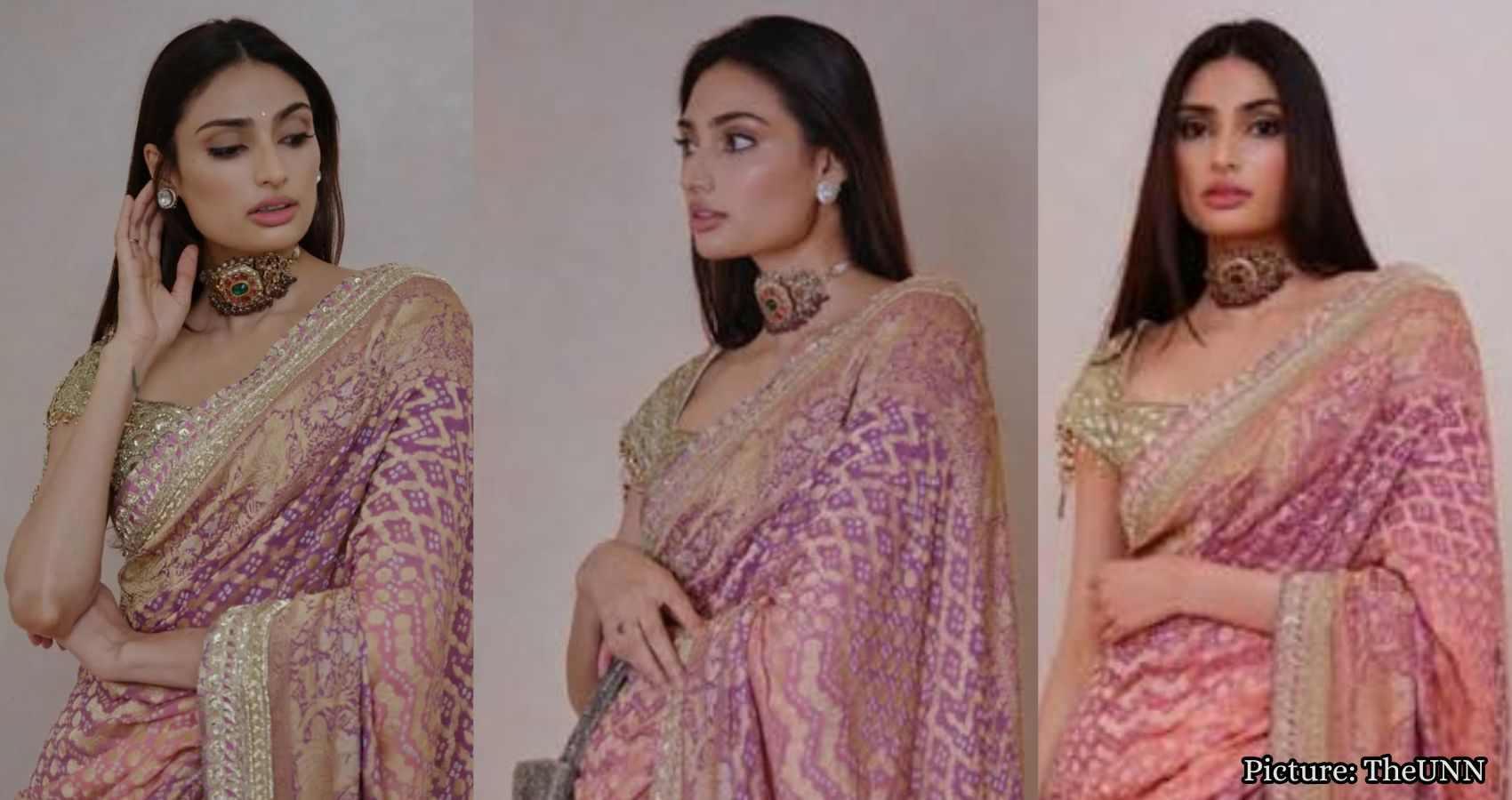
Athiya Shetty made a memorable appearance at a wedding reception, showcasing a Manish Malhotra sari that beautifully highlights traditional Indian craftsmanship and cultural imagery.
Athiya Shetty captured attention at the wedding reception of Anshula Kapoor and Rohan Thakkar, which took place in Mumbai on a recent date. The event was attended by numerous celebrities, and Shetty’s choice of attire—a stunning sari designed by renowned designer Manish Malhotra—became a focal point of discussion. This ensemble not only showcased the intricate artistry of Indian textiles but also emphasized the significance of heritage craftsmanship in contemporary fashion.
The sari featured a half-and-half drape that thoughtfully merged two textile traditions, allowing each to maintain its unique identity while complementing one another. The pallu, a significant element of the sari, was designed using the richly executed bandhani technique, transitioning through a color spectrum of peach, blush pink, and lilac. Bandhani, a traditional tie-dye method originating from Gujarat, is celebrated for its intricate patterns and vibrant colors, making it a favorite in modern fashion. The pallu was further adorned with checkered and diamond-shaped zari detailing, echoing the visual language of the classic Ghatchola weave, another revered textile technique known for its elaborate motifs and intricate craftsmanship.
Enhancing the pallu’s appeal were figurative woven motifs inspired by Radha-Krishna iconography, depicting the divine couple on a swing surrounded by peacocks, deer, and birds. This artistic representation serves not only as decoration but also as a homage to Indian mythology, showcasing the depth of skills possessed by traditional artisans. The sari’s rich aari-embroidered border added layers of texture and sophistication to the overall look, demonstrating the meticulous attention to detail characteristic of Malhotra’s designs.
In contrast, the pleated section of the sari was crafted from lilac brocade, embellished with delicate metallic floral buttis that enhanced the layered aesthetics of the ensemble. The accompanying blouse, featuring a cap-sleeved silhouette, continued the thematic dialogue between color and craft, showcasing lavish embellishments that included aari embroidery, sequin work, gold gota, and tassel detailing. This thoughtful interplay of textures and colors illustrates the designer’s commitment to creating pieces that are both visually stunning and culturally resonant.
For accessorizing, Shetty opted for a minimalist yet impactful approach. She paired her look with a statement kundan choker adorned with gemstones, along with classic polki stud earrings that harmoniously complemented the intricacy of her outfit. The simplicity of her beauty look—featuring soft smoky eyes, coral-toned lips, and sleek, center-parted hair—allowed her attire to take center stage. A tiny gold bindi added a traditional touch, while a modern silver potli bag introduced a contemporary flair to her overall appearance.
The significance of Shetty’s look lies not only in its visual appeal but also in its deep connection to heritage and craftsmanship. The sari, steeped in traditional techniques, is rejuvenated through the use of pastel hues that align it with modern sartorial trends, making it an investment-worthy piece that promises to transcend seasonal fashion. Such garments are designed to withstand fleeting trends, ensuring their relevance in wardrobes for years to come.
This choice reflects a broader trend within the Indian fashion industry, where there is an increasing celebration of the revival and reinterpretation of traditional textiles and craftsmanship. As consumers become more discerning and aware of the environmental and cultural implications of their fashion choices, the demand for sustainably sourced and heritage-inspired attire is on the rise. This movement not only supports artisans and local craftsmanship but also fosters a deeper appreciation for the historical narratives embedded within these textiles.
In related developments, the Vogue Wedding Atelier is scheduled to return on August 7-9, 2026, at the Taj Palace in New Delhi. This exclusive, invite-only event will showcase India’s leading couture designers, high jewelry brands, and bespoke luxury services, further emphasizing the significance of craftsmanship in the fashion industry. Such platforms play a pivotal role in promoting the artistry of Indian fashion and the importance of preserving cultural identity while embracing modern aesthetics.
As the landscape of Indian fashion evolves, the celebration of heritage textiles, as exemplified by Athiya Shetty’s recent appearance, underscores a commitment to honoring traditional craftsmanship while adapting to contemporary styles. This not only enriches the fashion narrative but also reinforces the cultural significance of these artisanal practices in today’s society, according to Source Name.