
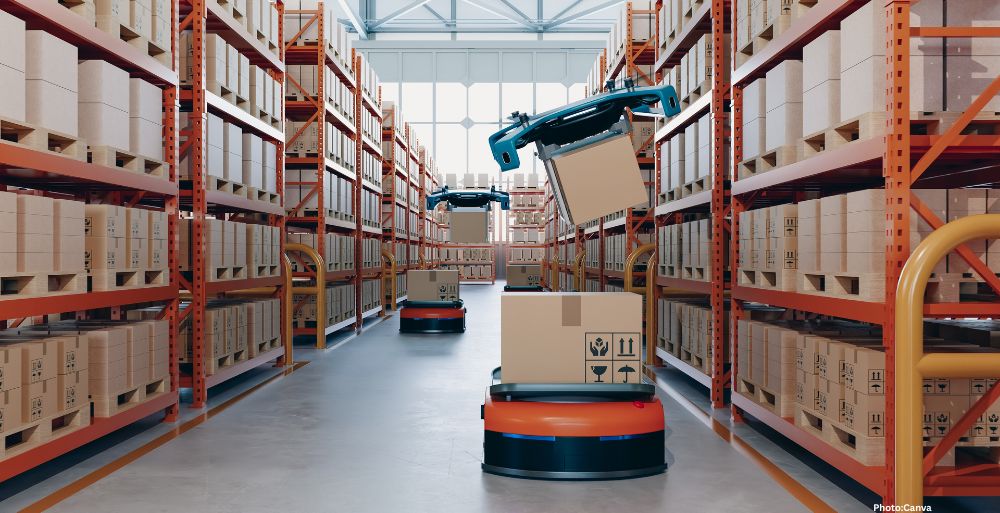
Amazon has discontinued its Blue Jay warehouse robot program, raising questions about the scalability of advanced robotics in logistics.
Amazon has quietly ended its Blue Jay warehouse robot program just months after its initial unveiling, which aimed to enhance same-day delivery capabilities. The multi-armed, ceiling-mounted robot was introduced in October as a significant advancement in warehouse automation.
Despite the initial excitement surrounding Blue Jay, the program faced considerable challenges that ultimately led to its discontinuation. While the core technology behind Blue Jay will be integrated into other projects, the robot itself will no longer be developed.
This abrupt decision prompts a critical inquiry: If Amazon, one of the world’s leading logistics companies, cannot successfully implement a high-profile robot at scale, what implications does this have for the future of artificial intelligence (AI) in practical applications?
Blue Jay was not merely an upgrade to existing conveyor belt systems; it was designed to recognize and sort multiple packages simultaneously using advanced AI-powered perception models. Amazon claimed that the system was developed in under a year, a remarkable feat aimed at increasing package throughput while alleviating worker strain in fulfillment centers.
However, despite its promising design, Blue Jay encountered significant engineering and cost hurdles. The robot’s ceiling-mounted configuration required intricate installation and seamless integration into Amazon’s Local Vending Machine warehouses, which are designed as expansive, automated structures. This rigidity in design likely became a liability, as modifications would necessitate extensive reconfiguration of hardware and infrastructure, a process that is both time-consuming and costly.
As a result, several employees who were involved in the Blue Jay project have transitioned to other robotics initiatives within the company. Although the Blue Jay robot itself has been shelved, Amazon continues to explore new avenues for improving its warehouse systems, with the underlying technology informing future designs.
Looking ahead, Amazon is shifting its focus to a new warehouse architecture known as Orbital. Unlike the older Local Vending Machine model, Orbital is modular, allowing for quicker deployment in various layouts. This adaptability is crucial as retail landscapes evolve, with customers increasingly expecting same-day delivery from urban centers, local stores, and grocery outlets.
Orbital could enable Amazon to establish micro-fulfillment centers in proximity to retail locations, including Whole Foods, thereby enhancing its competitive edge against rivals like Walmart, which already boasts a robust grocery network.
In conjunction with Orbital, Amazon is also developing a new robotics system called Flex Cell. Unlike Blue Jay’s ceiling-mounted design, Flex Cell will operate on the floor, indicating a strategic shift towards smaller, more flexible automation solutions tailored to the unpredictable nature of local retail environments.
For regular Amazon customers, the immediate impact of these changes may be minimal, as same-day and next-day delivery options remain a priority. However, the long-term implications of Amazon’s evolving robotics strategy could significantly influence order fulfillment speed, pricing, and the operational dynamics of local warehouses.
If Orbital proves successful, it could facilitate faster and more efficient deliveries. Conversely, if it encounters difficulties, the expansion of same-day delivery services could slow down or become more costly. This scenario underscores a broader truth about AI: while software can adapt rapidly through code updates, physical robots face challenges that require substantial investment and time to overcome.
The discontinuation of Blue Jay highlights a growing divide in the tech industry. While software-based AI is advancing at a remarkable pace, hardware development remains fraught with complexities. Robots must navigate real-world challenges such as gravity, friction, and unpredictable human interactions, where each error carries tangible costs.
Amazon’s decision to shelve Blue Jay does not signify a retreat from robotics; rather, it represents a recalibration of its approach. The company is betting on the success of modular, flexible systems over large, integrated machines. This strategic pivot could shape the future of e-commerce logistics.
Ultimately, the promise of faster delivery, improved availability, and enhanced local convenience remains intact for consumers. However, the journey to realize these ambitions involves navigating the intricate balance between AI aspirations and the constraints of physical reality.
As Amazon grapples with the challenges of implementing advanced robotics at scale, it raises an important question: How much of the AI revolution is still more vision than reality? This ongoing dialogue will shape the future of technology and logistics in the years to come, according to CyberGuy.