
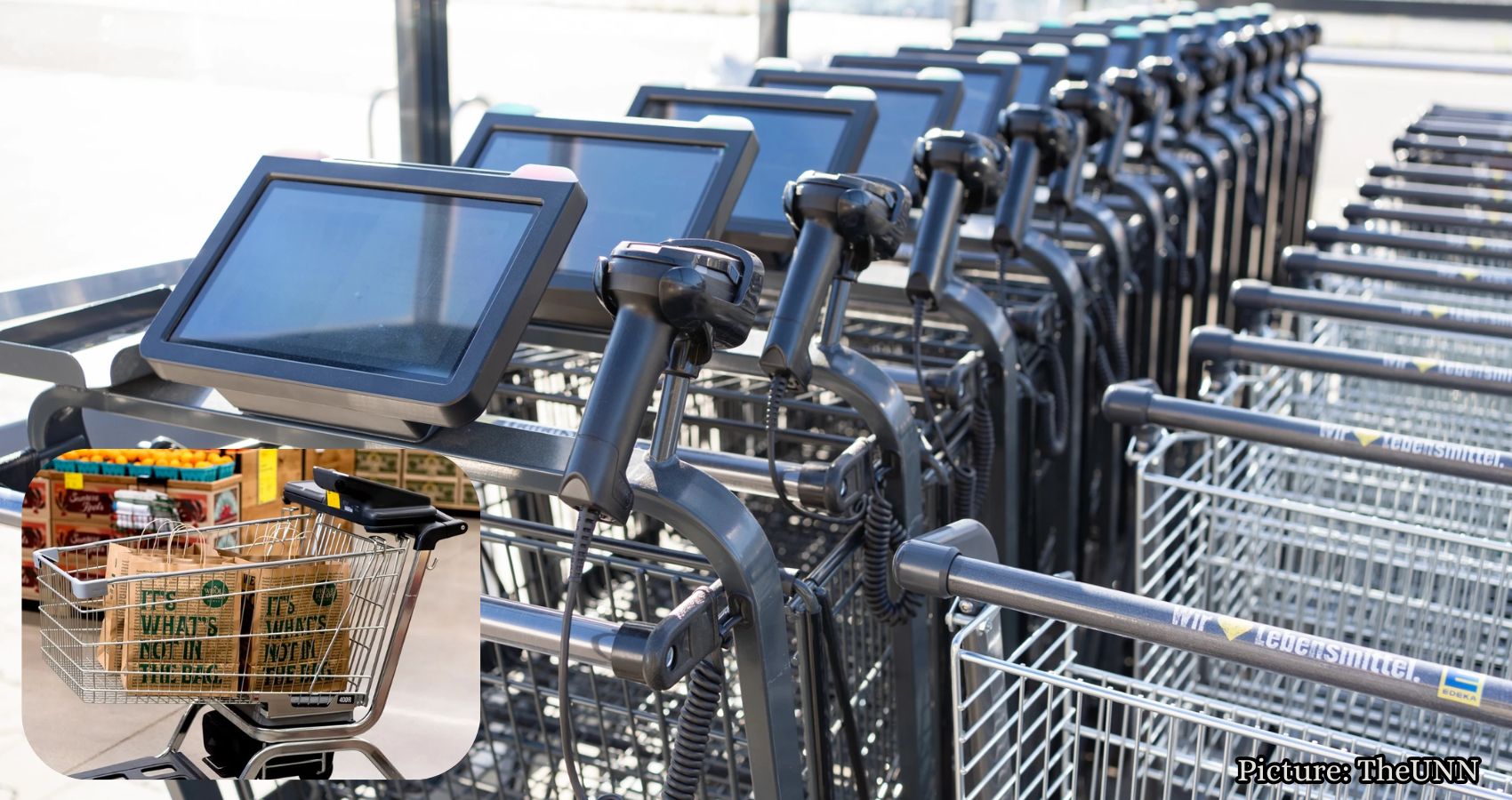
AI-powered smart grocery carts have been linked to a 32% increase in spending, raising questions about their impact on consumer behavior as they expand across U.S. stores.
Artificial intelligence is increasingly making its presence felt in grocery shopping, and recent research suggests it may lead to higher spending. Imagine pushing a grocery cart equipped with a screen that offers directions, coupons, and product suggestions. This technology not only keeps a running total of your purchases but also allows you to bypass the traditional checkout line. While this may seem convenient, it also provides retailers with a new avenue to influence your buying decisions.
A study conducted by Bayes Business School at City St George’s, University of London, found that shoppers using smart shopping carts spent an average of 32% more than those using regular carts. The research indicated that these shoppers not only bought more items but also spent more time in the store. This raises an important question: Are smart carts enhancing your shopping experience, or are they simply making it easier to overspend?
The study, published in the Journal of Business Research, examined the behavior of shoppers at a well-known German supermarket chain in March 2025. Researchers analyzed 12,418 shopping sessions, of which 9,422 involved the use of smart-cart technology. These carts, equipped with tablet-style screens, allowed shoppers to create digital shopping lists, receive personalized recommendations, and navigate the store more efficiently. They also supported checkout-free payment options.
Results showed that smart-cart users spent 32% more on average than non-users, purchased 25% more items, and spent 23% more time in the store. Interestingly, the spending gap was more pronounced during afternoons and weekends, with shoppers spending the most time in stores during the evening hours.
Dr. Sabrina Gottschalk, a lecturer in marketing at Bayes Business School and the study’s lead author, noted that these findings suggest significant revenue potential for retailers. The screens on smart carts create additional opportunities for advertising, allowing stores to present special offers and product recommendations while shoppers are actively deciding what to buy. This dual function of smart carts—serving as both a shopping tool and an advertising platform—could reshape consumer behavior.
However, it is essential to note that the study identified an association between smart-cart use and increased spending without definitively proving that the technology itself caused the rise. Shoppers opting for smart carts may have already planned larger grocery runs or may be more inclined to use technology to facilitate their shopping experience.
Further analysis revealed a subset of shoppers, dubbed “superusers,” who interacted with the smart-cart screen more than 20 times during a single trip. While these superusers bought significantly more items and spent longer in the store, they did not necessarily spend more money overall. This suggests that some shoppers may engage with the technology for the experience rather than to increase their purchases.
Smart carts are already making their way into grocery stores across the United States. Instacart has deployed thousands of its AI-powered Caper Carts in over 100 cities, with availability across 15 states and numerous retail banners, including Kroger and ShopRite. These carts utilize cameras, built-in scales, and sensors to track what shoppers add to or remove from their baskets, while also providing recommendations as customers navigate the aisles.
Amazon has introduced a competing product known as the Dash Cart, which displays prices, keeps a running total, and offers personalized deals. This technology is set to expand to additional Whole Foods Market locations across the U.S. by the end of 2026, making smart carts a more familiar feature in grocery shopping.
What makes smart carts particularly intriguing is their ability to deliver promotions directly to shoppers as they move through the store. For example, if a shopper turns down an aisle, the cart may display a promotion for a nearby product. This capability can enhance the shopping experience by reminding customers of forgotten items or suggesting complementary products. However, it also raises the risk of impulse purchases that may not align with the shopper’s original list.
Data privacy is another important consideration. Instacart’s Caper Carts utilize various sensors and tracking systems to monitor shopper behavior, which can enhance the cart’s functionality but also raises questions about data collection and personalized advertising. Shoppers should be mindful of the privacy settings associated with their grocery-store accounts and understand what information retailers collect.
Using an AI shopping cart doesn’t mean you have to forgo your budget. To maximize the benefits of this technology, shoppers should establish a clear list of what they need before entering the store. When the cart suggests additional items, it’s wise to compare those suggestions with your original list to avoid overspending.
Monitoring your total as you shop can also be beneficial, allowing you to make informed decisions before reaching the checkout line. While some recommendations may offer genuine savings, it’s crucial to remain vigilant and not assume that every promoted product is the best deal. Comparing prices and unit costs can help ensure that you stay within your budget.
For those curious about the impact of smart carts on their grocery bills, a simple experiment can provide insight. Track your spending during a few trips using a smart cart compared to regular grocery runs. This may reveal whether the technology helps you stay organized or contributes to unexpected increases in your total.
As smart carts become more prevalent in grocery stores, it’s essential to consider how they influence shopping behavior. While they offer convenience and potential savings, the 32% increase in spending highlighted by the study warrants attention. Shoppers should enjoy the benefits of technology while remaining mindful of their budgets and shopping lists.
Would you consider using an AI-powered shopping cart if it allowed you to skip the checkout line, or would the knowledge that smart-cart users tend to spend 32% more lead you to stick with a traditional cart? Share your thoughts with us at CyberGuy.com.
For more tips on managing grocery costs, check out our article on eight apps that can help reduce your food bill.
Copyright 2026 CyberGuy.com. All rights reserved.