
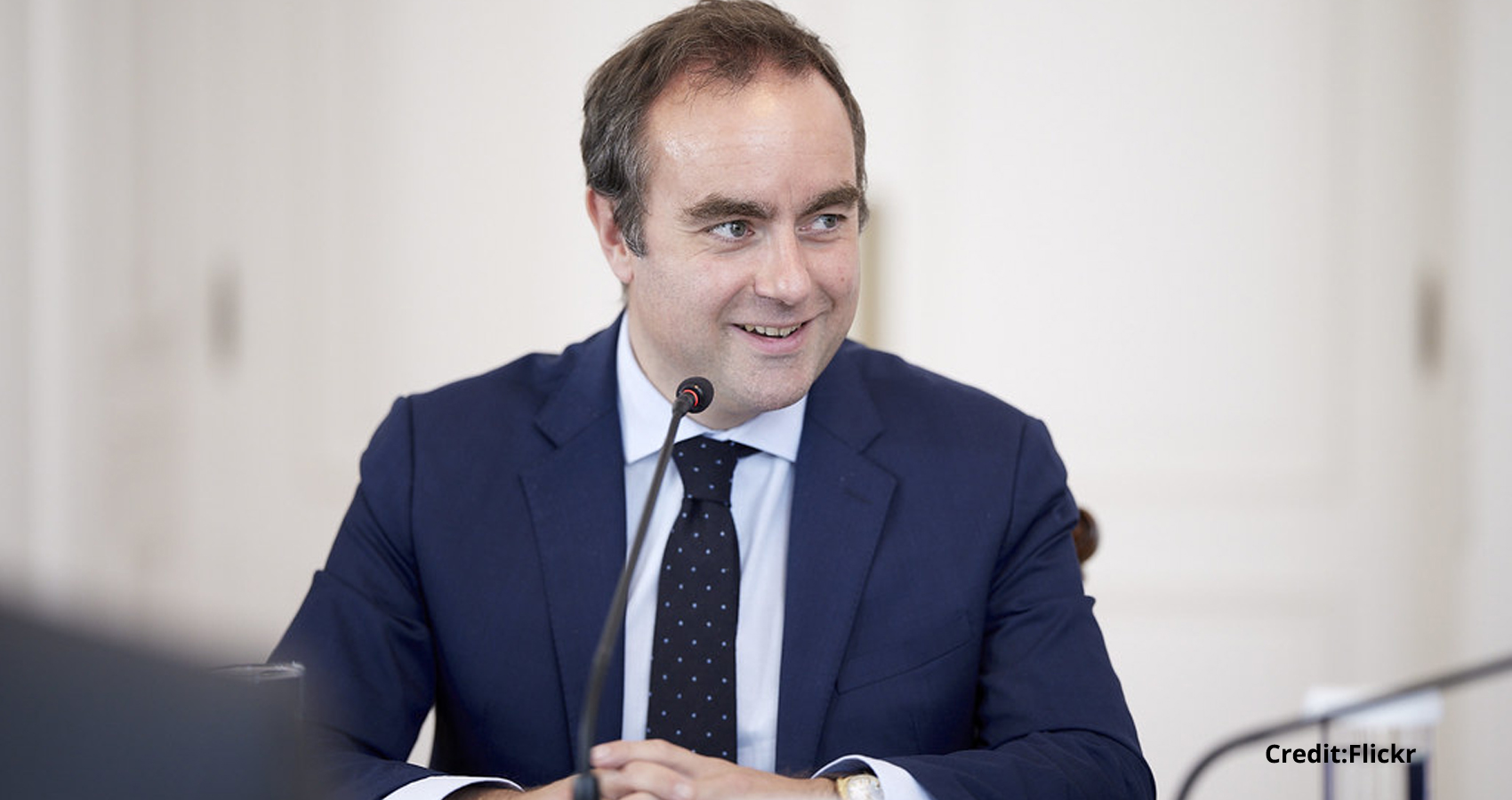
French Prime Minister Sébastien Lecornu defended police actions amid student protests that resulted in severe injuries to two teenagers, rejecting claims of police brutality.
French Prime Minister Sébastien Lecornu has come under scrutiny as he defended the police response to ongoing student protests, which have resulted in serious injuries to two teenagers. One teen lost a hand due to an incident involving a police grenade, while another was blinded in one eye after being struck by a projectile.
During a parliamentary session on Tuesday, Lecornu addressed accusations of police brutality and state repression, asserting that the term “police brutality” suggests that officers were instructed to use excessive force. He stated, “What triggers police action is the occurrence of urban violence,” and acknowledged that “accidents happen.”
Both Lecornu and Interior Minister Laurent Nuñez have maintained that the police response was a reaction to urban violence, including incidents of arson and vandalism. Nuñez characterized the police actions as proportionate in “almost all cases.” The prime minister also criticized the opposition party France Unbowed for allegedly exploiting the student protests to create chaos and gain political advantage ahead of the upcoming presidential election.
In response to the protests, President Emmanuel Macron convened an emergency meeting with senior ministers to discuss the situation and its potential political implications. The French government is facing increasing pressure as over 6,500 individuals have been arrested and hundreds injured during the protests, which are primarily driven by demands for improved funding and learning conditions in schools. Notably, a significant portion of those arrested were minors, according to reports from The Associated Press.
Lecornu reported that since the protests began, 215 students and 85 school staff members have sustained injuries, while his office indicated that 715 police officers have also been injured in the clashes. “I hope we can provide a political response to a very real anxiety among high school students,” he remarked.
As Lecornu delivered his statements, demonstrators from various French unions and teachers’ groups joined high school and university students in protest. Members of left-wing parties in France were also present, as noted by Politico. The Interior Ministry estimated that approximately 266,000 people participated in demonstrations nationwide on Tuesday, with around 56,000 in Paris alone. While the Paris demonstration remained largely peaceful, smaller groups later engaged in clashes with riot police, according to The Associated Press.
The protests initially began in high schools within the Paris region in mid-September before expanding across the country. On Monday, a 15-year-old boy in northern France lost his hand after a police grenade exploded during the protests. A prosecutor stated that it remains unclear whether the student picked up the grenade or if it was thrown at him.
In Tours, a 16-year-old was reported to have lost sight in one eye after being hit by a projectile, which may have been fired from a sub-lethal riot-control weapon used by police. In light of these incidents, Boris Vallaud, leader of the center-left Socialist group in parliament, announced plans to introduce legislation aimed at restricting the use of sub-lethal riot-control weapons during student demonstrations, citing concerns over the potential for irreversible injuries.
As the situation continues to develop, the French government faces the challenge of addressing the underlying issues raised by the protests while managing public safety and maintaining order.
According to Politico, the protests reflect a growing discontent among students regarding their educational environment and the government’s response to their needs.