
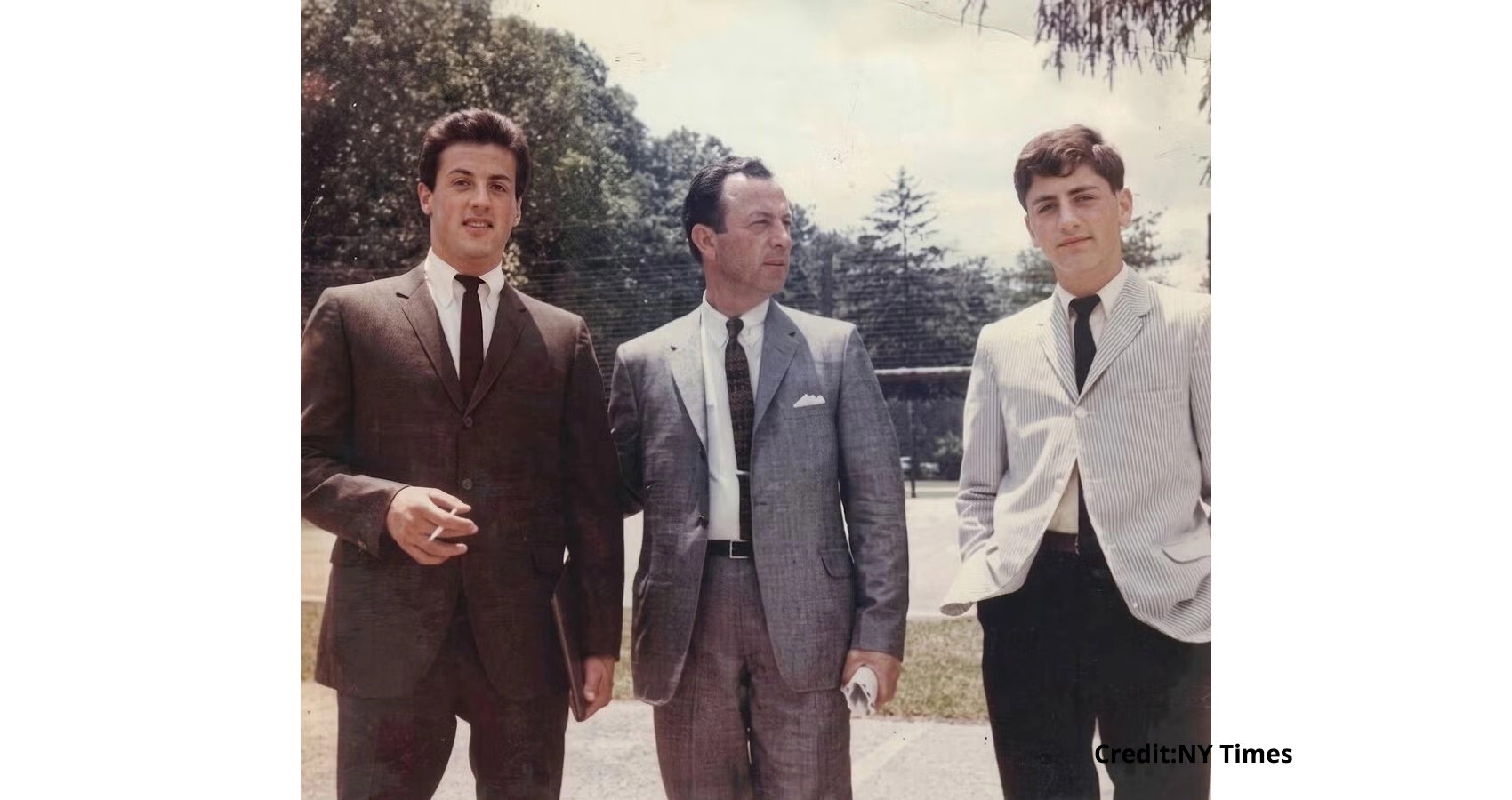
Sylvester Stallone opens up about his struggles with bulimia and anxiety while maintaining his iconic physique in a candid interview, shedding light on the pressures of Hollywood.
Sylvester Stallone, the renowned Academy Award-nominated actor, has revealed the health challenges he faced while preparing for physically demanding roles throughout his career. In a recent interview with The New York Times, the 80-year-old actor disclosed that he battled an eating disorder during his preparation for the 1982 film “Rambo.” Stallone, who has recently published a memoir titled “The Steps,” shared that he aimed to achieve a more “animalistic” look, drawing inspiration from jaguars and cats.
“Then it became an obsession. Really bad. It got to the point where I became bulimic,” Stallone admitted during the interview. Bulimia nervosa is characterized by episodes of binge eating followed by purging behaviors, which can include vomiting, excessive use of laxatives, fasting, or excessive exercise, according to the National Institute of Mental Health (NIMH).
“I couldn’t hold anything down. Or I didn’t want to keep it down because I became so obsessed with staying at that point of fitness, literally an obsessive body-worship kind of thing,” he explained.
Stallone also revealed that while filming “Rocky III,” he reached a dangerously low body fat percentage of 2.6%. The National Academy of Sports Medicine classifies body fat as “dangerously low” for men if it falls below 8% and below 14% for women.
In addition to his struggles with bulimia, Stallone acknowledged that he used steroids during certain periods of his career. “You have to,” he stated. “But you do it in a sensitive way — six weeks on, six weeks off … that also took a terrible toll.” Years of performing his own stunts have led to multiple surgeries on his back, shoulder, and neck, which he described as a result of his “very masochistic” approach to filmmaking.
“I’ve abused my body,” Stallone said candidly. “Everything is held together with baling wire, but I still want to stay in good shape.” His commitment to fitness has been a lifelong endeavor, but it has come with significant physical costs.
Stallone also opened up about his experiences with anxiety, recalling the first incident when he was 36 years old. “All of a sudden, I stood up and the hair on my neck went up and I started getting hot and I go, ‘I’m dying, this is it, I’m on my way out,’” he recounted. The panic attacks became a recurring issue, often resurfacing before high-profile television appearances. As he aged, Stallone continued to experience anxiety and sometimes felt compelled to leave crowded rooms.
Brian Pollack, a licensed clinical social worker and certified eating disorders specialist at Hilltop Behavioral Health in Summit, New Jersey, praised Stallone for sharing his experiences. “There are so many examples of what can take place in Sylvester Stallone’s life that have led him to moments of objectivity and body awareness,” Pollack, who has not treated Stallone, told Fox News Digital.
The expert suggested that Stallone’s desire to maintain his success may have contributed to his rigid routines, steroid use, and intense performance expectations, as well as the pressures associated with the entertainment industry. “The idea that a man enhances his appearance to remain consistent with his own public image and internal comfort goes back decades,” Pollack noted. “Stallone isn’t the first, and he isn’t the last.”
Pollack further elaborated on the expectations placed on Stallone, stating, “He has to almost keep himself in this homeostatic state where people expect Sylvester Stallone to be Rocky, which is his quintessential role.” He emphasized the challenges of maintaining this image throughout the various stages of Stallone’s life and career.
Giulia Suro, a licensed clinical psychologist and certified eating disorder expert at Monte Nido in Washington, D.C., described Stallone’s revelation as a “game-changer.” She pointed out that eating disorders are often misconstrued as primarily affecting women. “Eating disorders continue to be misconstrued as primarily female illnesses,” Suro told Fox News Digital.
Stallone’s candid discussion about his health struggles serves as a reminder of the pressures faced by individuals in the entertainment industry and the importance of addressing mental health and body image issues. His journey highlights the need for greater awareness and understanding of these challenges, regardless of gender.
As Stallone continues to navigate his health and fitness journey, his openness about these struggles may inspire others to seek help and foster a more supportive dialogue around mental health and body image in Hollywood and beyond.