
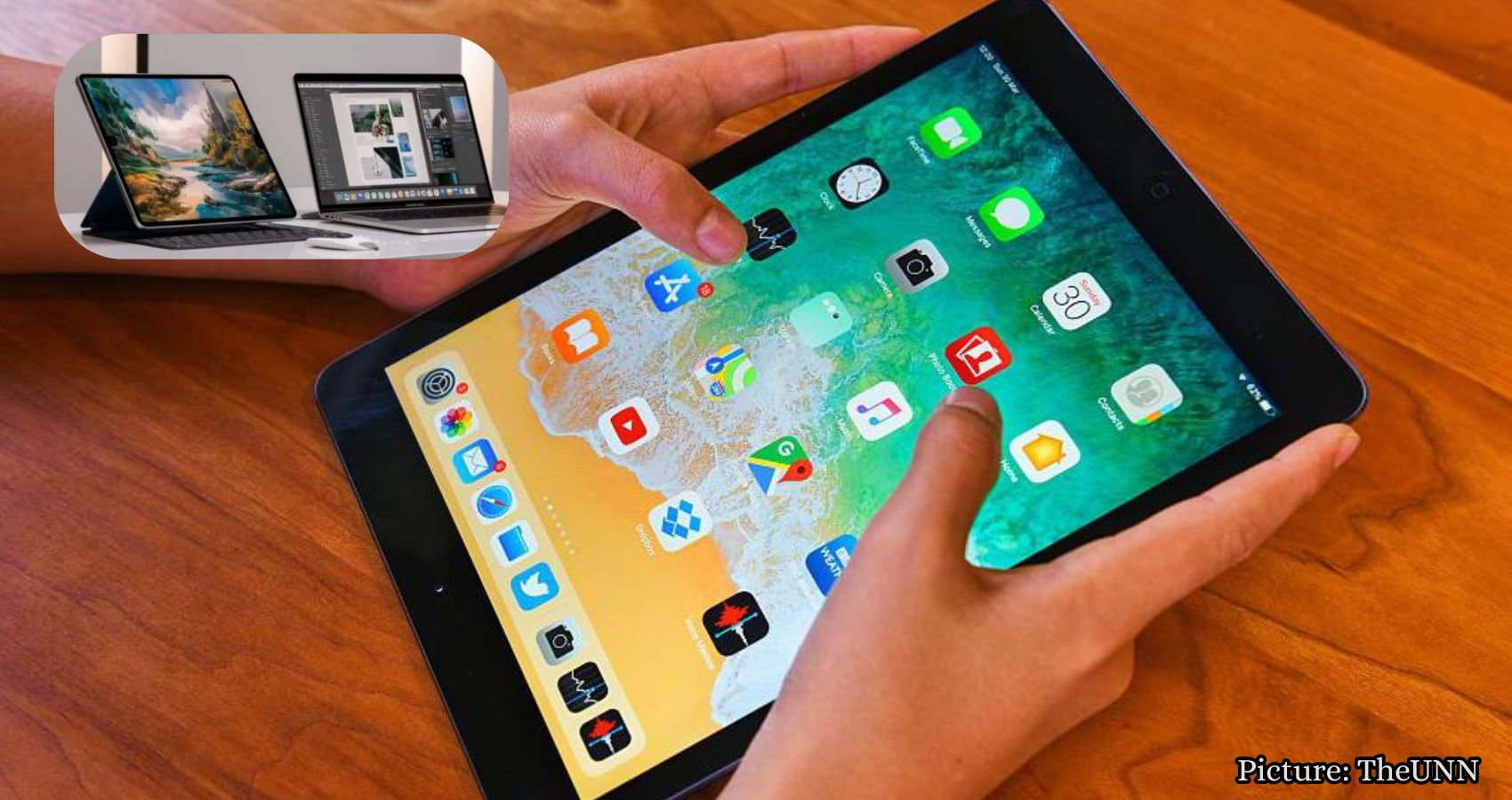
Apple is set to unveil a groundbreaking redesign of its MacBook lineup, featuring OLED displays, touchscreen capabilities, and advanced specifications, with a potential launch in late 2026 or early 2027.
Apple is currently preparing a significant redesign for its high-end notebook lineup, which is heavily rumored to debut as the MacBook Ultra. This premium tier is expected to introduce OLED displays, touchscreen integration, and an ultra-thin design, marking a notable shift in Apple’s approach to its laptop offerings.
According to industry analysts, including Bloomberg’s Mark Gurman, the new OLED touchscreen MacBooks are undergoing internal testing and could be launched as early as late October 2026 or early 2027. Samsung Display, the screen supplier, has already ramped up production on its specialized 8.6-generation OLED lines specifically for these upcoming 14-inch and 16-inch laptops.
The MacBook Ultra is anticipated to sit at the pinnacle of Apple’s laptop range as a new ultra-premium flagship model, rather than completely replacing existing standard models. Due to the advanced tandem OLED technology and structural changes, pricing is expected to rise by approximately 20%. Rumored starting prices suggest $2,499 for the 14-inch version and $2,999 or more for the 16-inch model.
One of the standout features of the upcoming MacBook Ultra will be its hybrid tandem OLED display, which will replace the current mini-LED technology. This new display is designed to offer true blacks, infinite contrast ratios, and significantly improved HDR output. It will maintain a 120Hz ProMotion refresh rate while running cooler and consuming less power.
In a departure from Apple’s long-standing tradition, the MacBook Ultra will also introduce full multi-touch display support, allowing for a seamless secondary input method alongside the trackpad and mouse. This feature will be optimized by a more touch-friendly version of macOS, enhancing the overall user experience.
The design of the MacBook Ultra will feature a thinner aluminum chassis, made possible by the space-saving properties of OLED technology. To prevent screen wobble when typing or tapping the touchscreen, Apple is incorporating a reinforced mechanical hinge into the design.
Additionally, rumors suggest that the traditional screen notch may be replaced by an interactive, software-driven Dynamic Island cutout, which will serve as a space for notifications and camera alignment.
In terms of processing power, the laptop is expected to utilize the highly capable M5 Pro and M5 Max chips. Reports indicate that Apple may skip intermediate M6 iterations, transitioning directly to M7 AI-centric silicon in future models.
There is also speculation about an optional C2 cellular modem tier that would provide built-in 5G/LTE support, allowing users to connect to the internet without relying on a phone hotspot.
Battery life is another area where the MacBook Ultra is expected to excel. The shift to oxide TFT and hybrid RGB tandem OLED technology will significantly reduce power consumption. Coupled with highly efficient 3nm chip architectures, the battery life is projected to reach or exceed an impressive 24-hour runtime.
To maintain optimal thermal performance within the slimmer chassis, the MacBook Ultra will feature a premium vapor chamber cooling system, designed to prevent performance throttling during intensive tasks.
The upcoming MacBook Ultra represents a radical design shift for Apple, introducing a tandem OLED touchscreen display and a customized macOS Golden Gate operating system. This flagship device is poised to utilize optimized M5 Pro and M5 Max architectures while positioning itself above the standard MacBook Pro lineup, according to Bloomberg.