
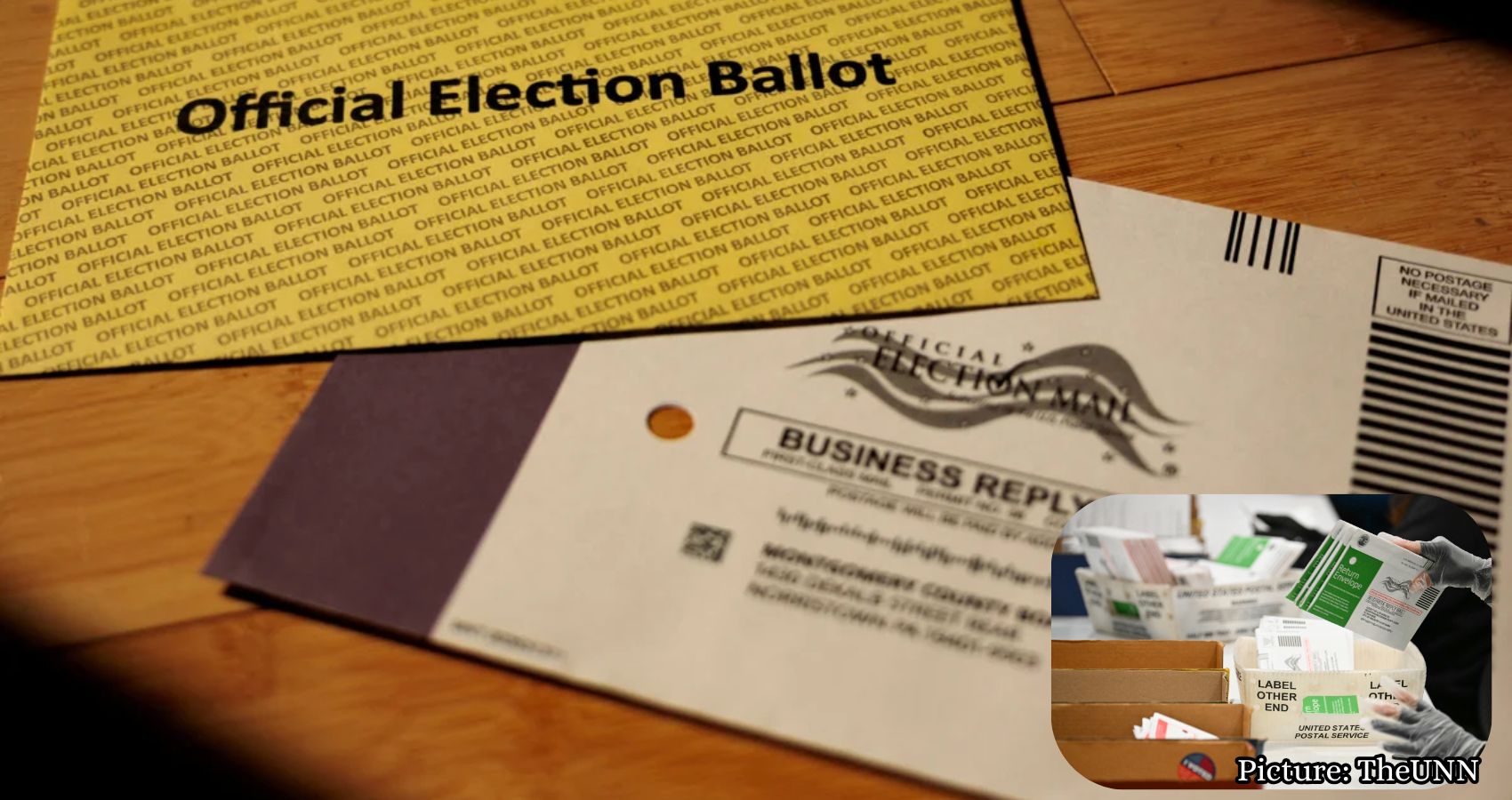
The Supreme Court’s recent decision on mail ballot rules leaves open the possibility for future implementation, as Justice Brett Kavanaugh’s concurrence suggests a potential path for the USPS to enact changes by 2028.
Justice Brett Kavanaugh, appointed by former President Donald Trump, has indicated that the United States Postal Service (USPS) may still have the opportunity to implement mail ballot rules in the future. This comes despite the Supreme Court’s recent denial of an emergency request from the Trump administration to lift a lower court’s injunction blocking these rules ahead of the 2026 midterm elections.
In his concurring opinion in the case of United States Postal Service, et al. v. California, et al., Kavanaugh noted that there is a “fair prospect” that the final rule could fall within the Postal Service’s statutory authority. He emphasized that while it is too soon to implement the rules for the upcoming midterms, the door remains open for future consideration.
This concurrence follows Kavanaugh’s previous legal arguments that have supported Trump’s initiatives, including a pathway for implementing an executive order on birthright citizenship and a blueprint for tariffs in earlier cases.
Jason Snead, executive director of the Honest Elections Project, remarked on Kavanaugh’s opinion, stating, “Justice Kavanaugh threw the government a lifeline by saying that he views it as likely that they do have the statutory authority.” He pointed out that Justices Thomas and Alito also share similar views on these legal questions.
On Monday, the Supreme Court ruled that the Trump administration was “unlikely to succeed on the merits” of its challenge against the injunction, effectively blocking the USPS rule for the 2026 midterms. As ballots have already been sent out, the case may return to the Supreme Court as litigation continues.
Snead expressed optimism about the possibility of the case returning to the Supreme Court, stating, “I think there’s a fair chance that it winds back up in front of the Supreme Court eventually.” He acknowledged that while the rule is unlikely to be implemented in time for the midterms, there is hope for its consideration before the 2028 presidential election.
The contested USPS rule mandates that federal ballot-mail envelopes include an election-mail logo, be scannable by high-speed processing equipment, and feature a unique barcode for each voter. Additionally, states would be required to upload specific voter information to a Postal Service portal.
A coalition of 24 Democratic state attorneys general filed a lawsuit against the Trump administration, claiming that the rule violates the Constitution’s Elections Clause, which grants Congress the authority to regulate elections. The Trump administration countered that the USPS is focused on mail regulation rather than election procedures.
Wessan, the Iowa Solicitor General, highlighted the timing of the litigation as a significant factor. He noted that earlier legal challenges and an injunction in Massachusetts delayed the Postal Service’s ability to publish the final rule. “I think that Justice Alito’s dissent highlights a lot of issues with the approach taken by the majority,” Wessan said, expressing uncertainty about whether the Supreme Court would reach the same conclusion ahead of the 2028 election.
Justice Samuel Alito, joined by Justice Clarence Thomas, dissented from the majority opinion, arguing that the government had met the necessary criteria for a stay. He raised questions about the standing of some plaintiffs and described their reliance on a “Hail Mary pass” that the Supreme Court has historically deemed unlikely to succeed.
Wessan noted the challenges posed by the timing of the ruling, stating, “The amount of time that it took to get that resolved by the Supreme Court put the Postal Service in a very tough spot timing-wise with rolling it out for the election coming up in November.” He emphasized that states are nearing the deadline for sending out ballots.
Abhishek Kambil expressed surprise at the lack of a detailed explanation from the court’s majority. “You would hope that in a stay opinion, the Supreme Court would explain its reasoning,” he said, particularly in light of Justice Alito’s thorough dissent that outlined perceived errors in the majority’s decision.
Looking ahead, Wessan anticipates that the rule will remain sidelined for the 2026 election but could potentially be implemented for the 2028 election. He believes this is part of a broader effort by the administration to enhance voter integrity.
Snead argued that without an imminent election, Democratic states may face increased difficulty in opposing the implementation of USPS rules. “They’re going to have a difficult time and a steeper hill to climb if they’re trying to explain in 2027 why they can’t possibly comply with basic rules like this over a two-year time frame,” he stated.
He further explained that the proposed changes involve standardizing mail ballot envelope design and ensuring states provide lists of eligible mail voters to the Postal Service, allowing for better tracking of ballots. “This is a very basic, very simple thing,” Snead concluded.
As the legal battles continue, the future of the USPS mail ballot rules remains uncertain, with potential implications for upcoming elections.
According to Fox News, the ongoing litigation and Kavanaugh’s recent comments may shape the landscape of mail-in voting regulations in the years to come.