
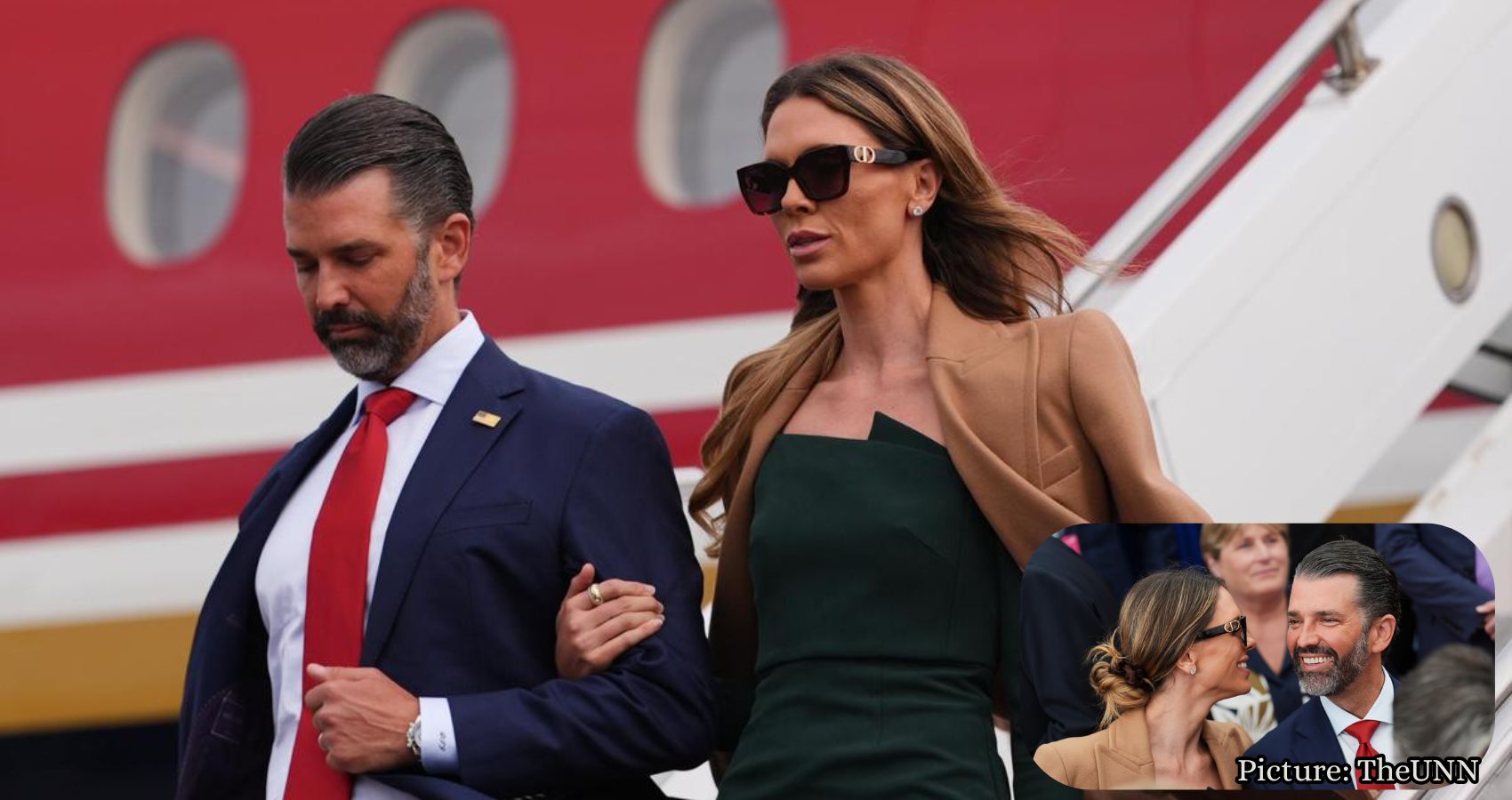
Donald Trump Jr. and his wife Bettina revealed that their recent wedding celebration was partially funded by Russian oligarch Umar Kremlev, raising concerns about foreign influence amid ongoing geopolitical tensions.
Donald Trump Jr. and his wife, Bettina, confirmed that their wedding celebration in May was significantly financed by Umar Kremlev, a Russian oligarch with close ties to President Vladimir Putin. This revelation has sparked concerns regarding foreign influence, particularly in light of the Trump family’s history of associations with Russia and ongoing geopolitical tensions.
Bettina Trump disclosed the financial support in an Instagram post, describing Kremlev as a “dear friend” who generously hosted two nights of celebrations for the couple following their private wedding ceremony. She expressed her gratitude for what she termed an “extraordinarily generous wedding gift,” emphasizing that it was a gesture of friendship rather than a politically motivated act.
The wedding festivities took place in the Bahamas, where ProPublica reported that Kremlev covered expenses totaling hundreds of thousands of dollars. These costs included the rental of a private island for the three-day celebration and funding for a fireworks display. The lavish nature of the event, attended by friends and family, stood in stark contrast to the couple’s intimate wedding ceremony.
Umar Kremlev is the president of the International Boxing Association and has been recognized by the Russian government, recently receiving the Order of Friendship from President Putin. His close ties to the Kremlin raise significant questions about the implications of foreign financial influence, particularly amid the ongoing conflict in Ukraine, which has drawn widespread condemnation from the international community.
Kremlev’s relationship with Putin includes accompanying him on a recent visit to China as part of a Russian delegation, as reported by state media. This connection amplifies concerns about the intersection of personal relationships and political motives, especially in the current geopolitical climate.
In her Instagram post, Bettina Trump clarified that the couple’s wedding was initially intended to be a simple ceremony attended only by family. She stated, “The weekend that followed had actually been planned well in advance as a fun weekend with friends. It was never intended to be our wedding weekend.” After changing their initial wedding plans, they opted for a private ceremony followed by a celebration with friends during the pre-planned weekend.
Bettina Trump expressed disappointment over how their joyous occasion might be perceived through a political lens, saying, “It’s unfortunate that something so personal and happy can be recast as something political or sinister simply because of who someone is or where they come from. Friendship doesn’t require a political motive. Generosity doesn’t automatically come with an agenda. And sometimes a wedding gift is simply a wedding gift.”
This revelation comes amid ongoing scrutiny of Donald Trump Jr.’s connections to Russia, a subject that has been intensely investigated since the 2016 presidential campaign. His meeting with Russian attorney Natalia Veselnitskaya at Trump Tower has been a focal point of federal and congressional investigations probing potential collusion between the Trump campaign and Russian efforts to influence the election. This meeting was framed as an opportunity to discuss potentially damaging information about then-Democratic candidate Hillary Rodham Clinton, part of broader Russian efforts to support the Trump campaign.
The implications of Kremlev’s financial involvement in the wedding festivities extend beyond personal relationships. They raise critical questions about the nature of foreign influence in U.S. politics, especially given the heightened sensitivity to Russian connections in public discourse. As the Trump family continues to face scrutiny over their past dealings and interactions with Russian individuals, this latest development adds another layer of complexity to the narrative surrounding foreign influence and domestic affairs.
The timing of the wedding celebration, coupled with Kremlev’s financial contributions, invites further examination of how personal relationships may intertwine with political dynamics. As investigations into the Trump campaign’s connections to Russia continue to evolve, this incident underscores the ongoing relevance of these issues in contemporary political discussions.
As public interest in these relationships grows, it becomes increasingly important to consider the broader implications of such financial arrangements, particularly against the backdrop of international tensions and the ongoing debate over foreign influence in U.S. political matters. The Trump family’s historical and ongoing connections to Russia remain a point of contention and analysis among political observers and analysts, according to ProPublica.