
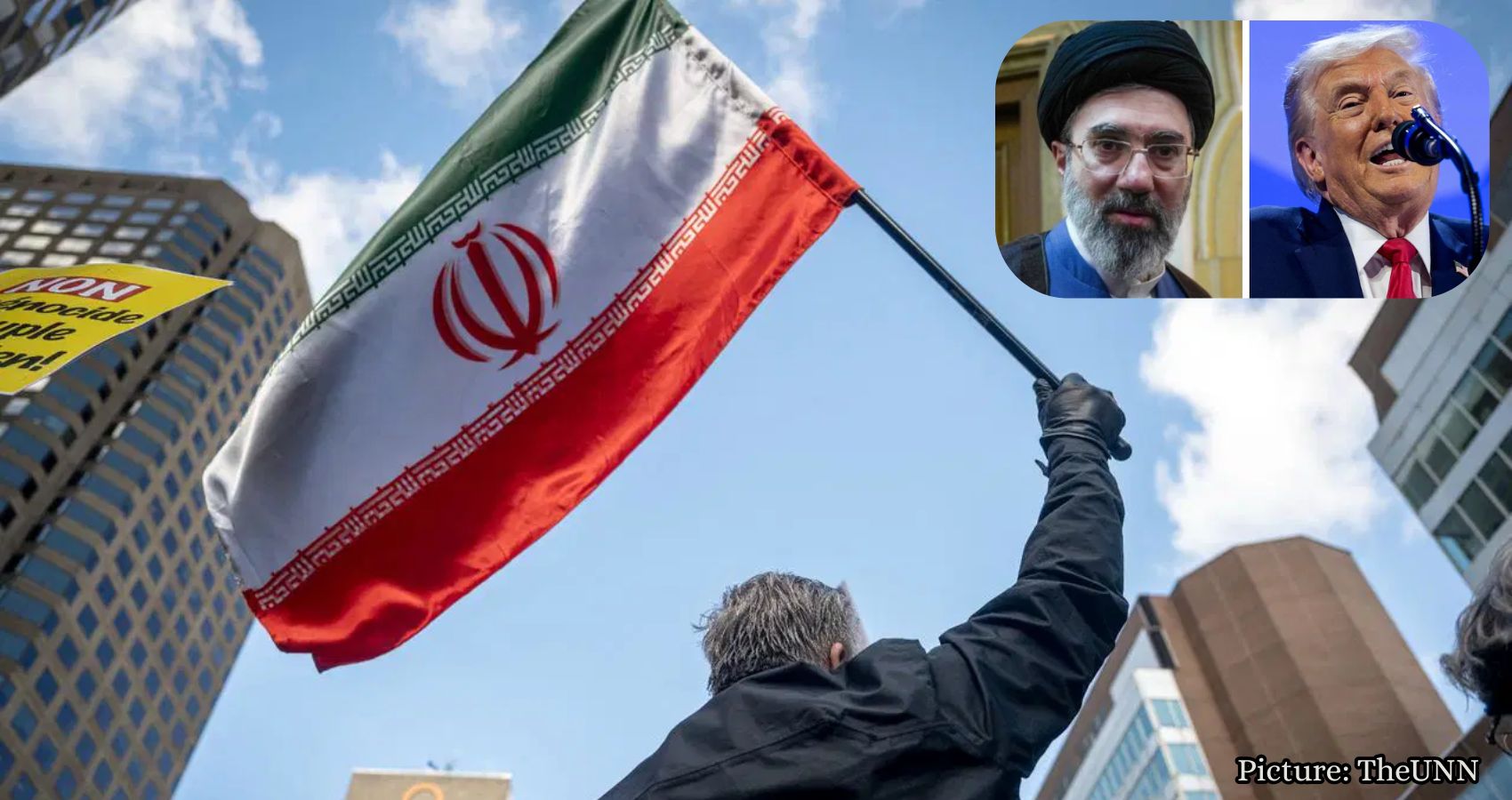
Iran has dismissed U.S. President Donald Trump’s offer for renewed negotiations, insisting that talks will not resume until its conditions are met, as the nation prepares for various potential outcomes in the ongoing conflict.
Iran has firmly rejected U.S. President Donald Trump’s recent proposal to restart negotiations, stating that discussions cannot resume until Tehran’s conditions are satisfied. Mohsen Rezaei, the secretary of Iran’s Supreme National Security Council, emphasized that the country would not engage in talks unless its demands are addressed. This stance comes as Iran’s military prepares for multiple potential scenarios regarding the ongoing conflict, which could range from a ceasefire to a full-scale war.
Rezaei characterized Trump’s recent remarks as mixed signals, asserting that Iran would not consider negotiations until its prerequisites are met. Trump had indicated on Monday that he was open to dialogue with Tehran, suggesting that Iran was eager to reach an agreement quickly. These comments followed weeks of the U.S. president stating that negotiations were not yet viable.
Tehran has outlined several conditions that must be fulfilled before it will entertain the idea of resuming talks. These include the cessation of the U.S. naval blockade, the lifting of economic sanctions, the release of frozen Iranian assets, and a halt to Israeli military actions in Lebanon and Gaza. Additionally, Iran has sought compensation for wartime damages and has linked the resolution of the conflict to the lifting of its blockade of the Strait of Hormuz.
In a recent social media post, Rezaei reiterated Iran’s position: “Don’t get distracted by the U.S. president’s mixed signals—from ‘no negotiations’ to ‘we’re ready to talk.’ The stakes around oil and the straits have changed. Damage control won’t stop what’s coming. No talks until Iran’s conditions are met. Period!”
In a separate development, Iran’s Armed Forces General Staff has issued a nationwide directive outlining preparations for three potential outcomes of the ongoing conflict. These scenarios include:
1. An end to the war, during which planned military exercises, training, and public programs would resume fully.
2. A ceasefire without a final settlement, where authorities would focus on public preparedness and vigilance against hybrid threats.
3. A full-scale war, leading to the suspension of large public gatherings and prioritization of essential services and operational readiness.
This directive was issued by Maj. Gen. Ali Abdollahi, chief of staff of Iran’s Armed Forces and chairman of the Permanent Passive Defense Committee.
The conflict between Iran and the U.S. has escalated significantly in recent months. On February 28, the U.S. and Israel launched extensive strikes against Iran, targeting government facilities, military sites, missile infrastructure, and air-defense systems. In retaliation, Iran conducted missile and drone attacks against Israeli and U.S. military positions throughout the region. The situation has continued to deteriorate, despite ongoing diplomatic efforts aimed at achieving a ceasefire.
Previously, Iran and Israel engaged in a 12-day conflict in June 2025, which concluded with a U.S.-backed ceasefire. As tensions remain high, the international community continues to monitor the situation closely, with concerns about the broader implications for regional stability and global oil markets.
According to The Sunday Guardian, the stakes surrounding this conflict are significant, and the potential for further escalation remains a pressing concern.