
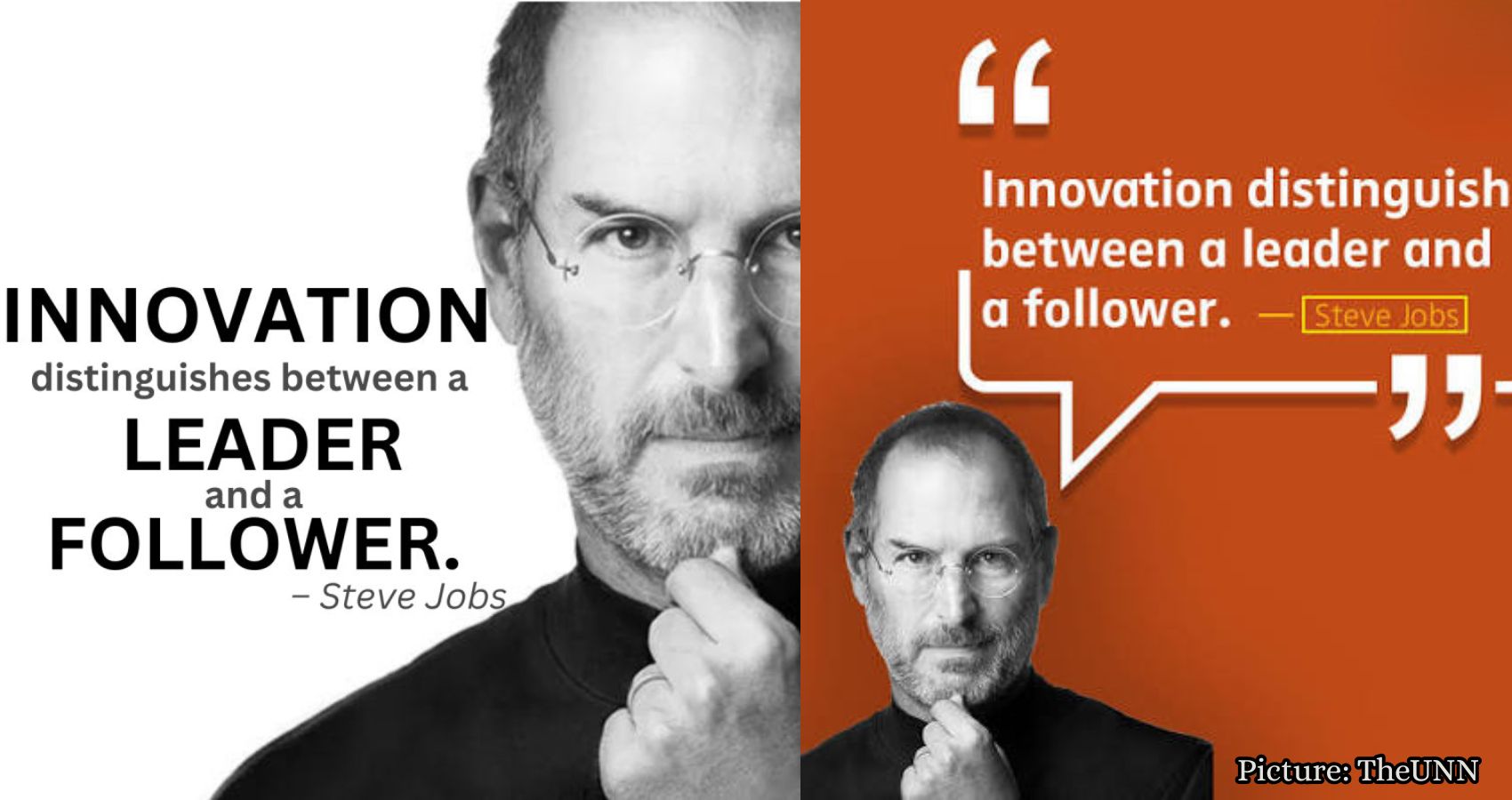
Steve Jobs’ assertion that “innovation distinguishes between a leader and a follower” emphasizes the critical role of creativity and risk-taking in effective leadership.
“Innovation distinguishes between a leader and a follower.” These words from Steve Jobs resonate deeply in today’s fast-paced world, where the ability to think creatively and embrace change is more crucial than ever. While some quotes inspire through their eloquence, others remain relevant because they encapsulate ideas that continue to shape our reality. Jobs’ statement about innovation falls squarely into the latter category.
At its core, this quote underscores the significance of innovation as a defining characteristic that separates true leaders from mere followers. Followers often observe existing paradigms and seek to enhance or replicate them. In contrast, leaders are inclined to ask a different question: What new possibilities can we create that do not yet exist?
For Jobs, innovation was intricately linked to creativity, curiosity, and the boldness to challenge conventional wisdom. This notion extends beyond the realm of technology; it applies to various fields, including business, education, science, and everyday life.
Leadership is not merely about authority or control. Exceptional leaders inspire others by introducing novel ideas and discovering more effective solutions to problems. Innovation empowers leaders to:
Challenge outdated concepts,
Approach problems with creativity,
Adapt to evolving circumstances,
Encourage diverse thinking,
Create new opportunities,
And develop products and experiences that stand out in a crowded marketplace.
This is why innovation has emerged as a vital quality in contemporary leadership.
Steve Jobs became synonymous with innovation during his tenure at Apple. His philosophy revolved around merging technology with design, simplicity, and user experience. Whether it was computers, music players, smartphones, or tablets, Jobs consistently focused on creating products that transformed how people engaged with technology.
His approach was not merely about adding features; it was about understanding user needs and crafting solutions that could make a significant impact. This perspective on innovation highlights that it is not always about inventing groundbreaking technology.
In fact, innovation can manifest in simpler forms, such as discovering a more efficient way to complete a task, devising a superior business strategy, developing a new educational method, or rethinking an old problem from a fresh angle. Ultimately, innovation begins with a willingness to question the status quo.
In summary, Jobs’ insight into the nature of innovation serves as a reminder that true leadership requires more than just following established paths. It calls for the courage to forge new ones, inspiring others to think differently and embrace change.
According to The Sunday Guardian, Jobs’ perspective on innovation continues to inspire leaders across various fields today.