
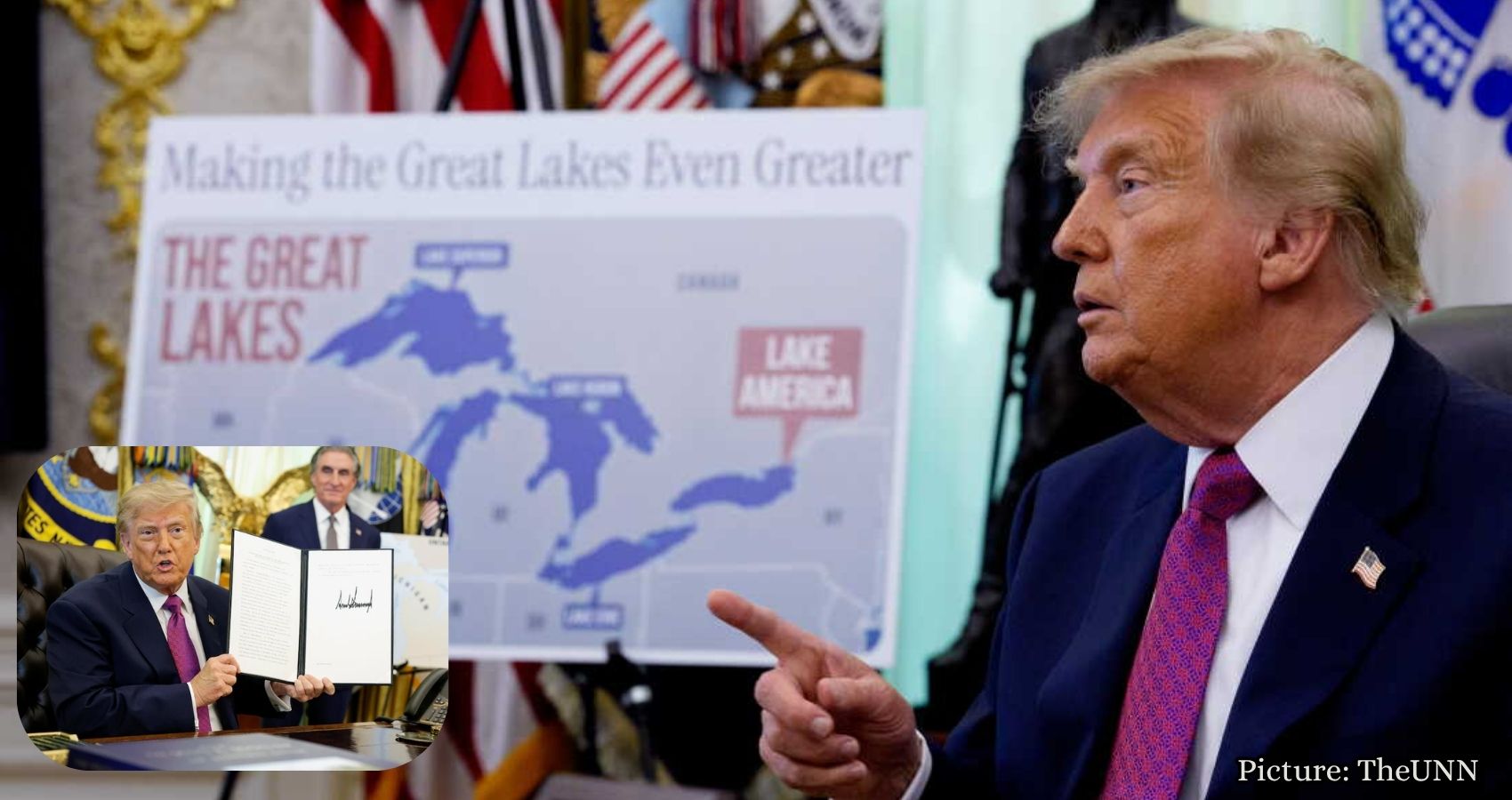
President Trump has signed an executive order renaming Lake Ontario as “Lake America,” a move that heightens tensions with Canada amid ongoing trade disputes.
President Donald Trump has signed an executive order directing U.S. federal agencies to refer to Lake Ontario as “Lake America.” This decision escalates tensions with Canada amid a growing trade dispute between the two nations.
The order was signed on Thursday, August 27, and mandates that the new name be used in official documents and maps produced by U.S. government agencies. This latest move follows Trump’s earlier decision to rename the Gulf of Mexico as the “Gulf of America” and to restore the name Mount McKinley for Denali.
It is important to note that this renaming affects only U.S. government usage. Trump does not have the authority to compel Canada to adopt the new name for the lake, which is shared by both countries. Canadian Prime Minister Mark Carney has stated that the body of water will continue to be referred to as Lake Ontario in Canada.
The renaming comes at a time when relations between Washington and Ottawa have soured over trade issues. Trump has been vocal in his criticism of Canada’s trade policies, arguing that the United States is treated unfairly by its northern neighbor.
Additionally, Trump has raised the prospect of Canada becoming the 51st U.S. state, a proposal that Canadian officials have firmly rejected. The trade dispute has intensified following the imposition of new tariffs on Canadian goods by the United States, prompting Canada to respond with retaliatory measures. This has added strain to an economic relationship characterized by deeply integrated supply chains.
While Trump’s order to rename Lake Ontario is largely symbolic, it exemplifies his administration’s use of geographic names to promote an “America First” political agenda. Canadian officials have dismissed the renaming effort, with Carney emphasizing that Lake Ontario has been known by that name for over 400 years, predating both Canadian Confederation and the founding of the United States.
This move is unlikely to alter how the lake is officially identified by Canadian authorities or on the international stage, meaning that the body of water may effectively have different names on either side of the border.
As tensions continue to rise, the implications of this renaming may extend beyond mere nomenclature, reflecting deeper issues in U.S.-Canada relations.
According to The American Bazaar, the ongoing trade disputes and tariffs have created a complex backdrop for this symbolic gesture.