
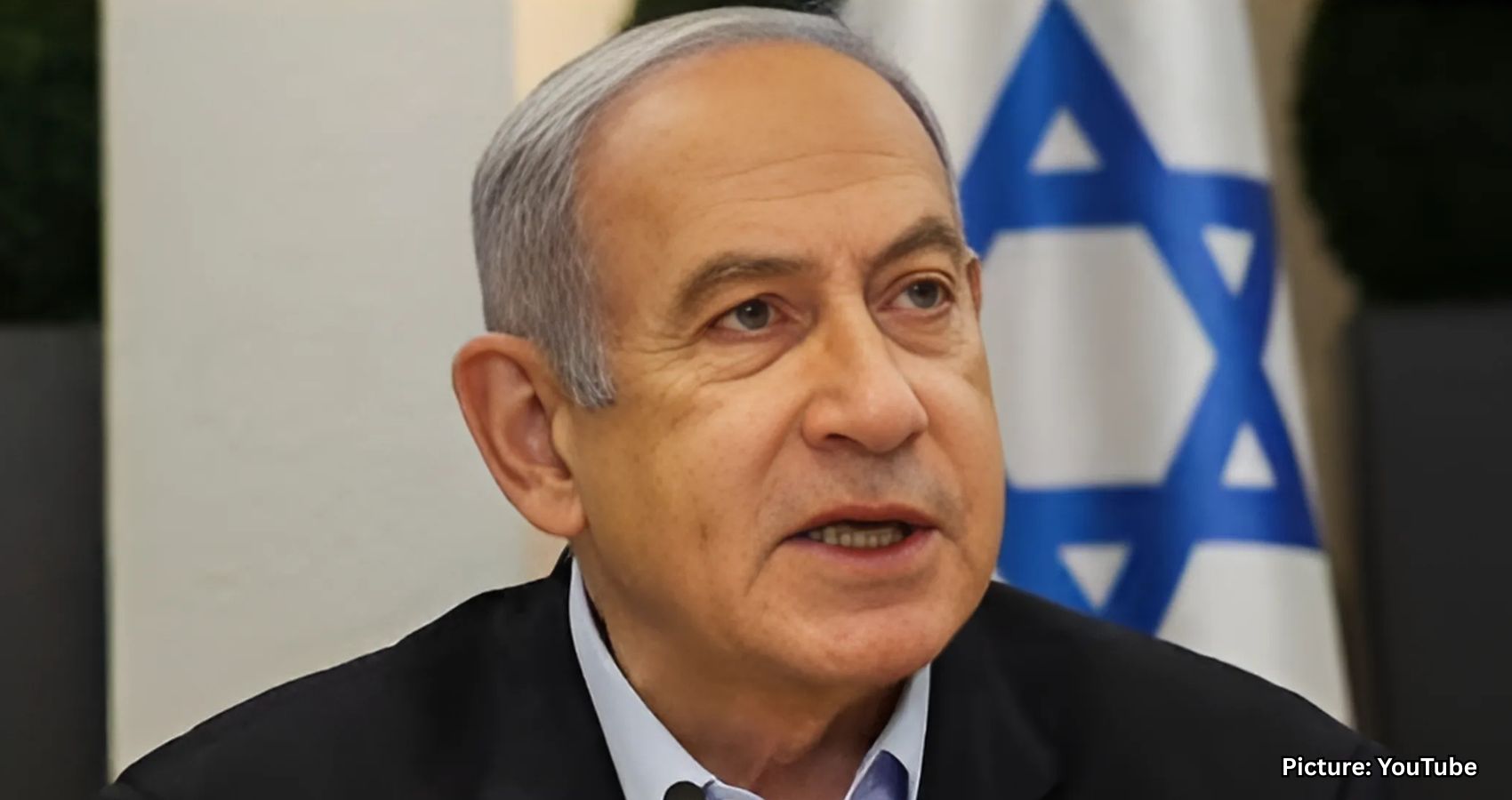
Israel’s upcoming election on October 27 serves as a referendum on Prime Minister Benjamin Netanyahu’s leadership amid deep national divisions following the October 7 Hamas attacks.
TEL AVIV, ISRAEL — As Israelis prepare to head to the polls on October 27, the air is thick with anticipation and uncertainty. Campaign banners featuring the faces of political leaders adorn buildings and streets, while discussions in homes, coffee shops, and family gatherings revolve around a singular question: Will Prime Minister Benjamin Netanyahu retain his position? This election is poised to be one of the most contentious in Israel’s recent history, with the potential for yet another political deadlock.
For many voters, this election has transformed into a referendum on accountability for the failures that led to the October 7, 2023, massacre — the deadliest attack in Israel’s history, carried out by Hamas terrorists. Netanyahu, who has been a dominant figure in Israeli politics for decades, has faced increasing pressure to accept personal responsibility for these security lapses. However, he has resisted calls for an independent state commission of inquiry, opting instead for a politically appointed investigation, a move that has drawn fierce opposition from bereaved families.
The divisions within Israeli society, however, did not begin with the October 7 attacks. In the months leading up to the tragedy, hundreds of thousands of Israelis took to the streets to protest Netanyahu’s proposed judicial overhaul, which critics argued would undermine the nation’s democracy. This unrest even spilled into the military, where reservists threatened to suspend volunteer service, raising concerns about Israel’s overall preparedness. Some analysts suggest that this turmoil projected a sense of weakness to Israel’s adversaries, although the extent to which it influenced Hamas’s decision to attack remains a matter of debate.
Three years after the massacre, these divisions have only deepened, making the upcoming vote intensely personal for many. Political allegiances have strained friendships and divided families, with the national discourse often boiling down to a binary choice: support Netanyahu, widely known as “Bibi,” or oppose him.
For families who lost loved ones on October 7, the stakes are particularly high. Shir Shai, who lost her brother Yaron, an Israeli soldier killed during the attack, delivered a poignant message to those contemplating another vote for Netanyahu. “If you nevertheless decide to vote again for the man who brought disaster upon us and his accomplices, I have one personal request: Don’t come here anymore,” she stated during her brother’s memorial ceremony. Shai urged voters to consider their choice carefully, emphasizing the need to honor the fallen rather than perpetuate past failures.
Conversely, some bereaved families have expressed gratitude towards Netanyahu, crediting him with maintaining a firm stance through years of conflict. They argue that the responsibility for the attack lies primarily with Israel’s military and intelligence establishments, which failed to anticipate Hamas’s actions.
The atmosphere leading up to the election has become increasingly charged, with a bitter campaign intensifying the divisions. Just days before the election, Netanyahu shared an AI-generated image depicting a nuclear explosion over Tel Aviv, warning of the existential threat posed by Iran if voters choose a leader unable to confront the regime.
Concerns extend beyond the election results themselves, as Israeli police are preparing for potential unrest following the polls. Experts have cautioned about the possibility of disputes over the legitimacy of the results, drawing parallels to the January 6, 2021, attack on the U.S. Capitol.
As the opposition unites in its ambition to unseat Netanyahu, it remains fragmented regarding post-election governance. Neither political bloc is guaranteed a parliamentary majority, and the final outcome may take weeks to determine.
On Election Day, polling stations will open at 7 a.m. and close at 10 p.m. local time. This day is designated as a national holiday in Israel, allowing voters ample opportunity to cast their ballots. Eligible voters must be Israeli citizens aged 18 and older, typically voting at their assigned polling stations. Most Israelis living abroad cannot vote remotely, although exceptions exist for certain official representatives.
Israel employs a parliamentary system where voters select political parties rather than individual candidates for prime minister. The Knesset, Israel’s parliament, consists of 120 seats allocated through a system of nationwide proportional representation. Each party submits a ranked list of candidates, and the number of seats it receives corresponds to its share of the national vote. To enter parliament, a party must secure at least 3.25% of the valid votes; those falling below this threshold receive no seats, which can significantly impact the balance between rival political blocs.
Major television networks in Israel are expected to release exit polls immediately after voting concludes. These projections will provide initial insights into how many seats each party may win and whether Netanyahu or his rivals are better positioned to form a coalition. However, exit polls are not official results, and even minor discrepancies in the final vote can determine whether parties cross the electoral threshold.
Actual vote counts will emerge as ballots are tallied, with preliminary results expected shortly after polls close. The Central Elections Committee has scheduled the publication of official results for November 4, eight days after the election.
Netanyahu, 77, leads the conservative right-wing Likud party and aims to extend his record tenure as Israel’s longest-serving prime minister. His main challenger is Gadi Eisenkot, 66, a former chief of staff of the Israel Defense Forces, who leads the centrist Yashar party and presents himself as an alternative to Netanyahu’s leadership. Other notable figures include former Prime Ministers Naftali Bennett and Yair Lapid, as well as former Defense Minister Avigdor Lieberman and right-wing populist allies Itamar Ben-Gvir and Bezalel Smotrich. Arab political parties, such as Ra’am and the Joint List, could also play a crucial role in shaping the final parliamentary balance.
The pivotal number in Israeli politics is 61 — the majority required in the 120-seat Knesset. No single party has ever won enough seats to control parliament independently, necessitating coalitions with other factions. Thus, the party that secures the most seats does not automatically lead the government; rather, the decisive question is which leader can garner enough parliamentary support to govern.
Once the official results are published, Israeli President Isaac Herzog will consult representatives from the newly elected parliamentary factions. Within seven days, he must assign a member of the Knesset the task of forming a government. The president typically selects the candidate deemed most likely to assemble a governing coalition, who may not necessarily be the leader of the largest party. This candidate has an initial 28 days to negotiate agreements with other parties, with a possible extension of up to 14 additional days.
If the proposed government fails to win a confidence vote in the Knesset, the president can invite another lawmaker to attempt to form a government, granting that individual 28 days without an extension. If that effort also fails, a majority of 61 lawmakers can request that another candidate be given 14 days to try. Should no government emerge, Israel may face yet another national election.
Coalition negotiations can be protracted, often taking weeks or even months. According to the Israel Democracy Institute, the process of forming a government has historically ranged from 20 to 100 days. Until a new government is sworn in, the outgoing administration remains in office.
This election marks the first national vote since the October 7 Hamas-led attacks, which ignited the ongoing war in Gaza and raised significant questions regarding Israel’s security leadership. Beyond Netanyahu’s political future, the next government will grapple with critical decisions surrounding national security, the future of Gaza, military conscription, relations with the United States, and regional diplomatic ties. With pre-election polling indicating no clear path to a parliamentary majority for either major political bloc, the outcome of this contest could remain unresolved long after the votes are counted, according to Fox News.