
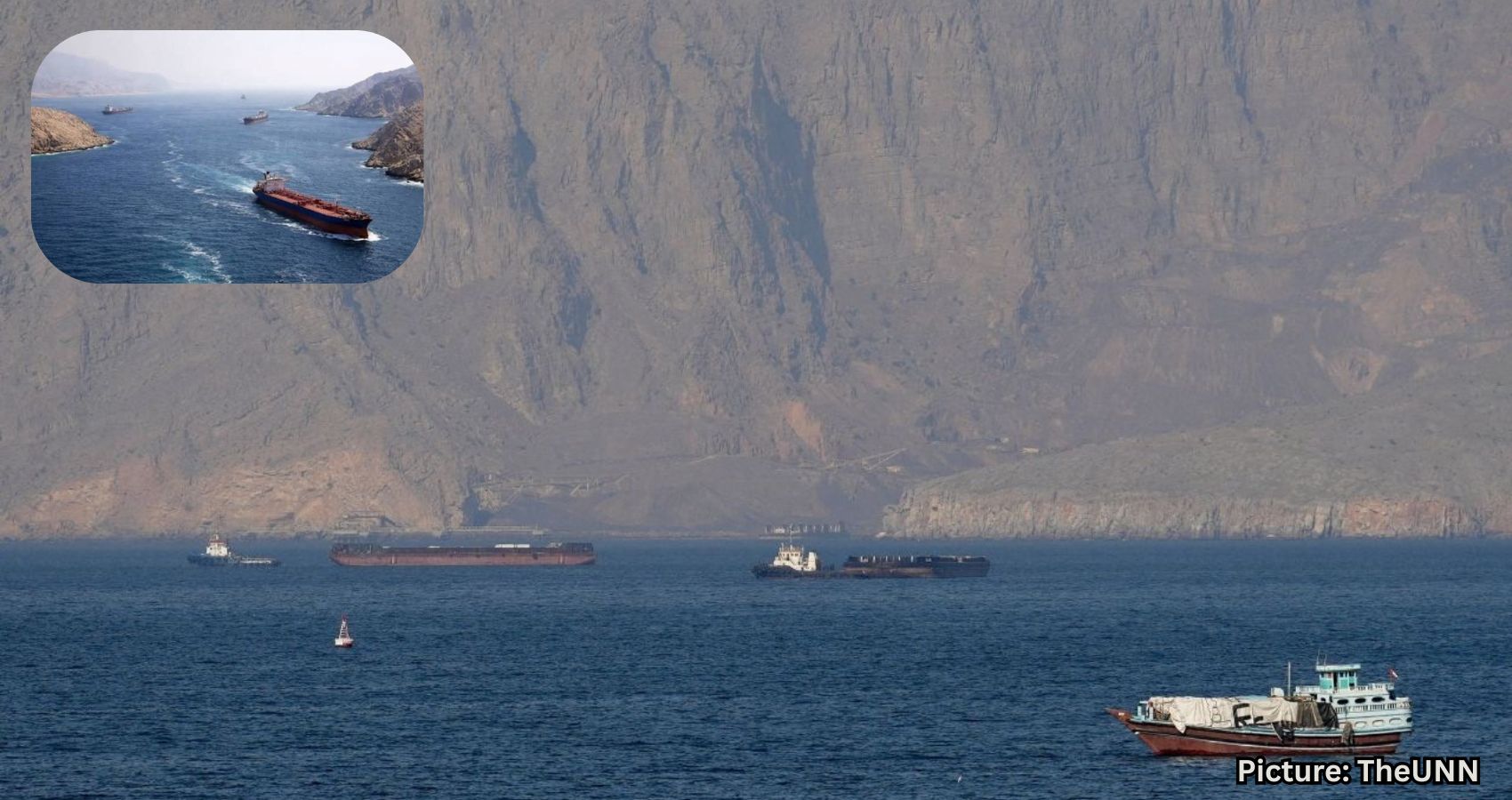
The Strait of Hormuz will remain closed until the U.S. meets specific conditions outlined in the Islamabad Memorandum of Understanding, according to Iranian Parliament Speaker Mohammad Bagher Ghalibaf.
The Strait of Hormuz is set to remain closed until the United States fully implements the conditions established in the interim Islamabad Memorandum of Understanding (MoU), as stated by Iranian Parliament Speaker and chief negotiator Mohammad Bagher Ghalibaf. This development marks a significant escalation in the ongoing tensions between the U.S. and Iran, with the situation in the Strait of Hormuz reaching a critical juncture.
The breakdown of the Islamabad MoU has intensified the crisis surrounding the strategic waterway, which is vital for global oil transportation. Ghalibaf emphasized that Iran’s leadership will not permit a normal reopening of the strait until the U.S. fulfills its commitments under the agreement.
Among the core demands reiterated by Ghalibaf during a recent parliamentary session are the lifting of the naval blockade on Iranian ports, the removal of economic sanctions targeting Iranian oil exports, the unconditional release of Iran’s frozen assets abroad, and the cessation of all U.S. military operations and threats in the region.
The geopolitical implications of this standoff are significant. Shipping companies and commercial tankers have largely ceased transits through the strait due to heightened risks. The vulnerability of this crucial passage was starkly highlighted when a vessel was struck by an unknown projectile, resulting in engine damage and a crew casualty.
In response to the escalating tensions, global oil markets reacted sharply, with Brent crude futures rising above $90 a barrel. This surge has intensified international concerns regarding energy-driven inflation and its potential impact on the global economy.
The standoff continues as a fragile ceasefire, mediated by Pakistan, nears expiration. U.S. President Donald Trump previously asserted that the American naval blockade would remain in full force until a definitive agreement is reached. In contrast, Iranian officials have maintained that commercial corridors will only be accessible via routes authorized by Tehran and Oman.
The timeline of the Islamabad MoU’s collapse reveals a rapid deterioration of relations. On June 17, 2026, the U.S. and Iran signed a 14-point interim agreement in France, aiming to halt an air war that had begun in late February. This deal established a temporary 60-day negotiation framework to lift blockades and restore commercial shipping.
However, the truce fractured almost immediately. By late June, Iran resumed restrictions on vessels, claiming that the U.S. and Israel had violated the agreement through continued military activity. By early July, the interim truce had completely collapsed after Iran attacked non-compliant commercial ships, prompting U.S. retaliatory airstrikes on Iranian targets.
The official 60-day deadline expired on August 17, 2026, with the U.S. choosing not to seek an extension. Instead, the U.S. declared the agreement void and demanded Iran’s complete diplomatic surrender, further complicating the situation.
The battle for sovereignty over the Strait of Hormuz has led to a severe war of words between the two nations. President Trump has claimed that the U.S. holds “full control” of the shipping lane, even suggesting the possibility of declaring the strait an American territory. Meanwhile, Vice President J.D. Vance indicated that the administration would maintain an indefinite naval blockade of Iranian ports until long-term security changes are secured.
In stark contrast, Iranian officials have forcefully rejected these claims. Deputy Foreign Minister Kazem Gharibabadi asserted, “The Strait of Hormuz has been Iranian, is Iranian, and will remain Iranian; this strait will only be closed and opened under Iran’s command.”
With diplomatic avenues closed, the risks to maritime assets have escalated to critical levels. International maritime monitoring agencies have raised regional risk assessments to “critical,” warning that attacks are almost certain. Most international shipping firms have frozen transits through the passage entirely.
On the day of the MoU’s expiration, UK Maritime Trade Operations (UKMTO) confirmed that a commercial vessel was struck and damaged by an unknown projectile while attempting to exit the strait, underscoring the dangers present in the region.
The closure of the Strait of Hormuz has significant economic implications, affecting approximately 25% of the world’s seaborne oil trade and 20% of global liquefied natural gas (LNG). This situation has resulted in widespread economic shockwaves, with Brent crude oil prices quickly surging toward $115 a barrel, dragging down global equity markets.
Developing nations and major buyers in Asia, such as China—which imports roughly 90% of Iran’s oil exports—are facing acute energy crises. To conserve energy, several Asian countries have implemented mandatory work-from-home periods, while Slovenia has become the first European Union nation to officially introduce fuel rationing.
The ongoing conflict has also made shipping uninsurable. Due to active sea mines, drone threats, and the activities of the Islamic Revolutionary Guard Corps (IRGC), war-risk insurance premiums have skyrocketed, making it prohibitively expensive for standard commercial vessels to secure coverage to enter the Persian Gulf.
The expiration of the Islamabad MoU on August 17, 2026, has resulted in a complete diplomatic deadlock, exacerbating a severe energy crisis and increasing the risk of military escalation in the Strait of Hormuz. With Brent crude surpassing $115 per barrel, the shutdown of this critical chokepoint is forcing immediate, costly shifts in global shipping routes and threatening a global recession, according to The Sunday Guardian.