
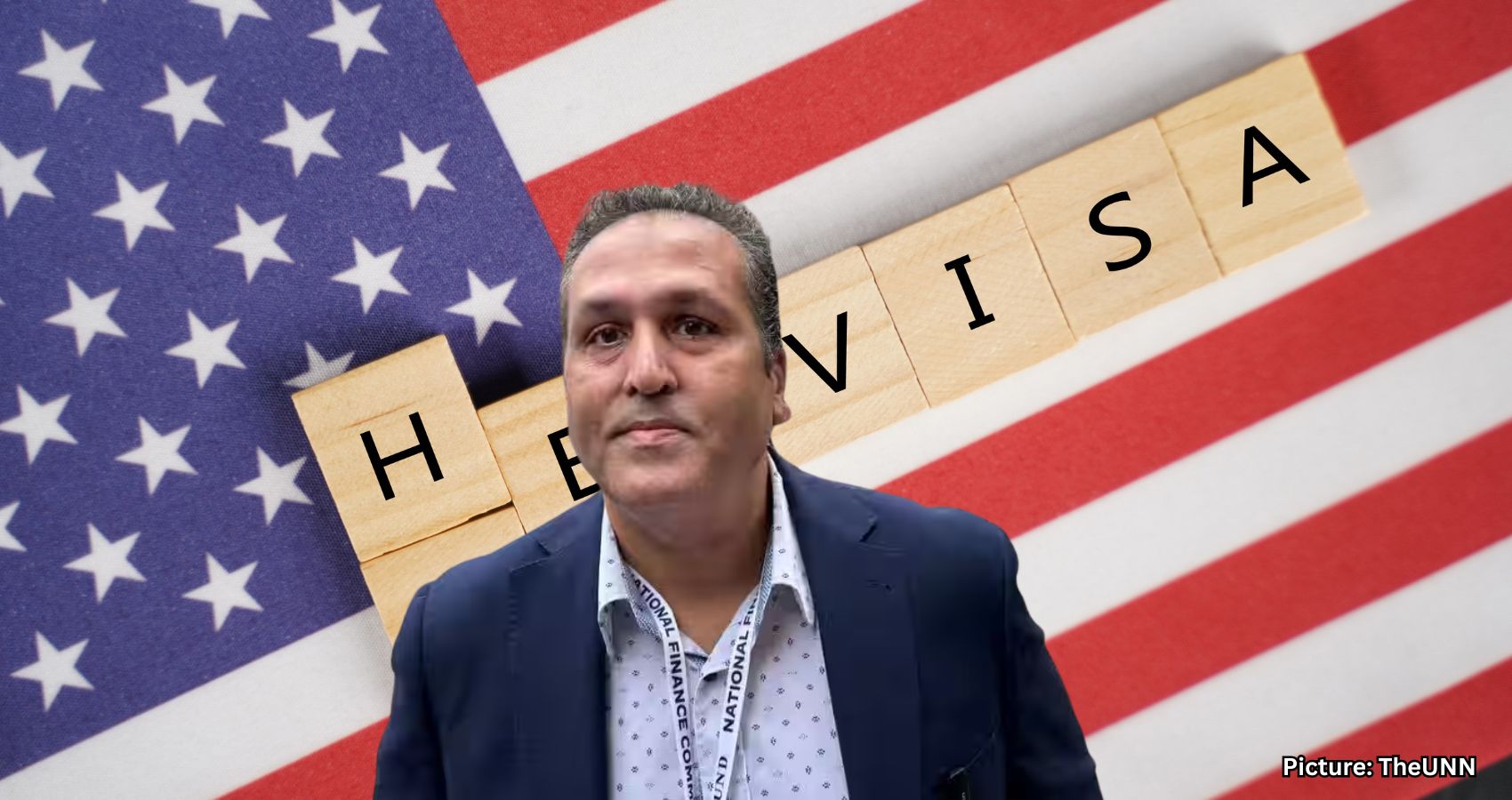
Ajay Bhutoria criticizes a proposed DHS regulation that would eliminate the 60-day grace period for H-1B visa holders following employment termination, arguing it jeopardizes immigrant families and the U.S. economy.
A new regulation proposed by the Department of Homeland Security (DHS) seeks to eliminate the 60-day grace period currently afforded to nonimmigrant visa holders, including H-1B, L-1, and O-1 workers, after their employment is terminated. This proposal, identified as RIN 1615-AD22, is presently under review by the federal Office of Management and Budget (OMB).
The proposed rule would remove the critical 60-day window that allows laid-off foreign workers to find new employment, transfer their visa status, or adjust their nonimmigrant classification while remaining legally in the United States. This change has raised significant concerns among immigrant advocates and community leaders.
Ajay Bhutoria, a former advisor to the Presidential Advisory Commission on Asian Americans, Native Hawaiians, and Pacific Islanders (AANHPI), has strongly condemned the proposal. In March 2023, while serving on the White House AANHPI Commission, Bhutoria successfully advocated for a policy recommendation to extend the grace period from 60 days to 180 days. This recommendation was based on the realities of corporate hiring practices, which often involve lengthy technical interview processes and extensive visa transfer paperwork that can take months to complete.
Bhutoria argues that eliminating the existing grace period will have dire consequences for legal immigrants who have significantly contributed to the technological and economic leadership of the United States. He stated, “I strongly condemn and slam this proposed DHS policy. Eliminating the 60-day grace period is inhumane and unworkable. When a worker faces a sudden termination, 60 days was already dangerously short. Stripping away this protection entirely leaves thousands of law-abiding individuals with zero time to wrap up their lives.”
He further elaborated on the potential fallout, saying, “People will not even have time to sell their homes, manage their leases, or transition their children out of schools. Families will be uprooted overnight, thrown into chaos through no fault of their own after dedicating years of hard work and tax contributions to this country.”
Bhutoria’s concerns extend to the broader implications for the South Asian immigrant community and the skilled workforce in the United States. He emphasized the importance of a compassionate and pragmatic approach, urging the DHS and the administration to withdraw the proposal and instead adopt a 180-day grace period that respects human dignity and protects America’s competitive edge.
The proposed elimination of the grace period poses immediate risks for workers. Without it, termination of employment would instantly render a worker and their dependent spouse and children out of legal status, necessitating immediate departure or risking a Notice to Appear (NTA) in immigration court.
Additionally, the impact on South Asian families could be profound. Hundreds of thousands of South Asian professionals in the tech, healthcare, and engineering sectors hold H-1B status. The removal of the grace period could lead to severe psychological distress, financial instability, and disruptions in the education of children raised in the U.S.
Moreover, depriving workers of the necessary time to transition could result in a loss of top talent. This would not only benefit competing economic nations but also deprive U.S. companies of critical expertise essential for maintaining their competitive advantage.
In light of these concerns, Bhutoria is calling on South Asian community organizations, business leaders, and advocacy groups to prepare for public comments once the rule is officially published in the Federal Register. He emphasizes the need for the administration to fully understand the potential impact of this proposal on immigrant families and the economy.
According to India Currents, the proposed changes could have far-reaching consequences for the immigrant workforce in the United States.