
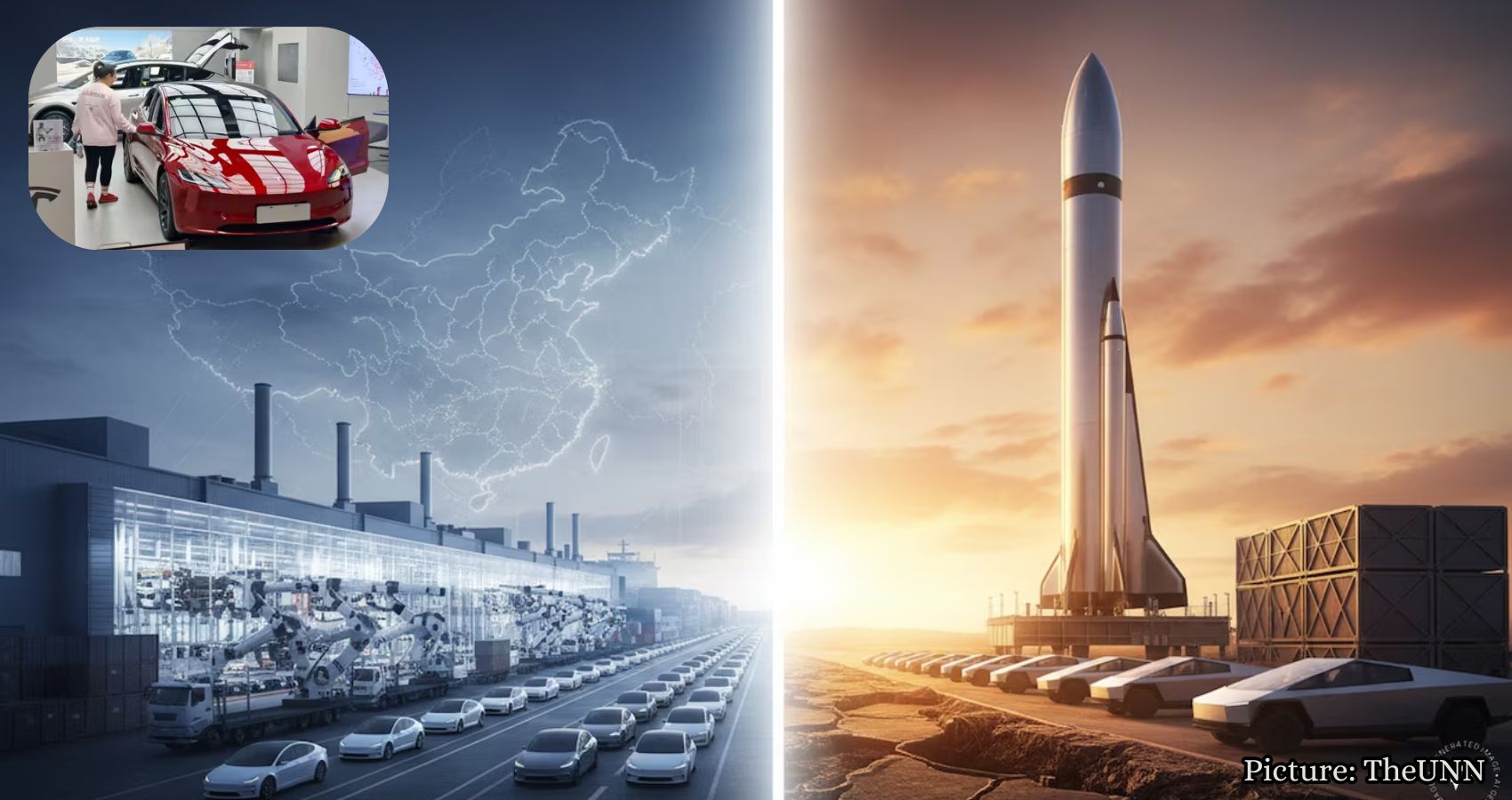
Tesla is reportedly exploring the sale of its China operations as it considers a potential merger with SpaceX, which may face regulatory challenges due to geopolitical tensions.
Tesla is reportedly contemplating the sale of its China business in light of a potential merger with SpaceX, according to a report from The Wall Street Journal. The article cites sources familiar with the discussions, although CEO Elon Musk has publicly denied these claims, stating on X, “This has never even come up in a discussion ever… Absurdly fake news.” Despite Musk’s dismissal, Tesla shares experienced a 2% increase in premarket trading following the news.
The report indicates that some Tesla executives have been instructed to prepare for a possible separation of the China business, which could take the form of a spinoff, sale, or closure. This development comes as Tesla’s Shanghai Gigafactory plays a crucial role in the company’s global manufacturing strategy, producing over half of all Tesla vehicles and serving as a significant export hub.
China stands as Tesla’s second-largest market, trailing only the United States, but the company faces stiff competition from local electric vehicle manufacturers. Notably, Tesla sources more than 95% of the components for its vehicles produced in China from a vast network of domestic suppliers. The Shanghai Gigafactory boasts an annual production capacity exceeding 950,000 vehicles, many of which are exported to Europe, Canada, and the Asia-Pacific region.
The factory is responsible for manufacturing the Model 3 and Model Y at Tesla’s lowest production costs, supported by over 400 local suppliers. Recent data shows that deliveries of these two models increased by 24.4% year-over-year, while second-quarter sales and exports from the Shanghai facility rose by 32.8%.
A merger between Tesla and SpaceX would likely encounter significant regulatory scrutiny, particularly due to SpaceX’s extensive collaborations with U.S. military and intelligence agencies. Given the current strained relations between Beijing and Washington, the continued ownership of Tesla’s major operations in China could complicate the merger process.
Speculation regarding a Tesla-SpaceX merger is not new, but it has intensified following SpaceX’s record $75 billion initial public offering (IPO) last month. SpaceX is currently valued at approximately $1.48 trillion, while Tesla’s market capitalization stands at around $1.22 trillion. Musk has not ruled out the possibility of a merger, suggesting that the operations of the two companies are becoming increasingly intertwined.
Analysts at JPMorgan have highlighted the “practical bottleneck” of obtaining regulatory approval for such a merger, particularly in light of Chinese concerns regarding SpaceX’s contracts with the U.S. government.
SpaceX President and Chief Operating Officer Gwynne Shotwell has acknowledged the potential advantages of a merger, noting that it could simplify management across Musk’s various enterprises. Additionally, discussions among executives have included the possibility of establishing a separate sales entity to manage exports from Tesla’s Shanghai factory. This could involve creating distinct office systems and limiting access for China-based employees to other parts of the company’s operations.
The implications of these developments are significant, as they not only affect Tesla and SpaceX but also reflect broader geopolitical dynamics. The potential merger, if it proceeds, could reshape the landscape of both the automotive and aerospace industries.
According to The Wall Street Journal, the ongoing discussions and considerations surrounding Tesla’s operations in China will be critical as the company navigates the complexities of a merger with SpaceX.