
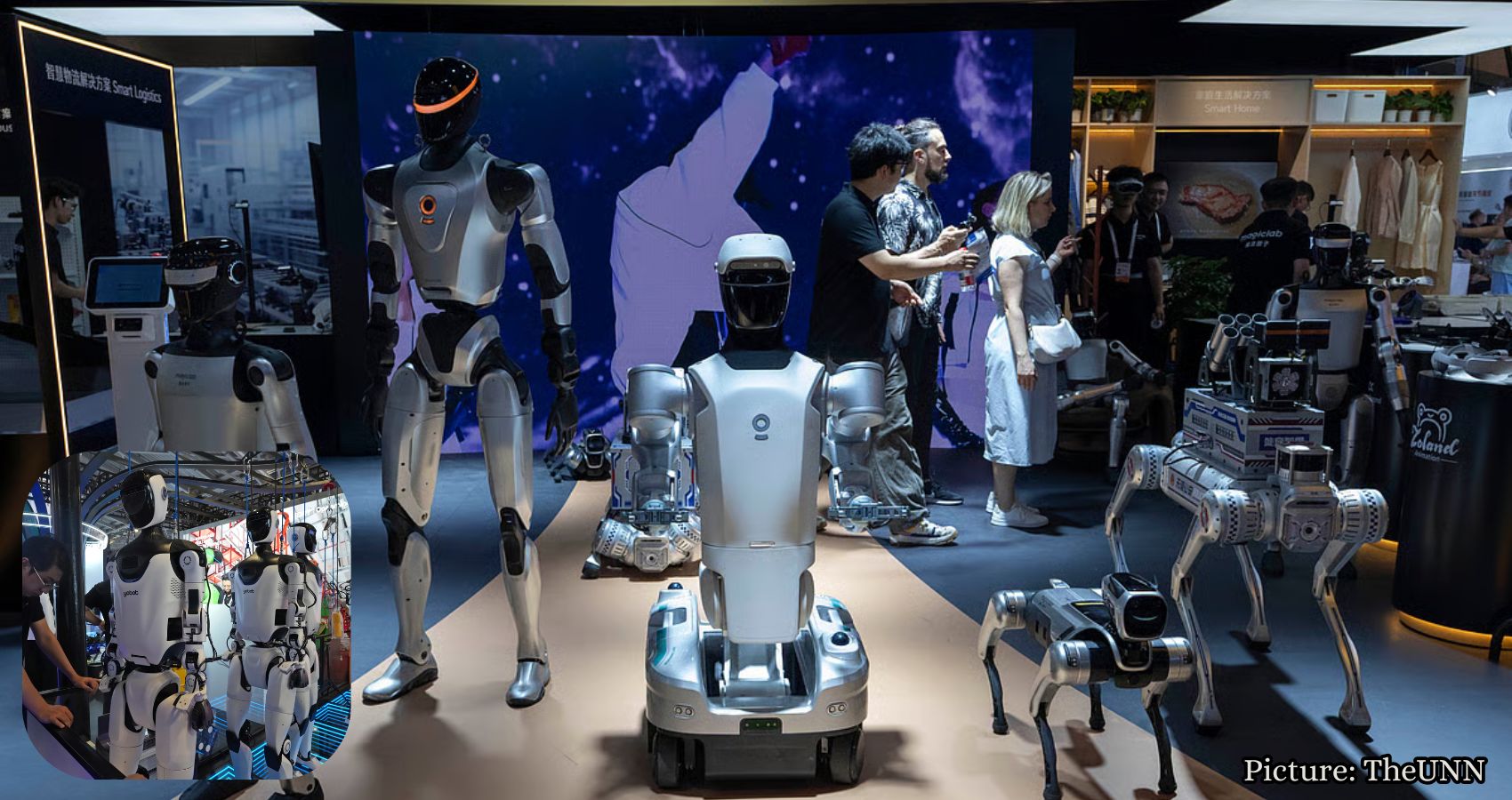
The FCC has added foreign-produced humanoid robots and connected power inverters to its Covered List, citing national security concerns primarily focused on China.
In a significant move aimed at bolstering national security, the Federal Communications Commission (FCC) has added foreign-produced humanoid robots and connected power inverters to its Covered List. This action effectively blocks many new models from receiving the necessary U.S. authorization required for importation and sale.
Humanoid robots, which can assist in various tasks from carrying equipment in factories to aiding researchers in artificial intelligence testing, come equipped with cameras and internet connectivity. While these features enhance their functionality, they also raise concerns about surveillance and data security. The Trump administration has identified this combination as a potential national security threat.
On July 28, the FCC’s decision to include advanced foreign robots and connected power inverters in its Covered List was announced. Although the ruling applies broadly to foreign-produced equipment, the focus is predominantly on China. U.S. officials aim to mitigate risks associated with surveillance and cyberattacks while simultaneously reducing reliance on Chinese technology. The hope is that this will encourage companies to shift more manufacturing operations to the United States.
As humanoid robots transition from novelty demonstrations to practical applications in factories and laboratories, their capabilities have expanded significantly. Four-legged robots are now being developed for tasks such as inspecting hazardous areas and patrolling large properties. However, these machines are equipped with sensors that allow them to map environments, recognize objects, and interact with people, raising the stakes for data security.
The FCC’s concerns center around the potential for hackers to exploit these robots. If a hacker gains access to a robot’s system, they could collect sensitive information or manipulate the robot’s movements. This risk is not merely theoretical; recent security reports involving connected devices, such as Yarbo robot mowers, have highlighted vulnerabilities related to remote access and live camera feeds.
Federal national security agencies have expressed alarm that some foreign-made robots could pose unacceptable cybersecurity and supply chain risks. The fear is that hostile governments could use these technologies to monitor American citizens or gather intelligence from sensitive locations. The implications of a hacked robot are severe, as it could traverse a facility while recording sensitive information or operating near critical equipment.
Importantly, the FCC’s action does not require Americans to surrender robots they already own, nor does it mandate that retailers remove all foreign robots from their shelves. Instead, the addition of foreign-produced advanced robotic devices to the Covered List means that new models will not receive FCC authorization. Most connected electronic products require this approval before they can be imported, marketed, or sold in the U.S. As a result, the restrictions primarily impact new models that have yet to receive authorization, while previously approved products can remain available. However, the FCC retains the authority to revoke earlier approvals if necessary.
Companies may still seek conditional approval for their devices, allowing federal national security agencies to assess whether they present an acceptable level of risk. It is anticipated that many non-Chinese suppliers will receive exemptions, indicating that the restrictions will predominantly affect Chinese manufacturers.
This regulatory action follows a bipartisan proposal introduced by lawmakers to prevent federal agencies from utilizing certain robots linked to foreign adversaries. The FCC’s recent decision extends this initiative further, potentially blocking new products from entering the broader American market.
While power inverters may not garner the same attention as humanoid robots, they play a critical role in the U.S. energy system. These devices convert direct current electricity into alternating current, which is essential for homes, power grids, and data centers. Many modern inverters are connected to the internet, allowing operators to monitor performance and install updates remotely. However, this connectivity also opens up potential vulnerabilities, as federal officials worry that foreign entities could interfere with these systems or compromise sensitive energy data.
Chinese companies have emerged as significant players in the advanced robotics market, often offering competitive products at prices that American developers find challenging to match. The FCC’s ban is expected to impact companies like Unitree, which holds a substantial share of the global humanoid robot market. Unitree has collaborated with Nvidia to integrate its AI chips into robot platforms, with assurances that data from these robots will remain in the U.S. Many of Unitree’s customers are universities and research institutions in America.
In response to the FCC’s actions, the Chinese government has criticized the U.S. for unfairly targeting Chinese businesses. The Chinese embassy in Washington has warned that Beijing may retaliate if the restrictions adversely affect Chinese interests, while China’s Foreign Ministry has labeled the policy as protectionist, arguing that it could harm American companies and consumers.
The foreign robot ban may provide U.S. manufacturers with an opportunity to grow in a less competitive domestic market. However, it could also pose short-term challenges for researchers and startups that rely on affordable Chinese robots for testing software or training AI systems. The loss of access to newer models may increase costs and limit available hardware for experimentation.
Moreover, the restrictions could complicate partnerships between U.S. chipmakers and Chinese robotics companies, potentially slowing down certain projects as Washington seeks to bolster domestic production. Building a competitive American robotics supply chain will require significant investment and skilled labor, as well as securing essential components like motors and sensors. Until these needs are met, tighter restrictions may create a gap between the robots American developers desire and the machines they can afford.
As connected devices like robot vacuums and lawn mowers become increasingly common, consumers are encouraged to consider the security measures in place for these products. Before purchasing, it is advisable to check for an FCC identification number and to understand how the company protects user data. Consumers should also be cautious of devices that do not provide clear regulatory information.
In conclusion, while the FCC’s ban on foreign robots aims to enhance national security, it raises important questions about innovation and competition in the robotics field. The success of this policy will depend on the development of secure products, robust testing, and sufficient domestic production capabilities to provide consumers with genuine choices.
For more information on this topic, refer to Fox News.