
The Trump administration has initiated its first case with the Alien Terrorist Removal Court, a rarely used judicial body established to deport noncitizens suspected of terrorism.
The Justice Department has filed its inaugural case with the Alien Terrorist Removal Court (ATRC), a specialized judicial body created under a 1996 law that has never before been utilized to deport a terrorism suspect. This unprecedented move aims to deport an unnamed illegal immigrant believed to be involved in terrorism, marking a significant moment in the court’s nearly 30-year history.
On July 15, the Justice Department submitted its first application for a removal order to the ATRC, invoking a little-known legal framework that allows the government to deport noncitizens suspected of terrorism using classified evidence. If successful, this action could breathe new life into what some legal scholars have termed a “zombie” court, transforming it into a potent tool for the removal of suspected terrorists.
A spokesperson for the Justice Department emphasized the administration’s commitment to utilizing all available resources to address threats posed by foreign terrorists. “This Department of Justice will use every tool available to bring alien terrorists to justice and remove them from the United States, including by use of this court established by Congress in 1996,” the spokesperson stated in a communication with Fox News Digital.
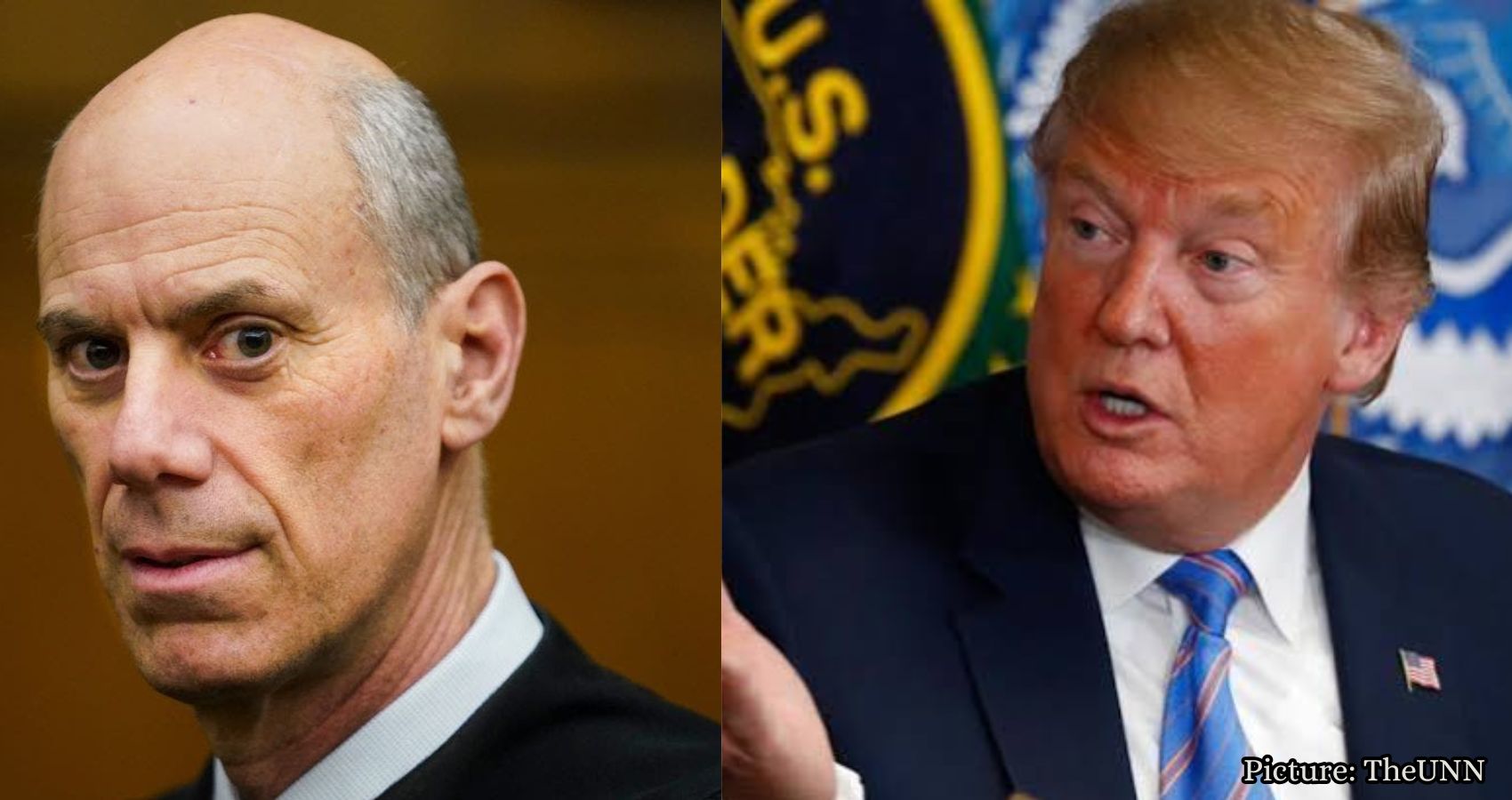
This development follows remarks made by Chief U.S. District Judge James Boasberg in Washington, D.C., who suggested the ATRC as a viable alternative for handling terrorism-related deportation cases. Boasberg had questioned the Trump administration’s reliance on the Alien Enemies Act during a March hearing, highlighting the ATRC’s potential role in addressing national security concerns.
“In fact, Congress has an answer for us, doesn’t it? Because they created the Alien Terrorist Removal Court,” Boasberg stated during the hearing. His comments came as he presided over litigation challenging the administration’s use of the Alien Enemies Act to deport alleged members of the Venezuelan gang Tren de Aragua. He temporarily halted the administration’s use of the wartime law for these removals while the courts assess the legality of Trump’s approach.
Hans von Spakovsky, a senior legal fellow at Advancing American Freedom, expressed support for the Justice Department’s decision to utilize the ATRC. “I think it is a sign of negligence, frankly, of prior presidents that they did not use this special court, this special procedure that was specifically set up by Congress, so that they could quickly get aliens — aliens who were either terrorists or supported terrorist activities — out of the U.S.,” von Spakovsky remarked.
The one-page sealed application submitted to the ATRC contained minimal information, omitting the individual’s identity, the alleged conduct, and the specific sections of the anti-terrorism law cited by the Justice Department. Following arguments from Justice Department officials, ATRC Chief Judge Joan N. Erickson requested additional information before proceedings could advance.
“The Court had questions about the nexus that the government alleges between the actions of the respondent and the specific sections and subsections it invokes with respect to those actions,” Erickson noted. She granted the Justice Department until Wednesday to provide further documentation.
The ATRC was established through the Antiterrorism and Effective Death Penalty Act, which was signed into law by President Bill Clinton in 1996. At the time, Clinton stated, “From now on we can quickly expel foreigners who dare to come to America and support terrorist activities.”
The court is composed of five federal district judges who serve five-year terms and is tasked with handling terrorism-related deportation cases where the government claims that disclosing evidence would jeopardize national security. In such instances, the government provides the respondent with an unclassified summary instead of the classified evidence itself.
Interestingly, during the law’s passage, then-Senator Joe Biden criticized the ATRC, expressing concerns over the potential for secret hearings and evidence. “You and me, Judge—me, the prosecutor; you, the judge—let’s deport him in a secret hearing, using secret evidence,” Biden remarked. “We know you did it, and we can’t tell you how we know. Now I think that is about as un-American as it gets.”
The Justice Department’s case before the ATRC comes amid ongoing challenges faced by the Trump administration from federal judges, who have frequently blocked or delayed key aspects of its immigration enforcement agenda. Von Spakovsky believes that the ATRC could streamline terrorism-related deportation cases and reduce interference from what he describes as “rogue” liberal judges.
“I think this court is a much stronger tool the Justice Department can use, and it’s going to make it much tougher for what I consider to be rogue judges to interfere with, and hopefully prevent, the removal of immigrants,” von Spakovsky stated.
This latest development underscores the evolving landscape of immigration enforcement and the legal mechanisms available to the government in its efforts to address national security threats.
According to Fox News Digital.