
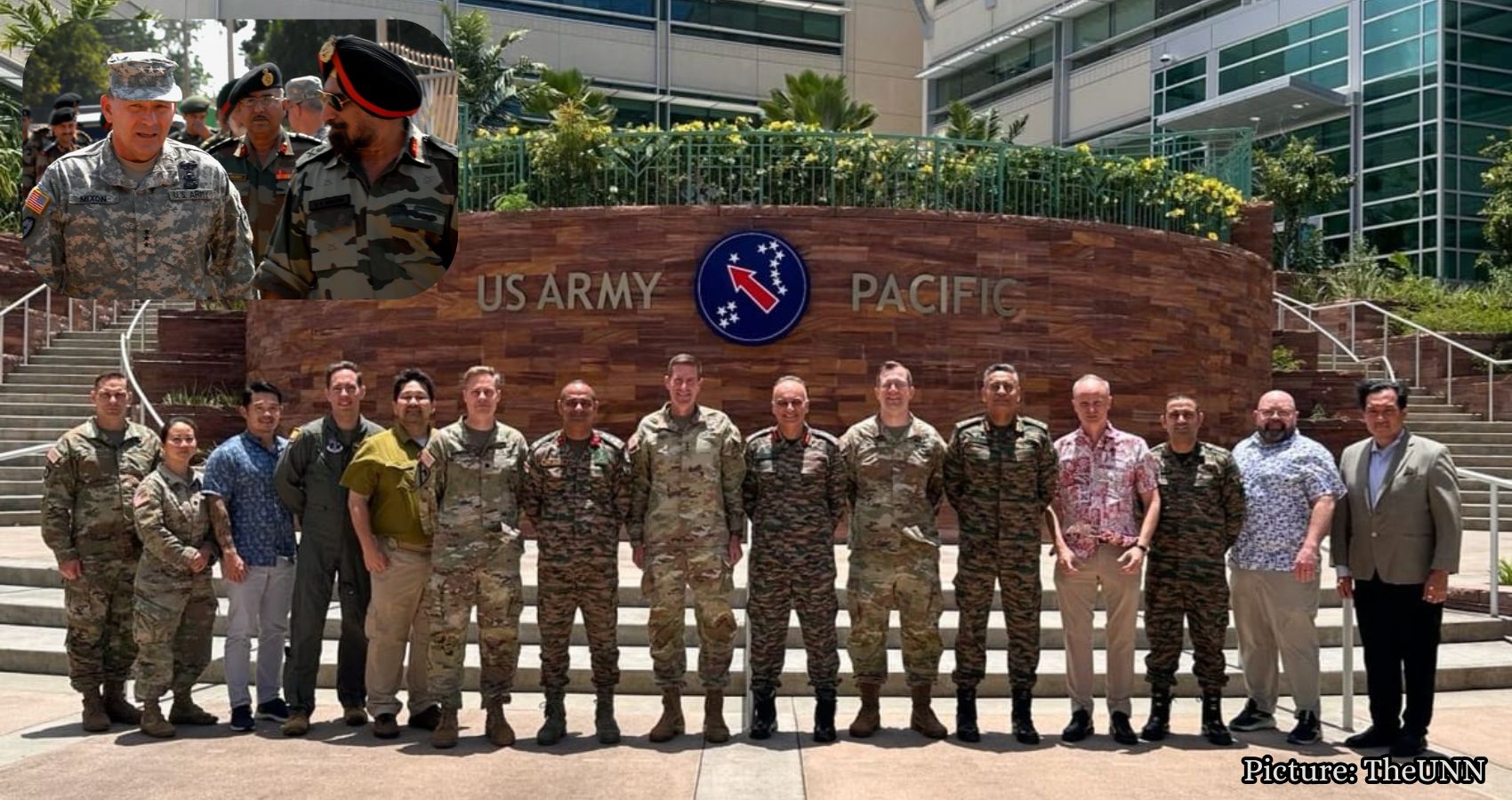
Recent incidents involving foreign nationals with military ties have sparked significant security concerns in India, particularly regarding border security and potential cross-border networks.
NEW DELHI – A series of reports concerning foreign nationals with alleged military backgrounds operating in and around India have raised alarms about border security, cross-border networks, and the potential use of the region as a transit route for illicit activities.
The latest incident involves the detention of Jordan Brown, a California resident who claimed to have served in the U.S. Navy. Brown was apprehended while allegedly attempting to cross into Nepal without the necessary travel documents. This incident follows closely on the heels of another case from March, where an American citizen was arrested for alleged involvement in military training alongside six Ukrainian nationals.
In a separate but related incident, the unexplained death of Terrence Arvelle Jackson, a serving officer with the U.S. Army’s elite 1st Special Forces Command (Airborne), has also drawn attention. Jackson died at a five-star hotel in Dhaka on August 31 of last year, leading to widespread media speculation regarding his activities in the region.
Initial reports from Bangladesh’s Weekly Blitz indicated that authorities in Dhaka suggested Jackson had died of natural causes. However, the circumstances surrounding his death—including the secrecy of his body’s removal, the confiscation of his belongings by U.S. Embassy officials, and his covert activities in the country—have led to concerns about a more complex narrative.
Jackson was reportedly involved in military training exercises at Saint Martin’s Island in the Bay of Bengal, raising questions about the nature of his presence in the region.
While these incidents may appear isolated and unconnected, they underscore a growing sense of unease amid regional instability. Experts emphasize the urgent need for enhanced vetting processes, improved intelligence-sharing, and stricter border controls, along with transparent investigations into such cases.
In the most recent incident, Brown was detained by India’s Sashastra Seema Bal (SSB) near Sonauli in Uttar Pradesh. During his apprehension, authorities recovered cash, mobile phones, and other items, but Brown was unable to provide documentation to substantiate his claims of military service. He is currently under investigation in accordance with the Foreigners Act.
Earlier this year, in March, the National Investigation Agency (NIA) of India apprehended Matthew Aaron VanDyke, an American citizen alleged to be a military warfare trainer, along with six Ukrainian nationals at airports in Kolkata, Delhi, and Lucknow.
VanDyke has been charged under the Unlawful Activities (Prevention) Act (UAPA) as part of an NIA investigation into suspected links with insurgent groups operating in Myanmar. He is currently in judicial custody at Tihar Jail in New Delhi, with court proceedings ongoing.
VanDyke gained notoriety during the Libyan Civil War in 2011, where he fought alongside rebel forces and was subsequently imprisoned. He later founded Sons of Liberty International (SOLI), an organization that reportedly provides military training and strategic advice to armed groups in conflict zones.
Investigators allege that VanDyke and the Ukrainian nationals intended to use India as a transit route to Myanmar in 2025 and 2026 to deliver drones and train ethnic armed groups. Seized electronic devices reportedly contained photos and videos of drone training sessions, further complicating the narrative surrounding their activities.
These incidents highlight the intricate security challenges facing India as it navigates a complex geopolitical landscape. The involvement of foreign nationals with military backgrounds raises critical questions about border security and the potential for regional instability.
As authorities continue to investigate these cases, the need for comprehensive security measures and international cooperation becomes increasingly apparent, according to IANS.