
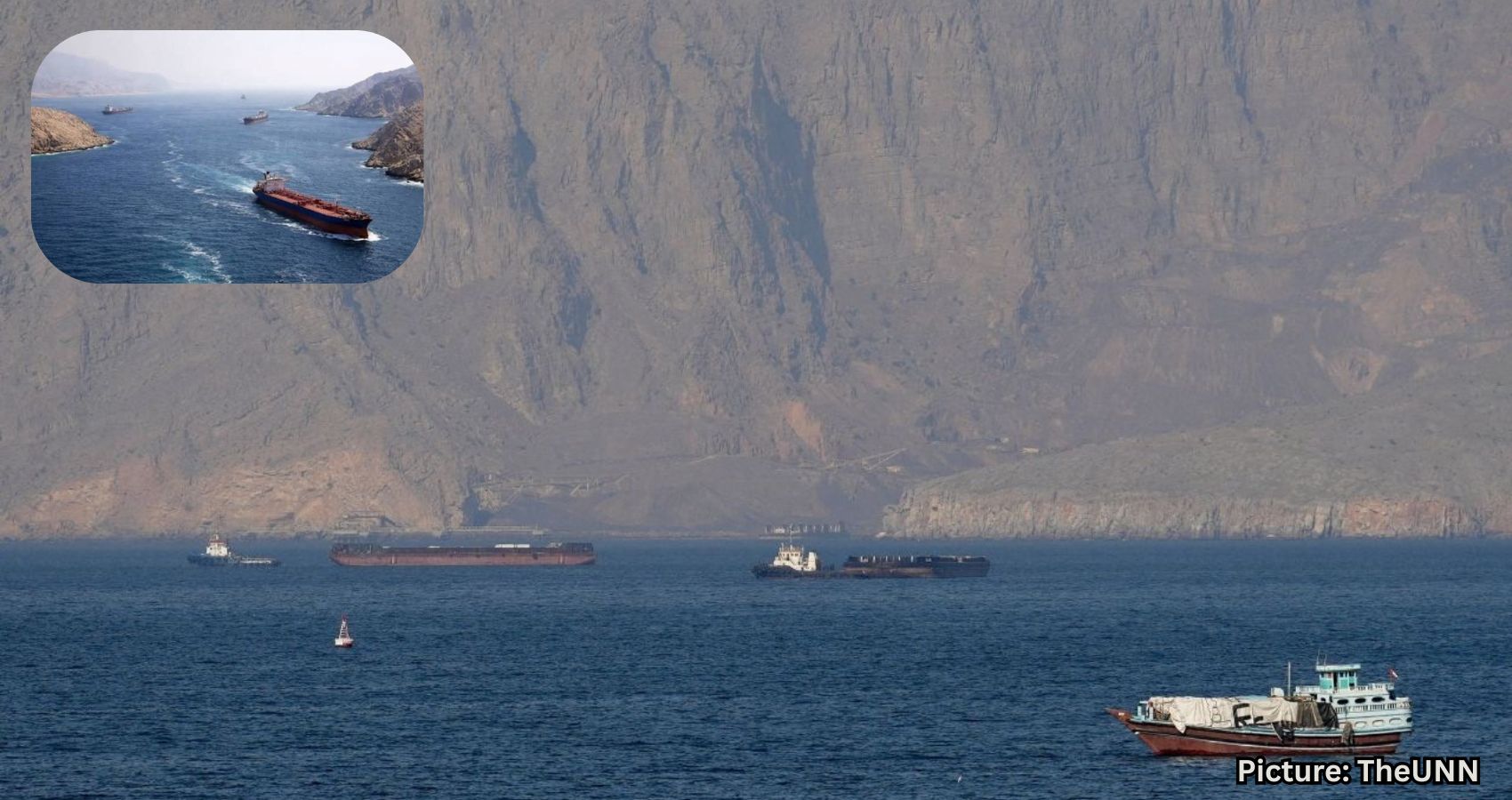
The Iranian military’s closure of the Strait of Hormuz has escalated tensions in the region as US-Iran talks begin in Switzerland amid ongoing violence in Lebanon.
TEHRAN, Iran — In a significant escalation of military and diplomatic tensions, Iran’s top joint military command announced on Saturday that it had closed the Strait of Hormuz. This action comes as the United States and Iran prepare for high-level talks in Switzerland, aimed at preserving a fragile agreement brokered by Pakistan earlier in the week.
The Iranian military’s statement, broadcast on state television, characterized the closure as a response to what it termed Washington’s “clear breach” of a recent memorandum of understanding. According to Tehran, the agreement mandates an end to hostilities “on all fronts.” The military described the closure as a “first step” and warned of further actions should attacks continue.
In a separate statement, Iran’s Islamic Revolutionary Guard Corps (IRGC) cautioned vessels against approaching the strategic strait, citing ongoing Israeli military operations in Lebanon and alleged failures by the US to enforce a ceasefire. Mohammad Mokhber, an adviser to Iran’s Supreme Leader Ayatollah Mojtaba Khamenei, criticized the US for not implementing the initial clauses of the 14-point agreement. He suggested that unless the deal materializes beyond mere words, the flow of energy from the Middle East would remain jeopardized.
The United States quickly rejected Iran’s assertion that the Strait of Hormuz had been closed. US Central Command (CENTCOM) spokesperson Captain Tim Hawkins affirmed that “Iran does not control the Strait of Hormuz.” CENTCOM reported that on the same day as Iran’s announcement, 55 merchant vessels, including those carrying over 17 million barrels of oil, successfully transited through the waterway.
The Strait of Hormuz is a critical global energy corridor, facilitating approximately one-fifth of the world’s oil and liquefied natural gas shipments. Any significant disruption in this vital route could have far-reaching consequences for global energy markets, particularly for countries like India that heavily rely on crude imports from the Gulf region.
Despite the heightened tensions, diplomatic channels appear to be making progress. Pakistan, which played a pivotal role in facilitating the recent agreement, announced that technical-level discussions involving Iranian, American, and Qatari representatives would commence on Sunday in Burgenstock, Switzerland. The Iranian delegation is led by Parliament Speaker and chief negotiator Mohammad Baqer Qalibaf, accompanied by Foreign Minister Abbas Araghchi and other senior officials.
Iranian Foreign Ministry spokesperson Esmail Baghaei expressed that Tehran intends to leverage the Swiss talks to pressure Washington into fulfilling its obligations under the agreement. He cautioned that negotiations for a final agreement would only begin once key commitments are upheld, warning that failure to do so could jeopardize the entire memorandum.
US Vice President JD Vance indicated that he would be traveling to Switzerland soon to participate in the discussions. Vance expressed confidence that the ceasefire framework established would endure, noting that senior US negotiators Jared Kushner and Steve Witkoff had already arrived in Switzerland to address technical details concerning Iran’s nuclear program.
The backdrop to these diplomatic efforts is the ongoing violence in Lebanon, which poses a significant threat to the recently established agreement. Reports indicate that at least 20 individuals were killed in Israeli airstrikes on Saturday, only hours after a ceasefire was enacted. The Lebanese Civil Defence reported earlier fatalities, including children, attributed to Israeli military actions.
Israeli strikes have reportedly targeted locations across southern Lebanon and the Bekaa Valley, areas known to be Hezbollah strongholds. An Israeli military spokesperson claimed that the attacks were in retaliation for over 50 projectiles fired by Hezbollah towards Israeli positions. Israel maintains that it remains committed to the ceasefire while asserting its right to defend against threats.
Hezbollah has accused Israel of violating the truce and has stated that it will not permit Israel “freedom of movement” in occupied Lebanese territory. A senior Hezbollah official revealed that Iran has communicated that the Strait of Hormuz would remain closed until Israel commits to a comprehensive ceasefire in Lebanon and ceases its military operations there.
The current violence underscores the fragile nature of the US-Iran understanding announced this week, which does not include Israel or Hezbollah as signatories. Israeli Prime Minister Benjamin Netanyahu has pledged to maintain military presence in southern Lebanon until all threats to Israel are neutralized. Reports indicate that Netanyahu and Defence Minister Israel Katz have instructed the military to maintain readiness but refrain from further territorial advances.
As the conflict continues, the humanitarian toll rises. The Lebanese health ministry reported more than 4,000 fatalities due to Israeli attacks since early March, including numerous civilians and medical personnel. In contrast, Israeli authorities have reported casualties among their military and civilian populations in the ongoing conflict with Hezbollah.
Residents on both sides of the border have expressed skepticism regarding the ceasefire, with concerns about the ongoing violence overshadowing diplomatic efforts. The negotiations in Switzerland are anticipated to address the implementation of the recently signed memorandum, which launched a 60-day timeline for discussions on Iran’s nuclear program, potential sanctions relief, and broader regional security arrangements.
While the US has lifted its blockade on Iranian ports and allowed for the resumption of Iranian oil exports under the interim deal, the continuation of hostilities in Lebanon, the threat of renewed disruption in the Strait of Hormuz, and mutual accusations of violations present significant challenges to the potential for a diplomatic breakthrough, according to GlobalNet News.