
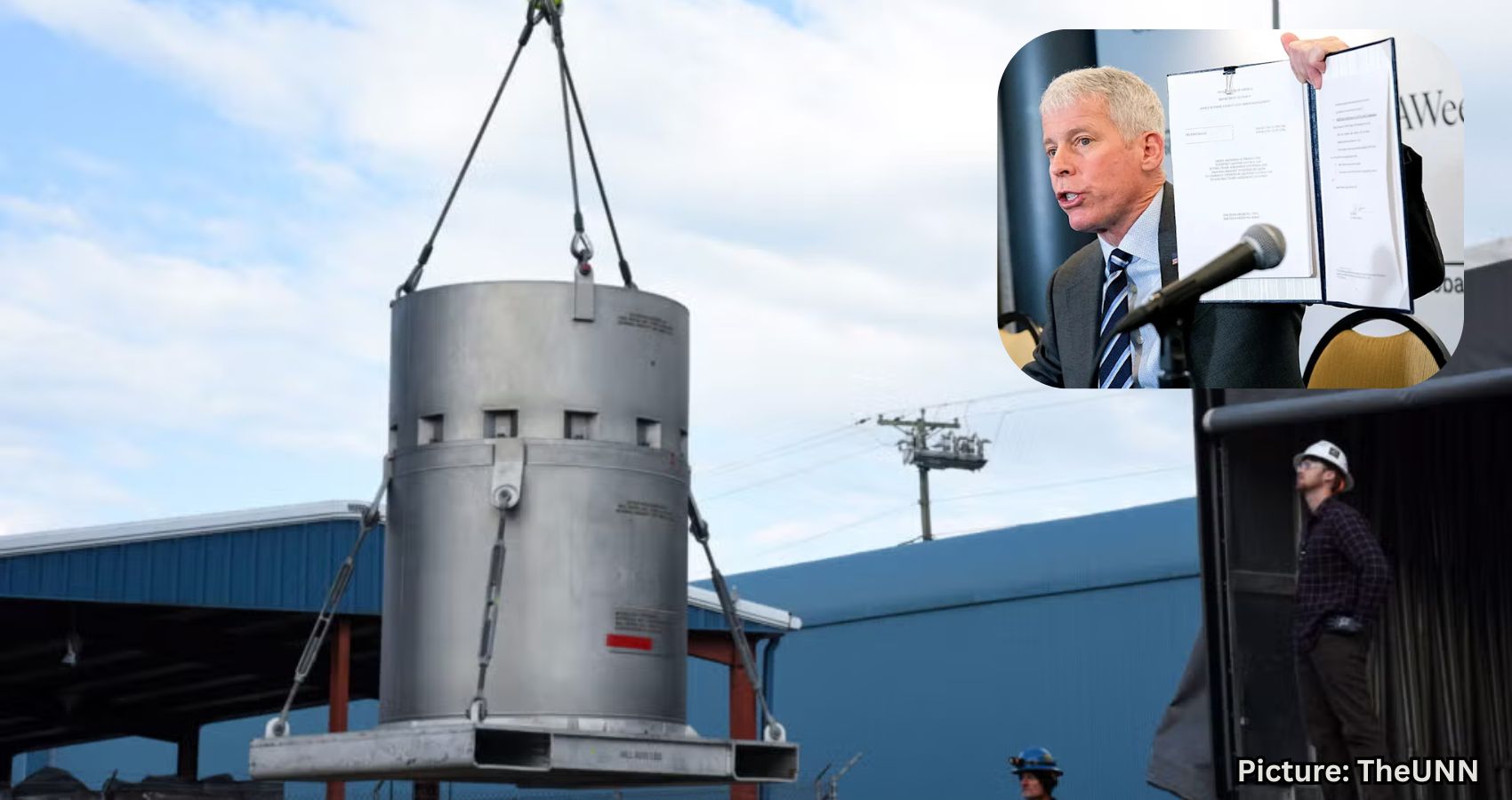
Antares Nuclear’s Mark-0 microreactor has achieved criticality at Idaho National Laboratory, marking a significant milestone as the first advanced reactor to do so under a U.S. Department of Energy pilot program.
Antares Nuclear, Inc. announced on Thursday that its Mark-0 microreactor has achieved criticality at Idaho National Laboratory. This milestone makes it the first advanced reactor to reach this stage under a U.S. Department of Energy (DOE) pilot program initiated following President Donald Trump’s executive order in 2025, which aimed to accelerate nuclear development.
The Torrance, California-based company stated that the reactor reached initial criticality under DOE authorization, positioning Antares as the first private entity to bring an advanced reactor to criticality through the Department of Energy’s Reactor Pilot Program.
“Hitting our commitments is everything to us. Nuclear in America has been defined for too long by delays, by companies that said they would and then didn’t,” said Antares CEO Jordan Bramble. “We said criticality in 2026, electricity production in 2027, and power to the warfighter in 2028. Today is the first of those commitments delivered on the schedule we set.”
Criticality is achieved when a reactor sustains a nuclear chain reaction, marking a significant advancement in reactor development. Antares noted that this demonstration validated key reactor physics parameters and produced essential testing data and control system performance information that will aid in future reactor development.
Energy Secretary Chris Wright confirmed the achievement, calling it a historic moment for American nuclear energy. “By bringing the first American non-light water privately developed reactor to criticality in more than four decades, Antares has shown what is possible when American innovation is unleashed,” he stated.
This milestone comes just over a year after Trump signed four executive orders aimed at accelerating reactor testing, boosting domestic nuclear fuel production, and streamlining pathways for advanced nuclear technologies.
One of these orders, Executive Order 14301, directed the Department of Energy to establish a pilot program designed to expedite the testing and demonstration of advanced reactor designs. The administration set a goal of achieving criticality for advanced reactor concepts by July 4, 2026.
“The President and DOE set an ambitious timeline for reactor testing, and we met that challenge,” Bramble remarked. “I want to thank our partners at the Department of Energy, Idaho National Lab, BWXT, and the U.S. Army. This is what happens when industry and government work together to accomplish big things.”
Antares reported that the criticality demonstration was conducted in collaboration with the Department of Energy, Idaho National Laboratory, and BWX Technologies, with the U.S. Army participating as a future end user of the technology.
The Mark-0 microreactor utilized TRISO fuel fabricated by BWXT and benefited from fuel technology developed through Project Pele, a Defense Department initiative aimed at creating transportable microreactors for military applications.
DOE officials emphasized that this achievement showcases the potential of the Reactor Pilot Program. “The skeptics didn’t believe President Trump’s Reactor Pilot Program could achieve criticality in less than a year,” said Assistant Secretary of Nuclear Energy Ted Garrish. “Today, we celebrate the first of the pilot projects to reach criticality and the people who rolled up their sleeves to shape the future of nuclear energy in the United States.”
During the demonstration, engineers gained crucial insights into reactor physics, control systems, and supply chain performance. This data will be instrumental in supporting future reactor development and eventual commercial licensing.
“We went from concept to a critical reactor, safely, in less than 12 months. That doesn’t happen by accident. The team treated the schedule as non-negotiable,” Bramble added. “For the American nuclear renaissance to succeed, we need efficient, iterative reactor testing, not a decade per design.”
Antares anticipates beginning electricity production from the same facility in 2027 and remains on track to deploy electricity-generating microreactors to U.S. military installations by 2028, according to Fox News.