
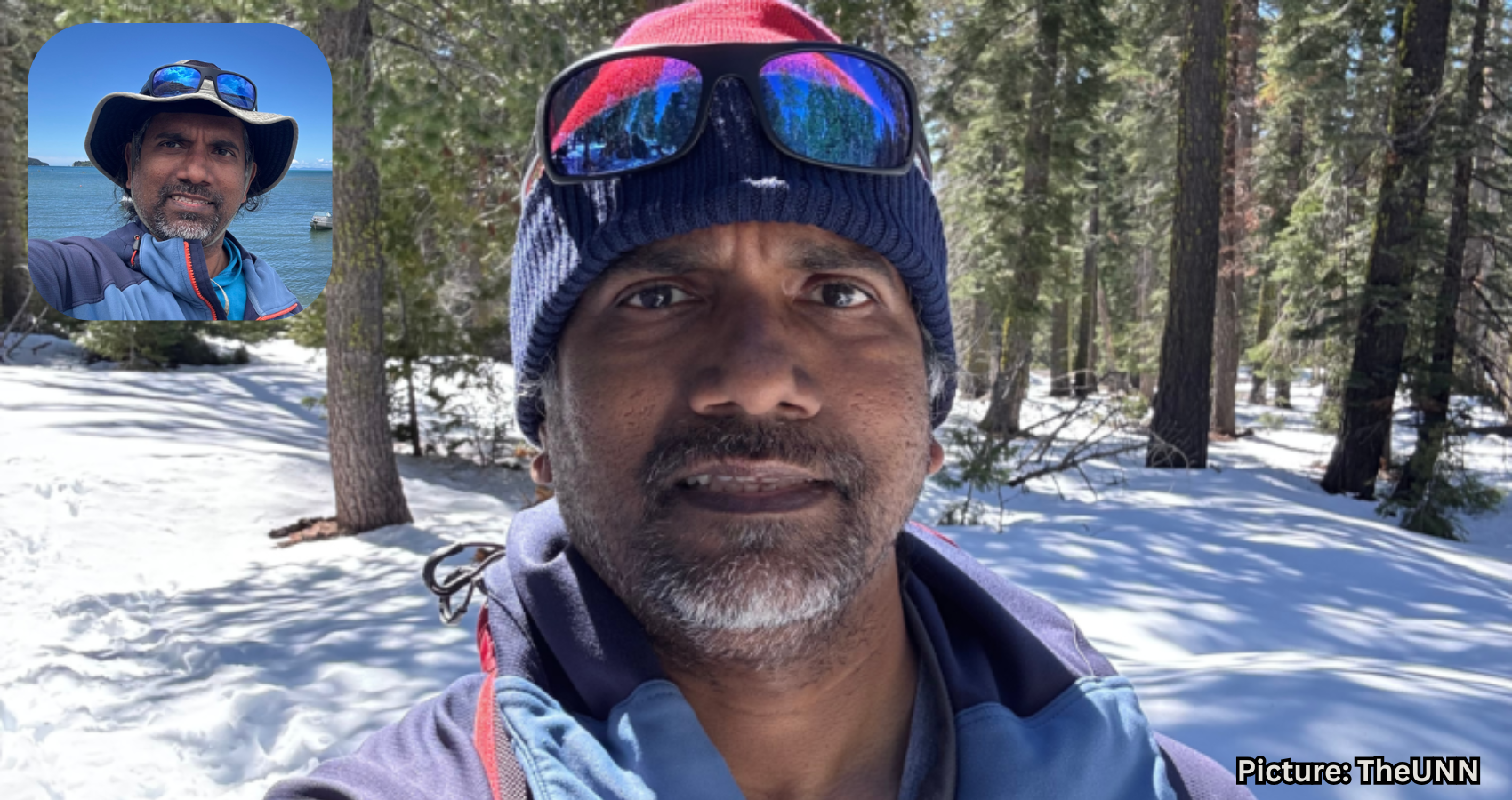
Saru Sivanesan’s journey from childhood trauma to healing illustrates the profound impact of intergenerational trauma and the power of therapy and self-discovery in reclaiming one’s life.
Saru Sivanesan vividly recalls a traumatic incident from his early childhood when he was nearly two years old. During a violent argument, his father expelled him and his mother from their home, an event that would mark the beginning of a long struggle with intergenerational trauma.
Years later, after undergoing extensive therapy and becoming a psychotherapist himself, Saru came to understand that this altercation was not an isolated incident. Instead, it was part of a deeper cycle of inherited trauma that had affected his family long before his birth.
The instability and emotional dysfunction that Saru experienced were rooted in a pattern of conflict that transcended generations. In South Asian culture, where family reputation often takes precedence over individual well-being, the stigma surrounding mental health issues further complicated the situation. As a child, Saru was unable to grasp the complexities of his parents’ disputes, which were fueled by issues such as dowry and interference from extended family. This turmoil was exacerbated by the civil war that ravaged his Sri Lankan Tamil community.
Beginning in 1983, the Liberation Tigers of Tamil Eelam (LTTE) initiated attacks against the predominantly Sinhalese Sri Lankan government in response to systemic discrimination. Concurrently, Sinhalese mobs, often supported by the state, perpetrated violent acts against Tamil civilians. The combination of his parents’ volatility and the external conflict conditioned Saru’s nervous system to remain in a constant state of fear, always anticipating disaster.
Growing up in a Sri Lankan Tamil household, Saru was deeply influenced by cultural norms that emphasized religion, patriarchy, and social status. Elders wielded significant power over family dynamics, shaping the identities and emotional well-being of younger generations. Saru’s mother struggled with her own sense of identity, while his father’s upbringing instilled strictness and emotional rigidity. Both parents carried their own unacknowledged traumas, which manifested in their relationship and parenting.
After his parents separated, Saru and his mother moved in with his maternal grandaunt. However, visits to his father’s home remained chaotic and frightening, often culminating in violent confrontations. The extended family, respected within their religious community, prioritized preserving the family’s reputation over addressing the abuse, pushing for reconciliation instead of accountability.
“Society is not kind in situations like this,” Saru reflects, highlighting the cultural expectations that often overshadow individual well-being. Trauma specialist Dr. Shilpa Kapoor explains that in many South Asian families, the belief that “marriage is forever, good or bad” can hinder the acknowledgment of harm within relationships. This normalization of suffering can leave individuals feeling trapped and voiceless.
Saru’s childhood was marked by a paradox of love and fear. While there were moments of affection, they were overshadowed by the chaos that permeated his home. One particularly haunting memory involved a caregiver threatening him with a snake, a fear that would later help him articulate his experiences. At five years old, after his parents reconciled, Saru’s father left for work in the Middle East, which temporarily eased tensions at home. However, the emotional scars from his early years remained.
As Saru grew older, he excelled academically, particularly in mathematics, but the pressure to perform was immense. Anything less than perfection was unacceptable, leading him to feel as though he was perpetually walking on eggshells. His self-worth became intertwined with family expectations, further complicating his emotional landscape.
After moving to Canada for university, Saru found that the unresolved trauma of his childhood resurfaced. As he struggled with concentration and feelings of disconnection, he turned to alcohol as a coping mechanism. Dr. Kapoor notes that children raised in survival mode often face challenges in emotional development, leading to anxiety, depression, and relationship difficulties.
Despite completing his degree, Saru felt “dysthymically depressed.” A dismissive response from a roommate when he sought help left him feeling unseen and unsupported. It was a moment of reckoning that prompted him to stop drinking cold turkey, marking the beginning of his journey toward healing.
Family therapist Sanjeev Balarajan emphasizes that early childhood experiences often linger beneath the surface of adult life, with current situations triggering old survival responses. For Saru, spirituality became a vital part of his healing process. At seventeen, he encountered a swami whose calm presence resonated deeply with him, prompting him to explore yoga and spiritual texts.
In 2002, Saru left a tech job to spend time at an ashram, and in 2007, he embarked on a transformative trip to Machu Picchu, which inspired him to shift his career focus from technology to counseling. Upon entering the Institute of Transpersonal Psychology, he felt an immediate sense of belonging.
After earning a master’s degree in counseling psychology, Saru began working as a therapist. He credits years of therapy with helping him process his trauma and develop healthier relationship patterns. In 2022, he incorporated acupuncture into his healing regimen, recognizing that traditional talk therapy had its limits when addressing deeply rooted childhood trauma.
Through his healing journey, Saru has also found a path to forgiveness, leading to a deeper understanding of his parents. A family member revealed that his father had cared for him, allowing Saru to reconcile his feelings of resentment and reconnect with his father before his passing.
“At the end of the day, I know they tried their best,” Saru reflects, acknowledging the complexity of his parents’ love.
Hope lies in the belief that inherited trauma does not dictate one’s destiny. Community organizations are increasingly recognizing the importance of addressing intergenerational trauma, providing safe spaces for survivors and their families. In 2022, the Bhatia Family Foundation committed $3 million to launch the South Asian Safe Families Initiative, aimed at breaking the cycle of violence.
Even today, Saru continues to engage in therapy, viewing healing as an ongoing process. “I’ve been working on it for the last 10 years,” he says, emphasizing the importance of addressing mental health within families.
Saru Sivanesan is now a practicing psychotherapist in the Bay Area, dedicated to helping others navigate their own journeys of healing.
According to India Currents, Saru’s story serves as a powerful reminder of the resilience of the human spirit and the potential for healing across generations.