
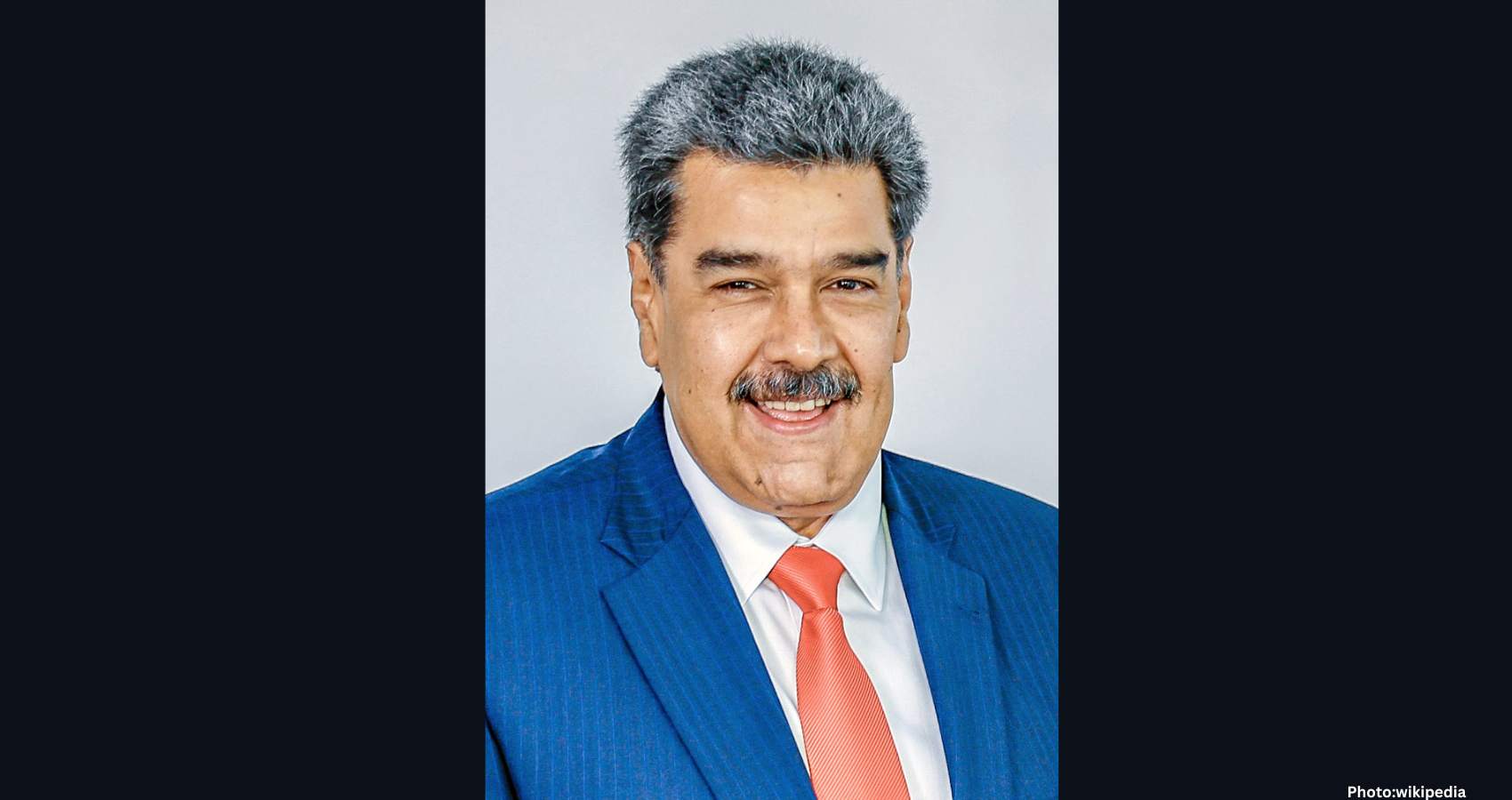
Venezuelan President Nicolás Maduro has been captured in a U.S. operation, raising concerns about the future of the nation’s oil reserves and political stability.
Venezuelan President Nicolás Maduro has been captured and removed from the country following a significant U.S. operation in Caracas. This development has raised urgent questions regarding the stability of Venezuela and its control over vast oil reserves.
Venezuela is home to one of the largest concentrations of crude oil in the world, with an estimated 303 billion barrels, which accounts for roughly 20% of global reserves, according to the U.S. Energy Information Administration. The future of this oil will play a crucial role in shaping the country’s next chapter.
As oil prices remain uncertain heading into the weekend, short-term fluctuations will largely depend on developments in the coming days. Under Maduro’s leadership, Venezuela’s socialist government has historically been hostile to foreign oil investment, resulting in significant disrepair of much of the country’s energy infrastructure.
The political direction of Venezuela is now unclear, raising questions about whether a future administration will maintain strict control over the struggling oil sector or adopt a more open approach to attract international investment and revive production.
Phil Flynn, a senior market analyst at the Price Futures Group, remarked, “For oil, this has the potential for a historic event. The Maduro regime and Hugo Chavez basically ransacked the Venezuelan oil industry.”
U.S. Secretary of State Marco Rubio announced that American operations in Venezuela have concluded following Maduro’s capture. Venezuelan Vice President Delcy Rodríguez, a key figure in the socialist government that has been in power since 1999, could potentially step in. However, analysts suggest that little would likely change under her leadership in the short term.
Maduro’s removal raises the possibility of a political power vacuum, leaving the future of Venezuela uncertain. The United States continues to recognize exiled leader Edmundo Gonzalez as the legitimate president, with support from 2025 Nobel Peace Prize winner María Corina Machado.
Flynn noted, “The next 24 to 48 hours will be huge. If we see signs that the Venezuelan military supports the opposition, that’ll be a big win for global markets. On the flipside, if there’s a sense this will lead to further conflict or a civil war in Venezuela, we’ll get the opposite reaction.”
Despite possessing the world’s largest oil reserves, Venezuela’s production remains significantly below its potential due to decades of mismanagement, underinvestment, and international sanctions. Official data indicates that the country holds approximately 17% of global reserves, surpassing OPEC leader Saudi Arabia, according to the London-based Energy Institute.
Venezuela was a founding member of OPEC alongside Iran, Iraq, Kuwait, and Saudi Arabia. In the 1970s, the country produced as much as 3.5 million barrels per day, accounting for over 7% of global output at that time. However, by the 2010s, production had fallen below 2 million barrels per day, averaging just around 1.1 million barrels per day last year.
The nationalization of Venezuela’s oil industry in the 1970s led to the formation of Petroleos de Venezuela S.A. The United States was once the country’s largest oil customer, but over the past decade, China has emerged as the main buyer following U.S. sanctions.
Exports effectively halted after former President Trump imposed a blockade on all vessels entering or leaving Venezuela in December 2025. PDVSA, the state-owned oil company, also controls substantial refining assets abroad, including CITGO in the United States. However, creditors have been engaged in long-running legal battles in U.S. courts to seize control of these assets.
The future of Venezuela’s oil industry and political landscape remains uncertain in the wake of Maduro’s capture, with global markets closely monitoring the situation.
According to American Bazaar.