
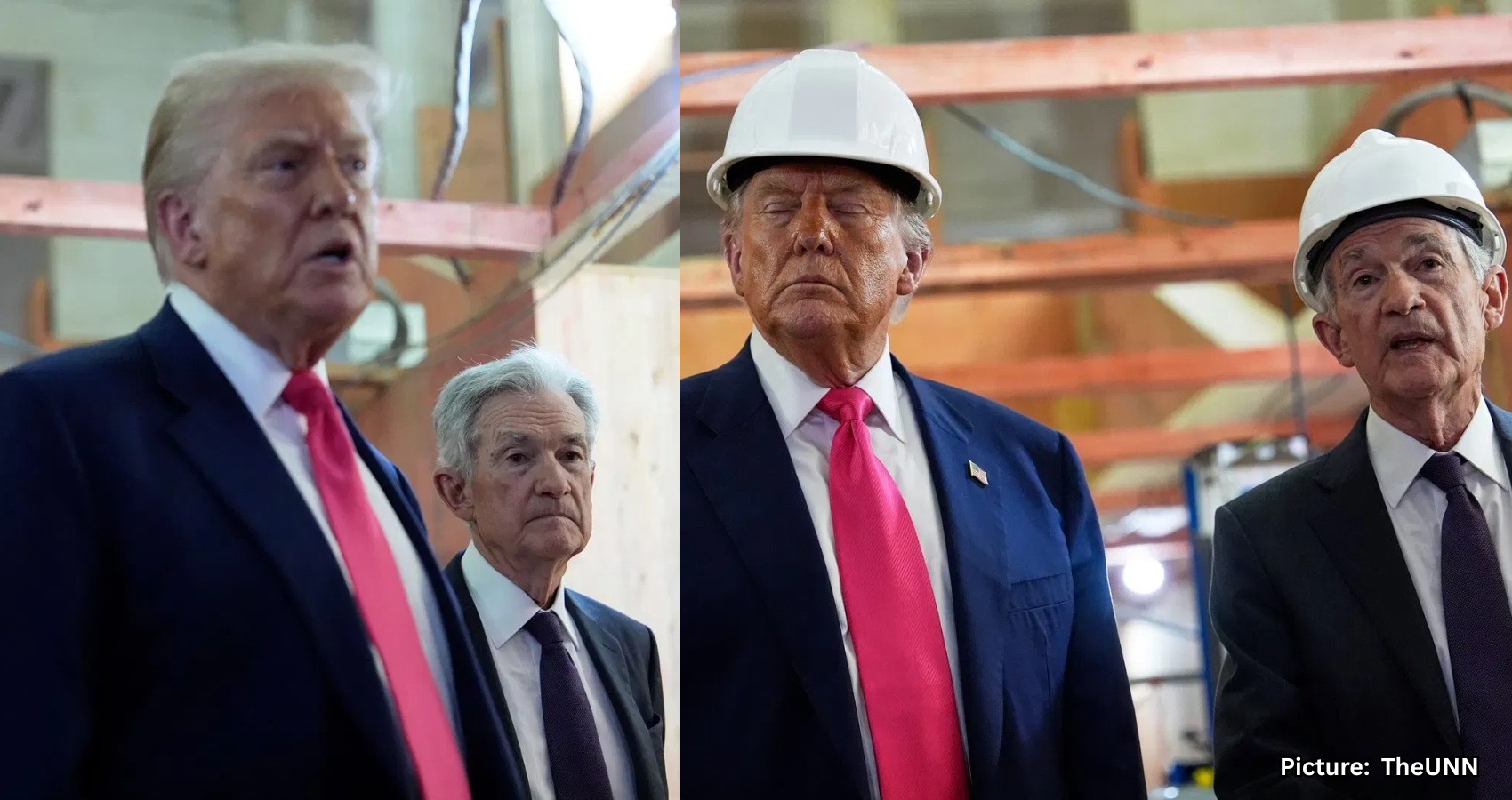
Former President Donald Trump has threatened to sue Federal Reserve Chair Jerome Powell, citing “gross incompetence” related to the cost of renovations at the central bank’s headquarters.
Former President Donald Trump has expressed strong dissatisfaction with Federal Reserve Chair Jerome Powell, indicating he is considering legal action against Powell for what he describes as “gross incompetence.” This remark came during a press conference alongside Israeli Prime Minister Benjamin Netanyahu, where Trump voiced his concerns about the ongoing renovations at the Federal Reserve’s headquarters.
“We’re thinking about bringing a suit against Powell for incompetence. Because think of it, these aren’t outstanding buildings. These are small buildings,” Trump stated. He further criticized Powell’s management of the construction project, asserting, “It’s gross incompetence against Powell. And it was his baby. And the guy’s just incompetent. There’s nothing you can do about it.”
This is not the first time Trump has threatened legal action against Powell. Earlier in the year, he hinted at a potential lawsuit but did not elaborate on the specifics at that time. Trump has been particularly vocal about the rising costs associated with the Federal Reserve’s renovations, claiming that Powell has allowed expenses to spiral out of control.
During the press conference, Trump also expressed a desire to dismiss Powell, saying, “I would fire him. I’d love to fire him. But we’re so close, you know. But maybe I still might.”
In addition to his criticisms regarding the renovations, Trump has been vocal about his discontent with the Federal Reserve’s monetary policies, especially its decisions on interest rates. He has suggested that Powell should either resign or be removed from his position. Throughout 2025, Trump has consistently targeted Powell and the Federal Reserve, accusing them of mismanaging the economy and overspending on various projects.
Jerome Powell has played a pivotal role in shaping U.S. monetary policy, including setting interest rates and managing responses to economic crises, such as inflation spikes and financial disruptions. Known for his pragmatic and cautious approach, Powell strives to balance economic growth with inflation control while maintaining the Federal Reserve’s independence from political pressures.
The ongoing tensions between Trump and Powell underscore the inherent challenges in the relationship between the executive branch and the nation’s central bank. The Federal Reserve operates with a significant degree of independence to effectively manage monetary policy, yet it often faces intense political scrutiny, particularly during periods of economic uncertainty.
While disagreements between the president and the Federal Reserve are not uncommon, the public nature of Trump’s criticisms highlights the complexities of aligning political priorities with long-term economic stability. Powell’s responsibilities involve making decisions that may be unpopular in the short term but are essential for the overall health of the economy.
Navigating interest rates, inflation, and other macroeconomic indicators requires complex judgment calls, often made under conditions of significant uncertainty. Although the president may express dissatisfaction with the outcomes of these decisions, the Fed’s independence is crucial for maintaining credibility in financial markets and ensuring the integrity of U.S. economic policy.
The scrutiny surrounding high-profile projects, such as the renovations of Federal Reserve buildings, also illustrates the symbolic importance of federal institutions and the expectation for efficient management of public resources. How leaders respond to criticism—both internally and publicly—can significantly influence perceptions of competence and institutional trust.
As the situation develops, it remains to be seen how Trump’s threats will impact the Federal Reserve’s operations and Powell’s leadership. The relationship between the executive branch and the central bank will continue to be a focal point of discussion as economic conditions evolve.
According to The American Bazaar, the tensions between Trump and Powell reflect broader challenges in U.S. economic governance.