
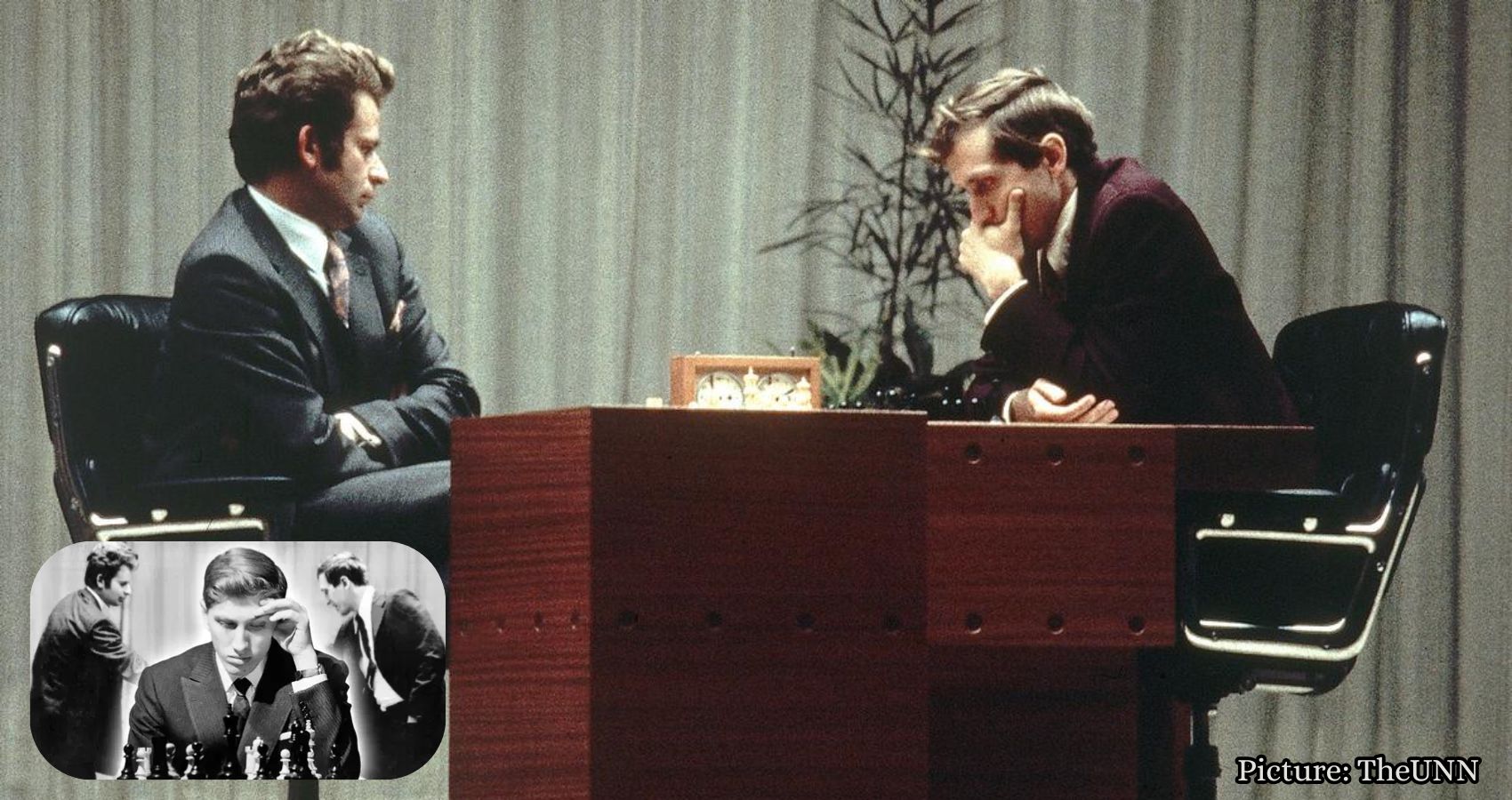
The 1972 World Chess Championship between Bobby Fischer and Boris Spassky became a significant event in Cold War history, symbolizing the ideological rivalry between the United States and the Soviet Union.
The 1972 World Chess Championship, held in Reykjavík, Iceland, marked a pivotal moment in Cold War history as American chess prodigy Bobby Fischer faced off against Soviet champion Boris Spassky. This match transcended the game itself, becoming emblematic of the ideological struggle between the two superpowers during a time of heightened tension.
Not only did the championship conclude a 24-year period of Soviet dominance in chess, but it also challenged the narrative of Soviet intellectual supremacy. The match captivated audiences worldwide, showcasing the intense rivalry that defined the era.
By the early 1970s, chess in the Soviet Union had evolved into a state-supported intellectual endeavor. The government began promoting chess in the 1920s, viewing it as a means to demonstrate the superiority of its system. This initiative included a comprehensive training infrastructure that nurtured aspiring players from a young age. By the time Fischer emerged as a contender, the Soviet Union boasted around four million registered competitive players and a well-established network of coaching and resources.
In stark contrast, the American chess scene during this period was largely amateur. Fischer, the best player in the United States, developed his skills independently, relying on books and self-study rather than formal training or institutional backing. This disparity highlighted the significant gap between the two nations’ approaches to chess, with Fischer representing a singular talent rather than a broader American chess culture.
Fischer’s journey to the championship match began in earnest around 1970, when his performances indicated that he might be capable of challenging the Soviet establishment. His path through the candidates tournaments was unprecedented. He achieved a historic 6-0 victory over Soviet grandmaster Mark Taimanov in the quarterfinals, a result that rattled the Soviet chess federation and led to Taimanov’s disciplinary actions upon returning to Moscow. Fischer continued his dominance with another 6-0 sweep against Danish grandmaster Bent Larsen in the semifinals and ultimately defeated former world champion Tigran Petrosian 6.5-2.5 in the finals.
By the time Fischer faced Spassky, he had achieved 20 consecutive wins against the world’s top players, a remarkable feat that underscored his extraordinary talent.
Originally scheduled for July 2, 1972, the championship match faced significant obstacles before it even began. Fischer’s insistence on a doubled prize fund and a personal call from U.S. Secretary of State Henry Kissinger delayed the start until July 11. Fischer lost the first game and forfeited the second due to protests over the placement of television cameras, putting him at a daunting 2-0 deficit before he had fully engaged in the match.
The turning point came during the third game, where Fischer won his first-ever competitive match against Spassky after five previous losses and two draws. This victory marked the beginning of a remarkable comeback; Fischer drew the fourth game and won the fifth, followed by a stunning win in the sixth game, which showcased his tactical brilliance and unexpected opening choices. By game eight, Fischer led the match 5-3.
Spassky managed to win one more game, but Fischer’s momentum continued, and the match culminated in a final score of 12.5 to 8.5 in favor of Fischer. Spassky resigned on September 1, 1972, marking a historic victory for the American challenger.
While the media hailed Fischer’s victory as a symbol of American superiority over Soviet intellectualism, the reality was more nuanced. According to analyses by chess historians, Fischer was an anomaly rather than a representative of American chess culture. His triumph showcased individual talent rather than a systemic capability to produce world-class players in the United States. The vast difference between Fischer and his contemporaries underscored the unique nature of his success.
In the years following his championship win, Fischer’s relationship with chess and the broader world became increasingly troubled. He refused to defend his title in 1975, allowing Soviet grandmaster Anatoly Karpov to become champion by default. Karpov retained the title until 1985, when he was succeeded by Garry Kasparov, another Soviet player, who held it until 2000. The long-standing dominance of Soviet and later Russian players reaffirmed the structural advantages of the Soviet chess establishment.
Despite his initial victory, Fischer’s life took a tumultuous turn, marked by paranoia and controversial beliefs. He was stripped of his U.S. citizenship after competing in a rematch with Spassky in 1992, in defiance of U.S. sanctions. Fischer eventually settled in Iceland, where he died in 2008, in the same city where he had once claimed the world championship.
The 1972 Fischer-Spassky match remains a defining moment in the history of chess and the Cold War. While it disrupted the Soviet stronghold on the championship, it did not herald a new era of American dominance in chess. Instead, it illustrated the extraordinary capabilities of one individual who managed to achieve greatness outside the established system. The match continues to evoke discussions about its significance and the implications it held for the cultural and political narratives of the time, according to Source Name.