
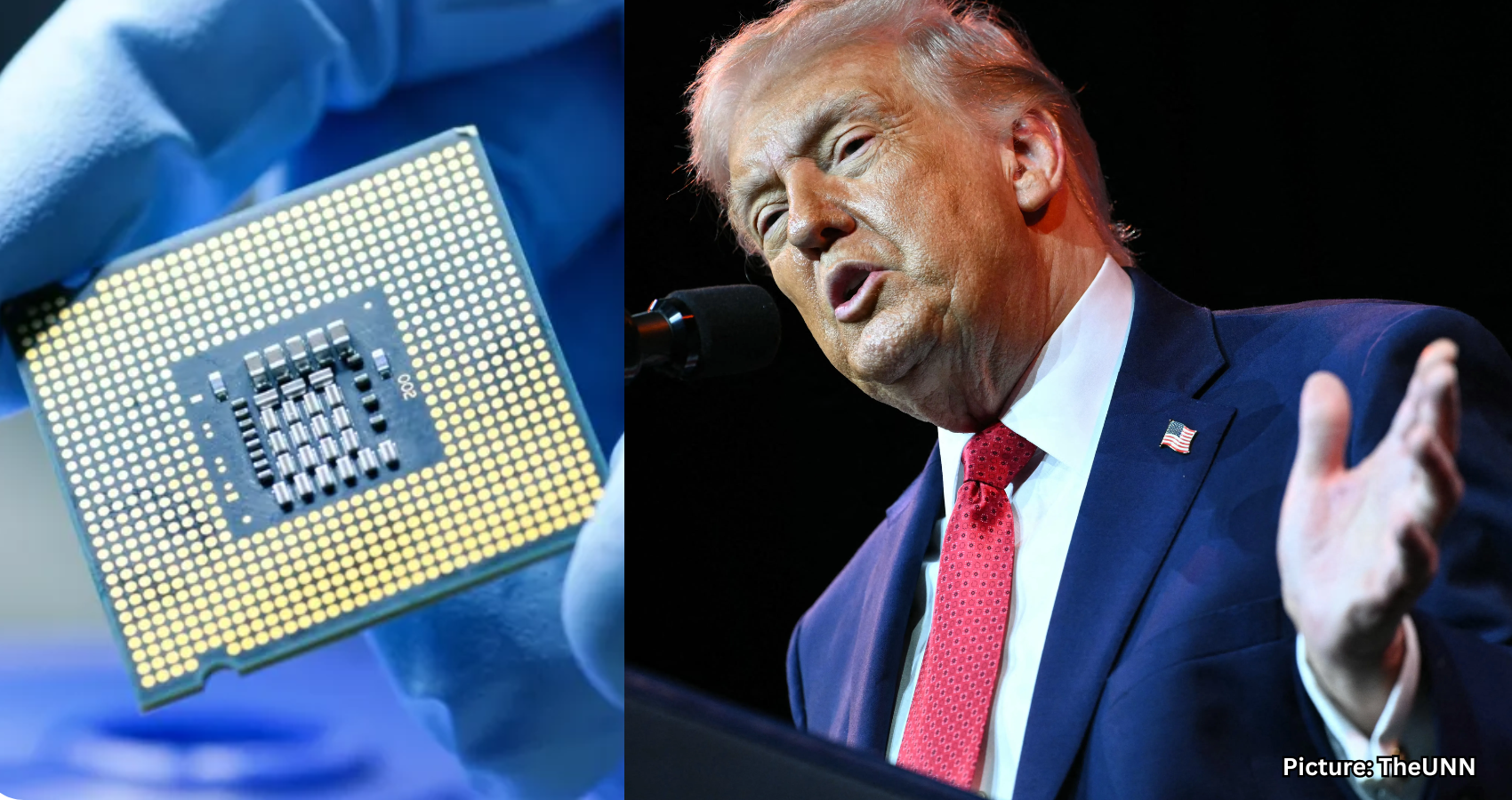
Taiwan has committed to investing $250 billion in U.S. semiconductor manufacturing, aiming to enhance domestic production capabilities and reduce reliance on foreign supply chains.
The U.S. Department of Commerce announced on Thursday that Taiwan will invest $250 billion to bolster semiconductor manufacturing in the United States. This significant deal, signed during the Trump administration, aims to enhance domestic production capabilities in a sector critical to both the economy and national security.
Under the agreement, Taiwanese semiconductor and technology companies will make direct investments in the U.S. semiconductor industry. These investments are expected to cover a range of areas, including semiconductors, energy, and artificial intelligence (AI) production and innovation. Currently, Taiwan is responsible for producing more than half of the world’s semiconductors, highlighting its pivotal role in the global supply chain.
In addition to the direct investments, Taiwan will provide $250 billion in credit guarantees to facilitate further investments from its semiconductor and tech enterprises. However, the timeline for these investments remains unspecified.
In exchange for Taiwan’s substantial investment, the United States plans to invest in various sectors within Taiwan, including semiconductor manufacturing, defense, AI, telecommunications, and biotechnology. The specific amount of this reciprocal investment has not been disclosed.
This announcement follows a proclamation from the Trump administration that reiterated the U.S. goal of increasing domestic semiconductor manufacturing. The proclamation emphasized that reliance on foreign supply chains poses significant economic and national security risks. “Given the foundational role that semiconductors play in the modern economy and national defense, a disruption of import-reliant supply chains could strain the United States’ industrial and military capabilities,” it stated.
Additionally, the proclamation introduced a 25% tariff on certain advanced AI chips and indicated that further tariffs on semiconductors would be considered once trade negotiations with other countries, including the deal with Taiwan, are finalized.
In 2025, semiconductor manufacturing has become a focal point of Trump’s economic agenda, with efforts aimed at reducing U.S. dependence on foreign chip production. The administration has proposed aggressive trade measures, including a potential 100% tariff on imported semiconductors, although companies that commit to establishing manufacturing facilities in the U.S. may be eligible for exemptions.
Last year, Taiwan Semiconductor Manufacturing Company (TSMC) announced plans to invest $100 billion to enhance chip manufacturing capabilities in the United States, further underscoring the importance of this sector.
Semiconductors are essential components of modern technology, powering a wide array of devices, from smartphones and automobiles to telecommunications equipment and military systems. The U.S. share of global wafer fabrication has significantly declined, dropping from 37% in 1990 to less than 10% in 2024. This shift has largely been attributed to foreign industrial policies that favor production in East Asia.
As the U.S. seeks to reclaim its position in the semiconductor industry, the partnership with Taiwan represents a critical step towards enhancing domestic manufacturing capabilities and securing supply chains.
This initiative reflects a broader strategy to strengthen the U.S. economy and safeguard national interests in an increasingly competitive global landscape, according to The American Bazaar.