
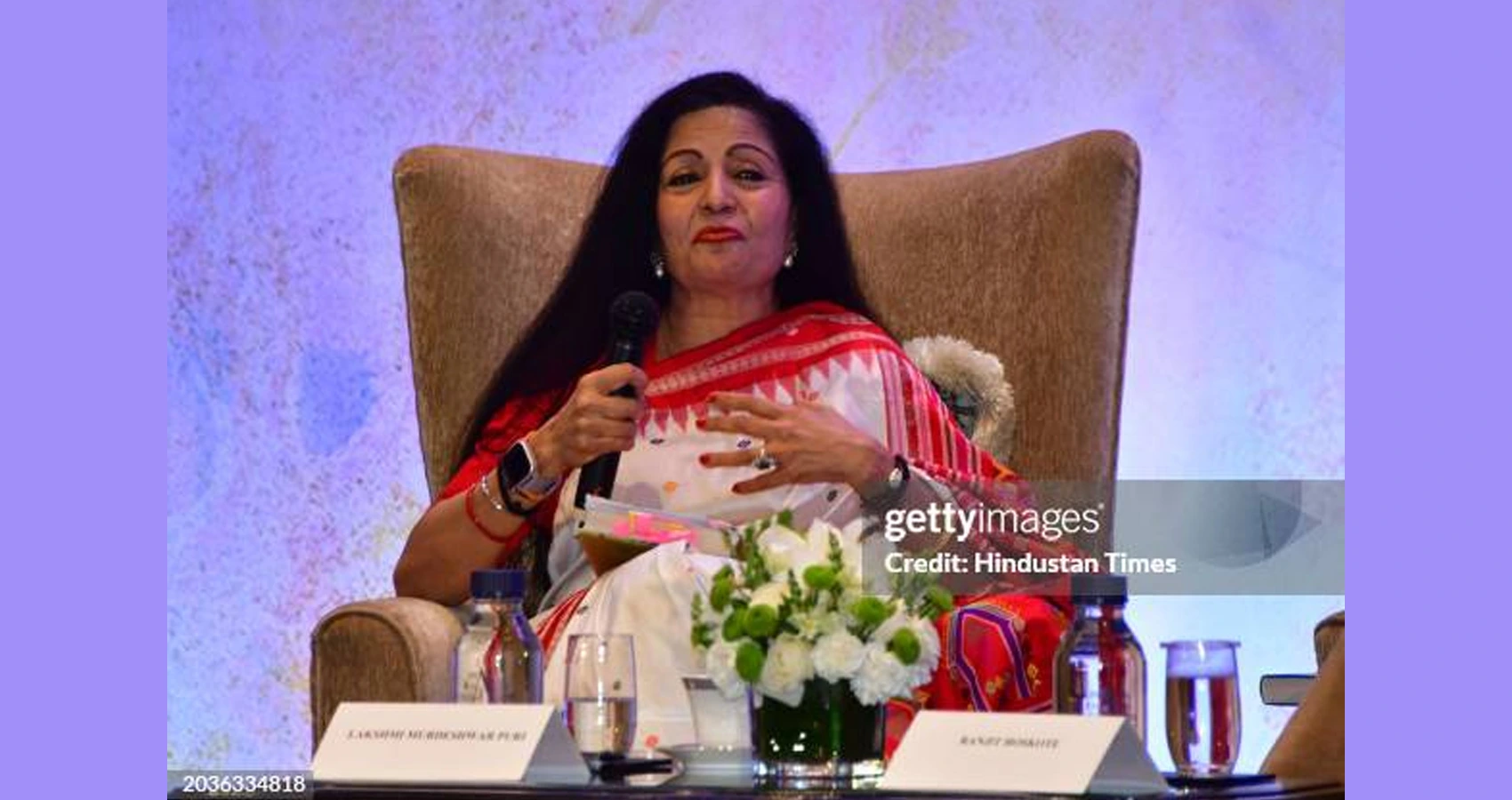
“Swallowing the Sun” by Lakshmi Murdeshwar Puri explores the dreams and defiance of young women during India’s struggle for independence, blending romance, political awakening, and rich cultural narratives.
“Swallowing the Sun” is a multifaceted novel that serves as an ode to freedom fighters, offering younger readers a glimpse into the sacrifices made during India’s independence movement. The book combines elements of romance and adventure, featuring thrilling encounters with dacoits from the Chambal Valley, while also acting as a feminist anthem that showcases the strength and resilience of its female characters in the face of societal challenges typical of the early 20th century.
Written by Lakshmi Murdeshwar Puri, a former diplomat and United Nations Assistant Secretary-General, “Swallowing the Sun” is set in the early 1900s during India’s struggle against British colonial rule. The novel, published by Pippa Rann Books in 2026 and originally released in India in 2024 by Aleph Book Company, marks Puri’s debut as a novelist.
The story follows Malati and her older sister Kamala, who grow up in a village in Maharashtra. Their father, Madhav Rao, is a progressive thinker who champions the education of girls, a rarity for that era, while their mother, Pratibha, embodies more traditional values. From a young age, Malati demonstrates her determination, standing up to a schoolyard bully and forging her own path with the unwavering support of her father and sister.
As the sisters navigate their educational journey, they attend boarding school and later an ashram, where they learn English. Their older sister, Surekha, accepts a marriage proposal from Vilas Rao, a wealthy finance minister, becoming his second wife. The sisters are welcomed into Surekha’s new family, where they encounter the complexities of wealth and status, including Vilas Rao’s first wife, Savitri, who possesses spiritual powers that some regard as madness.
Upon completing their schooling, Malati and Kamala gain admission to Elphinstone College in Bombay. Here, they meet new friends, including Guru, Shyam, Vivek, and Chandra, an old acquaintance from boarding school. Their college experience is enriched by theatre, music, and a growing political consciousness, which leads them to engage in the burgeoning independence movement. They participate in protests against the 1928 Simon Commission and have inspiring encounters with figures like Mahatma Gandhi and Annie Besant, all while navigating the complexities of friendship and romance.
The narrative is rich with parallel plotlines and a diverse cast of characters, yet Puri maintains coherence throughout the story, ensuring that no character is left behind. The author’s lyrical prose shines through in vivid descriptions, such as the transformation of Surekha into a “Bride Goddess of the Manor” and Sarala’s reflections on education, where she compares herself to “pebbles in a running stream,” emphasizing the value of shared experiences.
However, some aspects of the writing may feel overwrought, with moments reminiscent of romantic novels. At times, the characters’ dialogue and references to Western literature seem more suited to older, cosmopolitan individuals rather than young women just beginning their educational journeys. The transition from their simple village life to the competitive environment of urban Bombay appears rapid, creating a dissonance in the narrative.
Despite these inconsistencies, “Swallowing the Sun” remains a compelling read, evoking comparisons to Alka Joshi’s “The Henna Artist.” The novel features a spirited young female protagonist and rich imagery that lends itself well to adaptation. In 2025, Mumbai-based Abundantia Entertainment announced plans to adapt the book into a series, following the success of “The Henna Artist” trilogy, which was commissioned for a Netflix series starring Freida Pinto. However, updates on the adaptation have been sparse, leaving readers hopeful for a timely release.
At its core, Puri’s novel is a tribute to those who pursue their dreams with courage and determination, even when faced with obstacles. The title, “Swallowing the Sun,” is inspired by a Marathi devotional poem by Muktabai, symbolizing the audacity to dream big and strive for the seemingly unattainable. In a 2025 interview with NDTV, Puri expressed that the book is an exhortation to “dare to dream, break boundaries, attain the unattainable.”
“Swallowing the Sun” is not just a story of personal growth and romance; it is a reflection of a pivotal time in Indian history, capturing the spirit of resistance and the quest for freedom.
According to India Currents, the novel is a significant contribution to contemporary literature, blending historical context with the timeless themes of love, ambition, and resilience.