
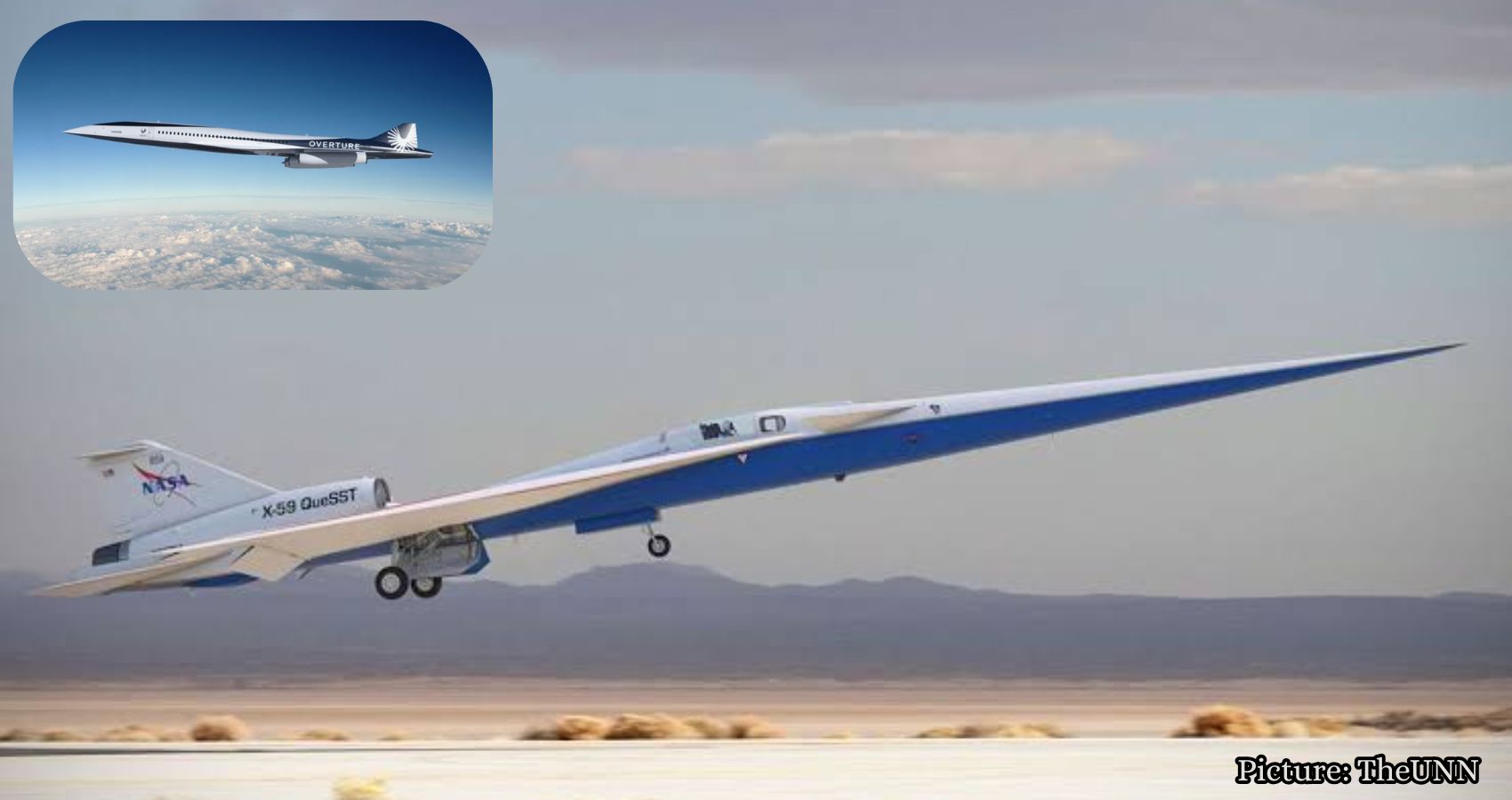
Supersonic passenger travel is on the verge of a comeback, driven by advancements in quieter aircraft designs and potential regulatory changes aimed at addressing the sonic boom issue.
More than two decades after the retirement of the Concorde, commercial supersonic travel is regaining traction as aerospace companies and government agencies tackle one of aviation’s most significant challenges: the sonic boom.
Recent advancements in aircraft design, engine technology, and noise reduction have sparked renewed optimism that passengers may once again be able to fly faster than the speed of sound, this time with minimal disruption to those on the ground.
Several promising developments are raising hopes that existing restrictions on supersonic flight could soon be revisited. NASA’s experimental X-59 aircraft recently completed its first successful supersonic flight, producing only a much quieter “sonic thump” instead of the disruptive boom associated with the Concorde. This aircraft is part of NASA’s Quesst mission, which aims to gather data that could encourage regulators to reconsider overland supersonic flight rules.
In addition to government efforts, private companies are also making strides in developing next-generation supersonic aircraft. Colorado-based Boom Supersonic is working on the Overture airliner, which is designed to cruise at Mach 1.7—nearly twice the speed of current commercial aircraft. The company anticipates that the Overture will accommodate between 60 and 80 passengers, significantly reducing travel times on international routes.
Regulatory momentum appears to be shifting as well. The U.S. government has begun exploring changes to long-standing restrictions on overland supersonic flight, reflecting a growing confidence that modern aircraft may no longer produce disruptive sonic booms. However, any changes to regulations will depend on extensive testing and public acceptance.
Despite the enthusiasm surrounding these developments, significant challenges remain. Supersonic aircraft are generally more expensive to build and operate than conventional airliners. They also consume more fuel and face stringent engineering requirements, which raises concerns about profitability.
Bombardier, whose Global 8000 is expected to become the fastest civilian business jet in service, has argued that very high-speed subsonic travel currently offers a more practical balance of speed, range, and operating costs compared to full supersonic flight.
Experts emphasize that any commercial resurgence in supersonic travel will depend not only on quieter technology but also on certification processes, airline demand, infrastructure, and environmental considerations.
Nonetheless, the industry’s progress represents the most significant push toward faster-than-sound passenger travel since the Concorde ceased operations in 2003. If ongoing flight tests and regulatory reviews prove successful, commercial supersonic aircraft could once again become a fixture in global aviation, offering travelers dramatically shorter journeys while avoiding the thunderous sonic booms that plagued an earlier generation of high-speed flight.
According to The American Bazaar, the future of supersonic travel looks promising as advancements continue to unfold.