
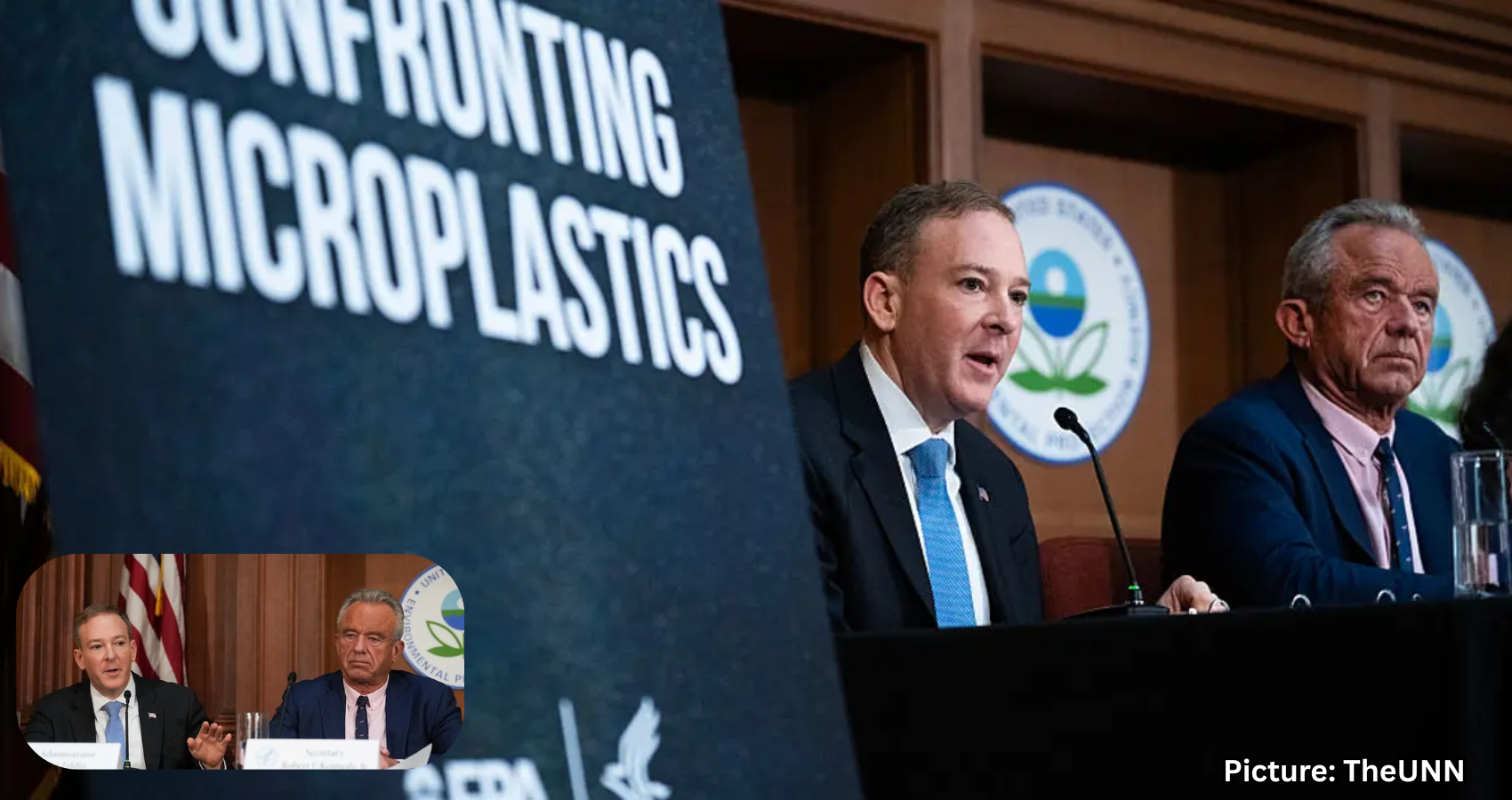
Health officials, including RFK Jr. and EPA Administrator Lee Zeldin, are intensifying efforts against microplastics, recognizing their potential health risks and adding them to the drinking water contaminants list.
Health and Human Services Secretary Robert F. Kennedy Jr. and Environmental Protection Agency (EPA) Administrator Lee Zeldin are taking significant steps to combat the growing concern over microplastics. These minuscule plastic particles, measuring less than 5 millimeters, can persist in the environment for hundreds or even thousands of years, potentially accumulating in human bodies and causing severe health issues.
In a landmark decision, the EPA has added microplastics and pharmaceuticals to its Contaminant Candidate List for drinking water. This move aims to prioritize funding for research and set the stage for possible future regulations through Congress.
As part of this initiative, the Health and Human Services Department is launching the Systematic Targeting of Microplastics (STOMP) program, which will investigate how these particles accumulate in the human body. In an exclusive interview with Fox News, Kennedy emphasized the urgency of understanding the various impacts of different types of plastics. “We do not have the science that distinguishes between the impacts of these different types of plastics,” he stated. “If we identify those impacts, the damaging ones can be immediately eliminated, because you can replace them with something else.”
Kennedy highlighted emerging scientific evidence suggesting that microplastics could have direct negative effects on public health. He warned that while some microplastics may be benign, others could be harmful. “The science shows if they cause inflammation, they cause oxidative stress,” he explained. He also noted that microplastics can act as endocrine disruptors, potentially interfering with fertility.
Dr. Leonardo Trasande, a professor of pediatrics and population health at NYU Grossman School of Medicine, echoed Kennedy’s concerns, citing research that links microplastics to increased risks of heart attacks, strokes, and neurodegenerative diseases. “The time to act is now,” Trasande asserted, drawing parallels to the government’s swift action to reduce lead exposure in the 1970s, even before all research was completed.
Kennedy, who has long advocated against environmental chemicals, criticized large corporations for contributing to the microplastics problem and called for them to take responsibility for cleanup efforts. “That’s a lesson we are all supposed to have learned at kindergarten – that you clean up after yourself, you don’t force the public to do it,” he stated. He also expressed concern over pharmaceuticals entering the environment, which he believes poses a particular threat to children. “They are swimming around now in a toxic soup. It’s coming from everywhere,” he warned, pointing to sources such as food, agriculture, air, water, and pharmaceutical drugs.
Zeldin, who has directed his agency to conduct studies on microplastics under the Trump administration, emphasized the need for regulation of chemical discharges. He noted that many harmful substances can be removed through advanced technologies, such as carbon filtration.
Both Kennedy and Zeldin view the fight against microplastics as a bipartisan issue. Zeldin advocates for increased education and transparency regarding microplastics and public health, cautioning against a one-size-fits-all approach from the federal government. “You want to be able to get the answers, you want to see the gold-standard science,” he said, expressing concern over existing communication gaps that can erode public trust.
The collaboration between Zeldin and Kennedy reflects their shared commitment to the Make America Healthy Again agenda, with both officials expressing mutual respect for their working relationship. “There’s no American in this country who can’t get heard somehow by Secretary Kennedy, and it’s just an honor to serve alongside him,” Zeldin remarked.
As they continue their efforts, Kennedy noted, “I like everybody in that Cabinet, but Lee and I work with particular closeness, and I’ve really enjoyed the relationship.” Their partnership appears poised to tackle the pressing issue of microplastics, with the hope that their combined efforts will lead to meaningful change in public health policy.
For more information on this developing story, please refer to Fox News.