
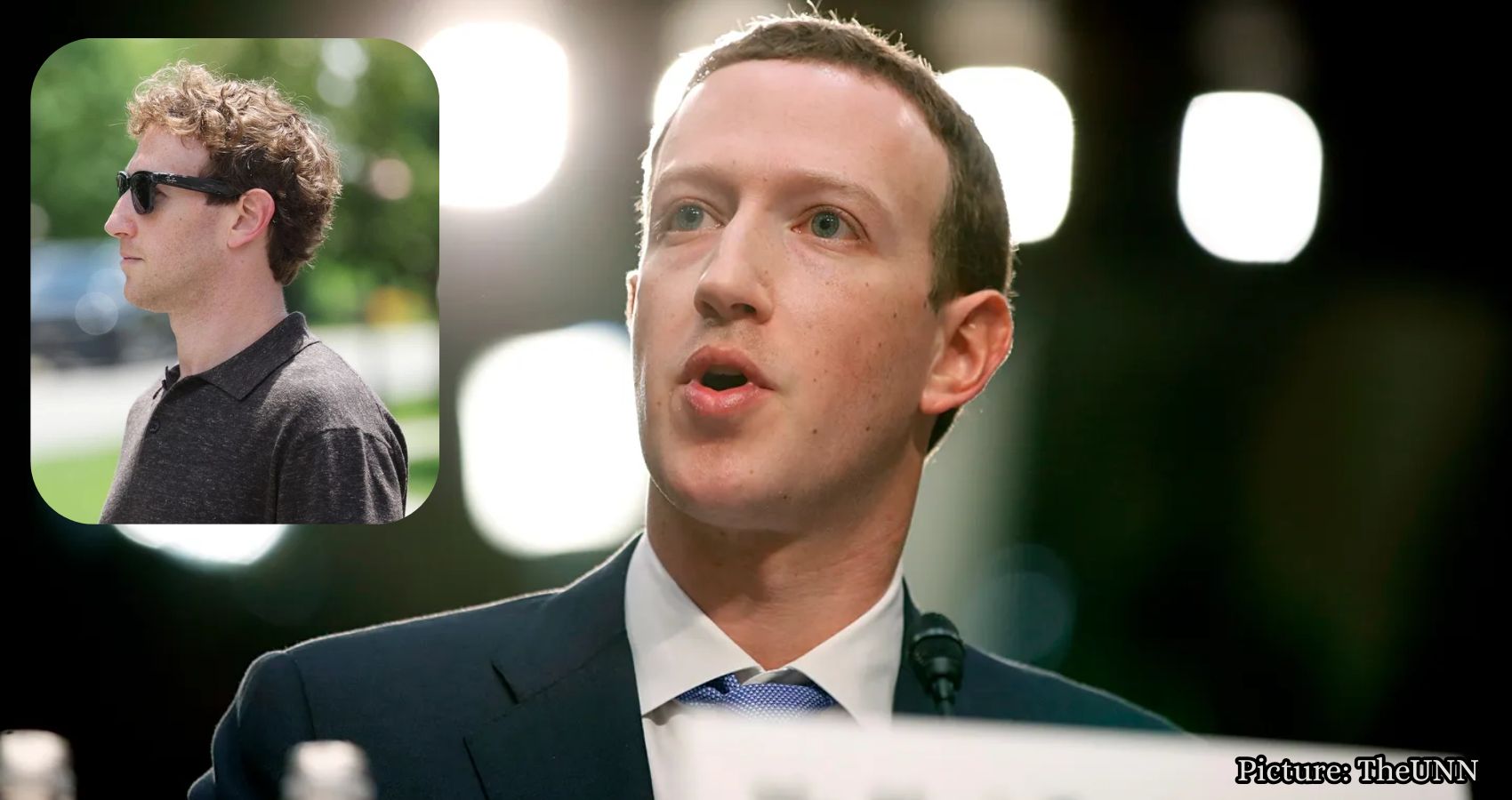
Meta Platforms Inc. is facing a landmark trial over allegations of designing addictive social media features for minors, amid a broader bipartisan backlash against the expansion of artificial intelligence infrastructure in the U.S.
OAKLAND, Calif. — Silicon Valley is currently grappling with significant political and legal challenges on two fronts. In Oakland, California, tech giant Meta Platforms Inc. is embroiled in a high-profile lawsuit initiated by California and 28 other U.S. states. The lawsuit alleges that Meta intentionally created addictive features on its social media platforms that harm children while misleading the public about associated safety risks. Concurrently, a growing bipartisan backlash is emerging across the United States regarding the rapid expansion of artificial intelligence data centers, prompting political leaders from both major parties to implement emergency development constraints despite previous support for the infrastructure from former President Donald Trump.
Inside a federal courtroom just north of Meta’s Silicon Valley headquarters, the primary regulatory battles shaping the American technology landscape are increasingly being fought through state litigation rather than Congressional legislation.
The trial, which began last week in Oakland, involves a coalition of 29 state attorneys general prosecuting Meta Platforms Inc., valued at approximately £1 trillion ($1.36 trillion). The states accuse the company of deliberately fostering social media addiction among minors through its core engineering practices. Prosecutors contend that Meta systematically concealed internal research that detailed mental health risks to youth in an effort to maximize user engagement and advertising revenue.
The legal proceedings have already featured intense testimony. During the trial’s opening week, a former Meta employee turned whistleblower accused CEO Mark Zuckerberg of misleading the public and lawmakers regarding his commitment to youth safety measures.
In their opening statements, state prosecutors outlined their allegations around four operational strategies: they claim Meta designed features that “hook” young users, “hold” them on platforms like Instagram for extended periods, “harvest” their behavioral data, and ultimately “hide” internal findings from parents and regulators. The attorneys argue that this systematic model was specifically crafted to exploit adolescent psychology.
Meta has strongly denied the allegations. In an official statement regarding the trial, Meta spokesperson Liza Crenshaw criticized the legal framework established by the states.
“Rather than sticking to the facts or the law, the states have instead decided to chase an outlandish payout,” Crenshaw stated, asserting that the company has consistently developed age-appropriate safeguards and tools for parents.
The Oakland trial underscores a significant divergence in global technology oversight. While the European Union employs comprehensive legislation such as the Digital Services Act and the United Kingdom enforces strict statutory frameworks, the United States has largely delegated industry regulation to judicial courts and civil tort litigation.
Legal analysts note that the slow pace of Congressional drafting and ongoing partisan gridlock have historically left federal lawmakers ill-equipped to address rapid technological advancements. During a 2018 Capitol Hill hearing on quantum computing, one Republican representative openly acknowledged the knowledge gap, stating, “I can understand about 50% of the things you say.” This dynamic, observers say, continues today, particularly regarding generative artificial intelligence.
As a result, state attorneys general and civil litigants are increasingly using state court injunctions as the primary means to compel structural changes within tech companies.
“Courts have the ability to force these changes much quicker than legislation. Courts can say, ‘Look, you either comply with these orders … or you stop doing business in our state.’ States have the authority to enforce that. For these companies, this is a real point of reckoning,” explained Laura Marquez-Garrett, an attorney with the Social Media Victims Law Center.
Marquez-Garrett’s organization, which represents plaintiffs in thousands of individual cases nationwide, played a crucial role in Meta’s initial trial defeat regarding social media addiction in Los Angeles earlier this year.
Rather than seeking purely monetary damages, the 29 states prosecuting Meta are explicitly asking the court to mandate fundamental changes to the company’s product design. Legal experts draw parallels between the current litigation against Meta and the landmark 1990s Master Settlement Agreement with major tobacco companies, which imposed permanent bans on outdoor advertising, cartoon mascots, paid product placement, and branded promotional apparel.
While Meta defends its product algorithms in court, the broader tech industry’s multi-trillion-dollar push into artificial intelligence is facing a parallel political crisis across the United States.
The rapid growth of industrial-scale data centers—massive facilities that require extensive water cooling and significant electrical grid capacity to train AI models—has sparked widespread public opposition. A poll released three months ago by Gallup indicated that over 70 percent of Americans oppose the construction of data centers in their local communities. Subsequent polling by climate news outlet Heatmap revealed that the percentage of respondents who “strongly oppose” nearby data center developments more than doubled over the past year.
This public resistance has forced a swift political shift among state executives who previously supported tech infrastructure expansion.
In Pennsylvania, Democratic Governor Josh Shapiro announced new regulatory restrictions targeting large-scale data center developments last week, marking a departure from previous policies aimed at fast-tracking permits and reducing regulatory hurdles.
In Texas, Republican Governor Greg Abbott, who previously labeled the state as the “epicenter of AI development,” remarked over the weekend that the data center sector had effectively “dug its own grave” through uncoordinated development.
Texas Republican Senate candidate Ken Paxton has introduced a formal anti-AI infrastructure platform, emphasizing the need for local resource protection.
Despite the widespread local pushback, former President Donald Trump has actively defended the industry’s infrastructure expansion, framing the need for computing capacity as a national security imperative.
“Communities that don’t take a data center, they’re making a mistake,” Trump stated during a recent interview, arguing that municipalities rejecting such facilities risk losing out on long-term tax revenues.
The hostility surrounding physical infrastructure poses a significant threat to Silicon Valley, where major tech valuations heavily depend on continuous AI scaling. Without the physical facilities needed to house specialized microchips, AI deployment could face delays.
In response, tech executives are adopting various strategies to address public concerns.
Some companies, like OpenAI, are engaging in community campaigning by holding local town halls, promising direct municipal investments, and sponsoring local events to mitigate public resistance. OpenAI CEO Sam Altman expressed empathy for concerned residents, noting, “I understand emotionally why people don’t want data centers in their backyard, just as I wouldn’t want a nuclear power plant next to my house, even though I know it’s a super safe thing.”
Other industry leaders have pushed back against opposition, claiming that local resistance is driven by coordinated campaigns. Garry Tan, CEO of Y Combinator, asserted on social media that negative discourse surrounding data centers constitutes a “documented psyop,” while Reddit co-founder Alexis Ohanian emphasized that winning public support would require emotional narratives rather than technical data.
The political volatility surrounding these issues has also attracted foreign influence operations. OpenAI disclosed in early July that foreign state-backed networks, including Russian and Chinese state media accounts, utilized generative AI tools to create and disseminate anti-data center propaganda on social platforms, including political cartoons depicting wealthy executives extracting local resources, designed to exacerbate local resistance.
As Meta’s trial continues in Oakland, with executive testimonies expected from Mark Zuckerberg and Instagram chief Adam Mosseri, both the software and hardware foundations of Silicon Valley remain under intense public, legal, and regulatory scrutiny, highlighting the evolving landscape of technology regulation in the United States.
According to Source Name.