
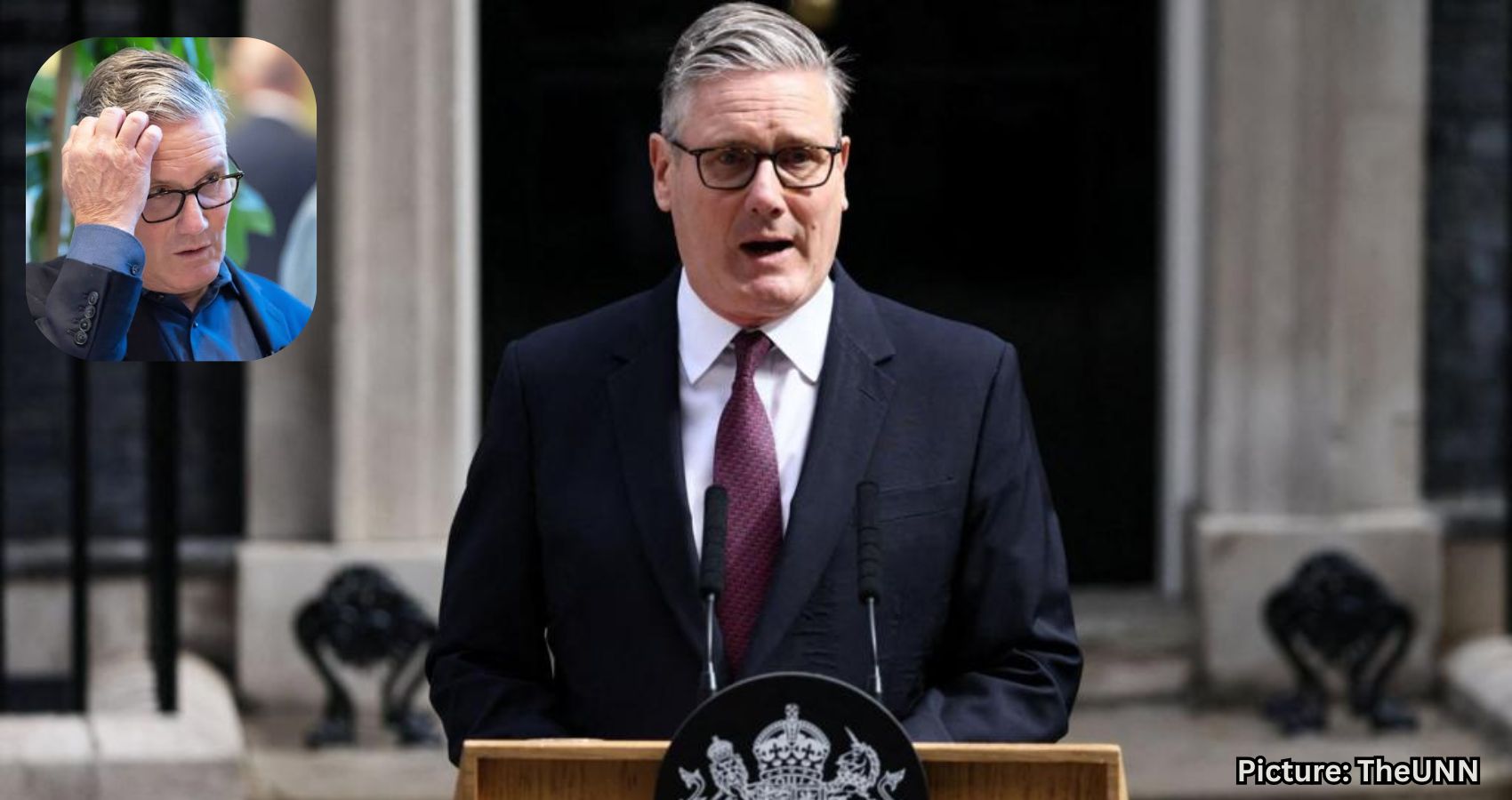
Keir Starmer has resigned as Prime Minister of the United Kingdom, concluding a two-year leadership marked by declining public support and internal party challenges.
Keir Starmer has announced his resignation as Prime Minister of the United Kingdom, effective immediately. This significant political development comes after a tumultuous two-year tenure characterized by fluctuating public support and rising discontent within the Labour Party, which he led to a historic electoral victory in 2021.
Starmer’s resignation follows a notable decline in his approval ratings. Recent polling data from YouGov indicates that his popularity has plummeted to just 28%, a stark contrast to the 45% approval he enjoyed shortly after taking office in April 2021. The Labour Party, once perceived as a rejuvenated political force, now finds itself embroiled in factional disputes and grappling with a lack of coherent direction.
Starmer ascended to the premiership following Boris Johnson’s resignation, which was precipitated by a series of scandals and allegations of misconduct. As a former barrister and the Member of Parliament for Holborn and St Pancras, Starmer was initially praised for his composed leadership style, particularly during the COVID-19 pandemic. His government focused on economic recovery, climate change initiatives, and social justice reforms—issues that resonated with many voters during his rise.
However, as the nation emerged from the pandemic, Starmer faced mounting challenges. Inflation rates surged to a staggering 11.1% in October 2022, the highest in 40 years, leading to widespread public dissatisfaction. Critics within the Labour Party pointed to Starmer’s inability to effectively capitalize on the Conservative Party’s vulnerabilities, raising doubts about his strategic acumen and his capacity to unify the party.
The announcement of Starmer’s resignation has elicited mixed reactions from the public and political analysts. Some view his resignation as a necessary step for the Labour Party to reestablish itself, while others express disappointment at what they perceive as a hasty exit. Political commentator and author Sarah Johnson remarked, “Starmer had the potential to reshape Labour’s image, but the internal divisions within the party ultimately undermined his leadership. His departure opens the door for a new leader to take the reins and potentially reinvigorate the party’s base.”
In the wake of Starmer’s resignation, the Labour Party stands at a pivotal crossroads. Prominent figures such as Deputy Leader Angela Rayner and Shadow Chancellor Rachel Reeves are being discussed as potential successors. The party is expected to convene a leadership election in the coming month to determine its new leader and outline a strategy to move forward.
Starmer’s resignation raises critical questions about the future trajectory of the Labour Party and its ability to effectively challenge the Conservative government. With general elections anticipated in late 2024, Labour must swiftly regroup to present a united front against a Conservative Party that remains a formidable political force. Analysts are already speculating on how this leadership change might affect ongoing policy debates surrounding key issues, including the economy, healthcare, and climate action.
As the UK navigates an increasingly complex political landscape, the Labour Party’s next steps will be crucial in determining its viability as a serious alternative to the Conservatives. The choice of a new leader will not only shape the party’s immediate direction but may also have lasting implications for its role in British politics for years to come.
The Labour Party’s internal dynamics will be under close scrutiny as it moves forward from this leadership transition. Historically characterized by its diverse factions, the party can both enrich its platform and lead to significant internal strife. As the party seeks to unify its base, the incoming leader will need to address longstanding grievances among various factions, from the more centrist elements to the left-wing progressives.
Experts suggest that the next leader will also need to cultivate a clear, compelling narrative to engage with a public increasingly wary of traditional party politics. Given the challenges posed by inflation, economic recovery, and public services, the new leader’s approach to these issues will significantly influence the party’s electoral prospects.
In conclusion, with Keir Starmer’s resignation, the Labour Party finds itself at a critical juncture. The decisions made in the coming weeks regarding leadership and policy direction will be pivotal in shaping the party’s future and its potential to reclaim a prominent position in the UK’s political arena, according to Source Name.