
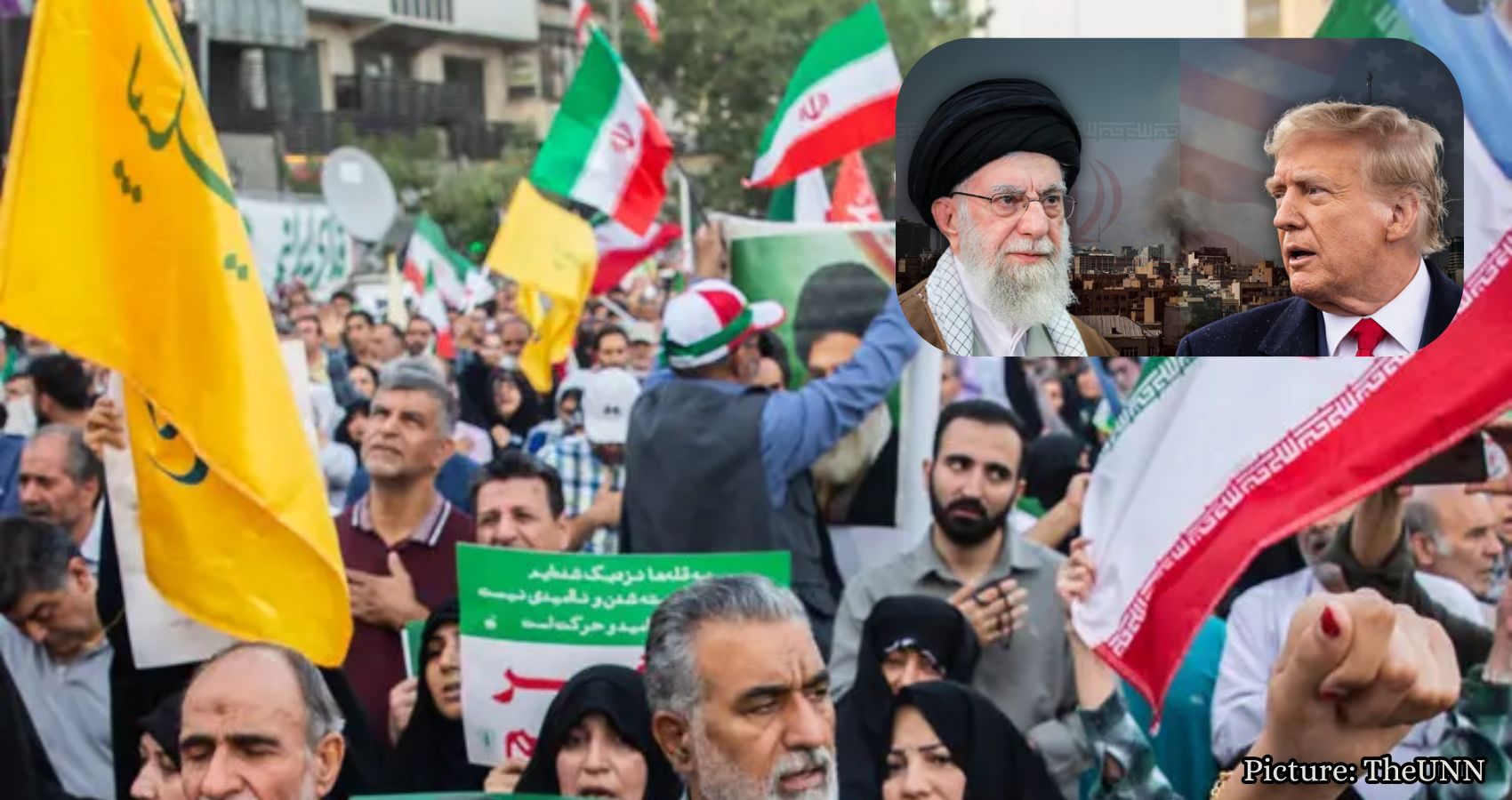
Israel’s leaders indicate readiness for a potential third strike against Iran, while the U.S. maintains close coordination with Jerusalem amid rising tensions in the region.
Israel’s leadership has publicly expressed its preparedness to conduct a third military strike against Iran, as a U.S. official confirmed ongoing close coordination between Washington and Jerusalem. During a graduation ceremony for the Israeli Air Force’s newest pilots, Israel Defense Forces (IDF) Minister Israel Katz stated, “The IDF is on high alert and prepared to resume the campaign, regain air superiority, and carry out an independent Israeli strike against Iran to eliminate threats — even for a third time.” He emphasized, “If we have to return, we will return with even greater force.”
Prime Minister Benjamin Netanyahu echoed Katz’s sentiments, asserting that Israel’s campaign against Iran is far from over. He declared, “The war has not yet ended,” and noted that new challenges are emerging alongside existing ones. “Axes are falling, and axes are rising. We are paying attention to this. We are prepared for every scenario,” he added.
However, reports indicate that the Trump administration currently prefers that Israel refrain from participating in the latest U.S. strikes against Iran. According to two Israeli sources who spoke to CNN, Netanyahu is eager to join the U.S. efforts, but the U.S. has expressed a desire for Israel to remain uninvolved at this time. A U.S. official countered this narrative, labeling it as “fake news,” and reaffirmed the strong relationship between the U.S. and Israel, which has contributed to the success of recent military operations.
Israel initiated a significant military campaign against Iran in June 2025, later joined by the U.S. in targeting key nuclear facilities. A new coordinated military campaign was launched by both allies on February 28. Despite the public declarations of readiness for further military action, some Israeli officials and analysts suggest there is limited appetite for renewed conflict unless it yields a clear strategic advantage.
Nadav Eyal, an Israeli analyst and journalist for Yedioth Aharonoth, noted that while Israel is signaling its willingness to strike Iran, there is a cautious sentiment behind the scenes. He stated, “On the record, Israel is signaling that it is prepared and even eager to strike Iran. But off the record, sources are saying that it is anything but that.” Eyal highlighted the potential repercussions of an Israeli strike, particularly the risk of Iranian ballistic missile attacks against Israel.
As Israel approaches another election, the domestic political consequences of renewed military action could make Netanyahu hesitant to engage in further conflict. Eyal remarked, “If these strikes are meant to provide meaningful, strategic change, it is something the prime minister can sell to the public. But if the intention is only to use Israel as leverage, why should Israelis again experience a couple of weeks or more of sitting in safe rooms and losing their summer vacations?”
Despite the ongoing military rhetoric, the diplomatic landscape remains active. Trump recently declared that the ceasefire with Iran is over, stating, “The Islamic Republic of Iran has asked us to continue ‘talks.’ We have agreed to do so, but the United States has stated to them, in no uncertain terms, that the Cease Fire is OVER!”
In a bid to de-escalate tensions, Qatari negotiators have reportedly traveled to Iran in coordination with the U.S. to engage with Iranian officials. On Thursday, Netanyahu and Trump spoke by phone, agreeing to continue their coordination across various regional fronts. Trump also briefed Netanyahu on American operations in the Gulf.
Military warnings from Israeli officials coincide with reports from the Wall Street Journal indicating that Israel has provided the U.S. with intelligence regarding a potential Iranian plot to assassinate Trump. These developments follow renewed attacks on commercial shipping in the Strait of Hormuz, where U.S. naval officials have described the maritime threat as “severe.” U.S. Naval Forces Central Command reminded commercial vessels that an expanded southern route through the strait remains open, and no controlling authority can require ships to pay a fee for passage.
A U.S. official characterized Iran’s attacks on commercial vessels as “acts of terrorism,” asserting that they violate the memorandum of understanding between Washington and Tehran. “The United States is still committed to finding a resolution, and technical talks continue,” the official stated, adding, “Iran can never possess a nuclear weapon.”
Brig. Gen. Yossi Kuperwasser, a former senior Israeli military intelligence officer, emphasized that Israel has never viewed the memorandum as a sufficient guarantee. “From Israel’s perspective, the MOU was never a good deal,” he told Fox News Digital. He urged that Israel should remain on high alert, ready to respond to any Iranian threats.
As tensions escalate, Israel’s leaders are making it clear that they are prepared to act against Iran. However, the extent to which the U.S. will allow Israel to participate in renewed military operations could significantly influence whether the current confrontation escalates into a broader regional conflict.
Fox News Digital reached out to the White House for comment.
According to Fox News Digital.