
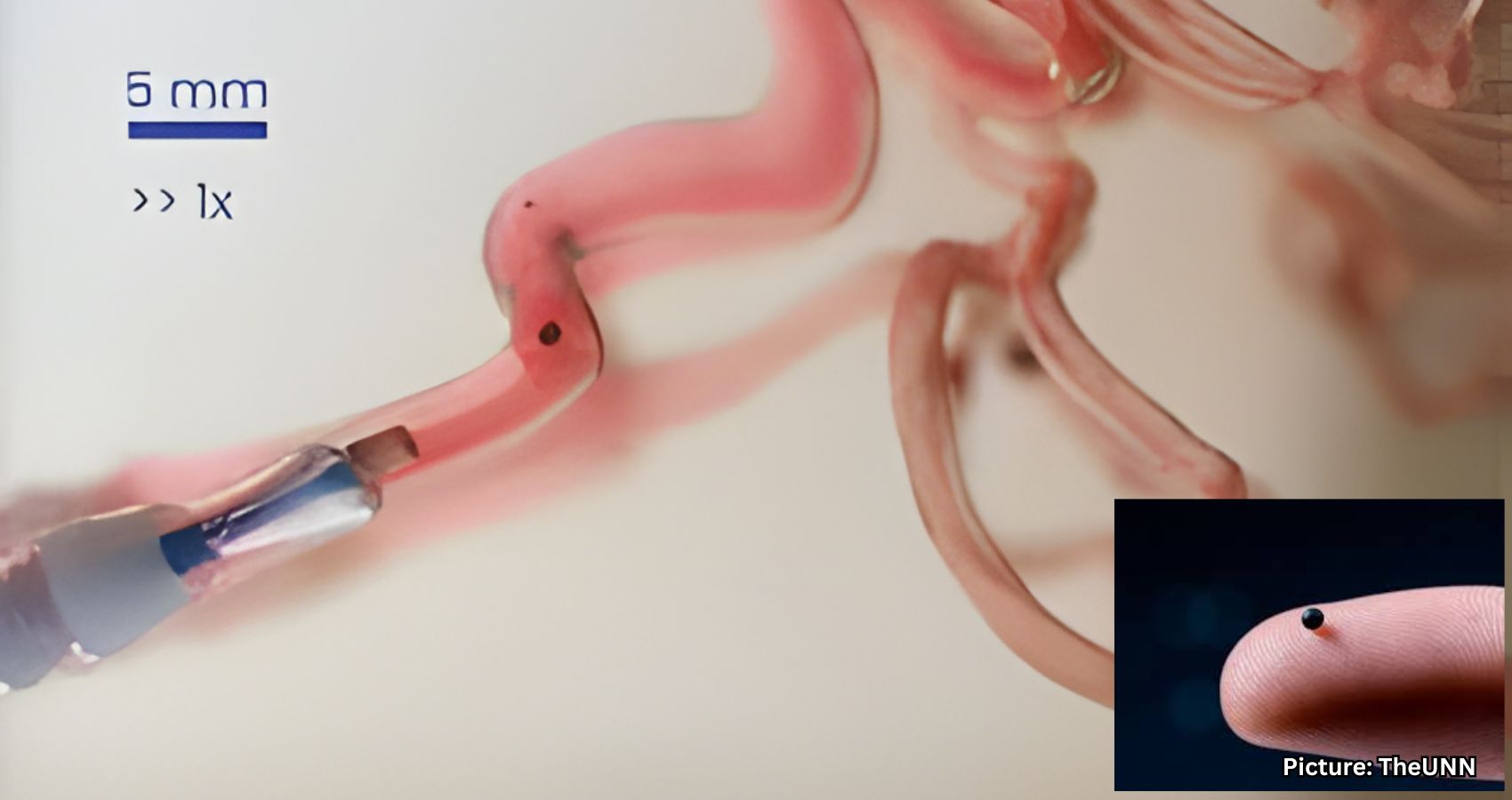
Swiss scientists have developed a grain-sized robot that can be magnetically controlled to deliver medication precisely through blood vessels, marking a significant advancement in medical technology.
In a groundbreaking development, scientists in Switzerland have created a robot as small as a grain of sand, which can be precisely controlled by surgeons using magnets. This innovative device allows for targeted delivery of medicine through blood vessels, ensuring that treatments reach the exact location where they are needed.
Bradley J. Nelson, a professor of robotics at ETH Zurich and co-author of a paper published in the journal Science, expressed optimism about the potential applications of this technology. He noted that the team has only begun to explore the possibilities, and he anticipates that surgeons will discover numerous new uses for this precise tool once they see its capabilities in action.
The robot is housed within a capsule that surgeons guide using magnetic fields. By employing a handheld controller that is both familiar and intuitive, they can navigate the capsule through the body. Surrounding the patient are six electromagnetic coils, each generating a magnetic force that can push or pull the capsule in any direction.
This advanced control system enables surgeons to maneuver the robot through blood vessels or cerebrospinal fluid with remarkable accuracy. The magnetic force is powerful enough to move the capsule against the flow of blood, allowing it to access areas that are typically difficult or unsafe for conventional tools to reach.
The capsule is constructed from biocompatible materials commonly used in medical devices, including tantalum, which provides visibility on X-ray imaging. Inside the capsule, iron oxide nanoparticles developed at ETH Zurich respond to magnetic fields, facilitating movement. These nanoparticles are bound together with gelatin, which also contains the medication intended for delivery.
Once the capsule reaches its target, surgeons can dissolve it on command, allowing for the precise release of medication. Throughout the procedure, doctors can monitor the capsule’s movements in real time using X-ray imaging technology.
Many medications fail during development because they distribute throughout the body rather than remaining localized at the treatment site, leading to unwanted side effects. For instance, when taking aspirin for a headache, the drug circulates throughout the body rather than targeting the source of pain.
The introduction of a microrobot capable of delivering medication directly to a tumor, blood vessel, or abnormal tissue could address this issue. Researchers at ETH Zurich believe that the capsule may be beneficial in treating conditions such as aneurysms, aggressive brain cancers, and arteriovenous malformations. Preliminary tests conducted in pigs and silicone blood vessel models have yielded promising results, and the team is hopeful that human clinical trials could commence within the next three to five years.
If this technology proves successful, it could revolutionize the way treatments are administered. Instead of systemic medications that affect the entire body, patients may receive therapies that target only the specific area requiring attention. This shift could significantly reduce side effects, shorten recovery times, and pave the way for new drug designs that were previously deemed too risky to use.
Moreover, precision care has the potential to enhance the safety of complex procedures for patients who cannot tolerate invasive surgeries. Families facing aggressive cancers or delicate vascular conditions may ultimately benefit from treatment approaches that rely on targeted tools rather than broad-spectrum drugs.
While the concept of a grain-sized robot navigating the bloodstream may seem ambitious, the underlying science is advancing rapidly. Researchers have demonstrated that the capsule can move with precision, maintain tracking under imaging, and dissolve on command. Early findings suggest a future where drug delivery becomes significantly more focused and less harmful.
This research is still in its nascent stages, but it hints at the dawn of a new era in medical robotics. As the technology progresses, it raises intriguing questions about the potential for targeted treatments. If physicians could deploy a tiny robot directly to the source of a medical issue, what specific treatments would patients want this technology to enhance first? The future of medicine may be closer than we think.
According to Source Name, the implications of this technology could be transformative for patient care.