
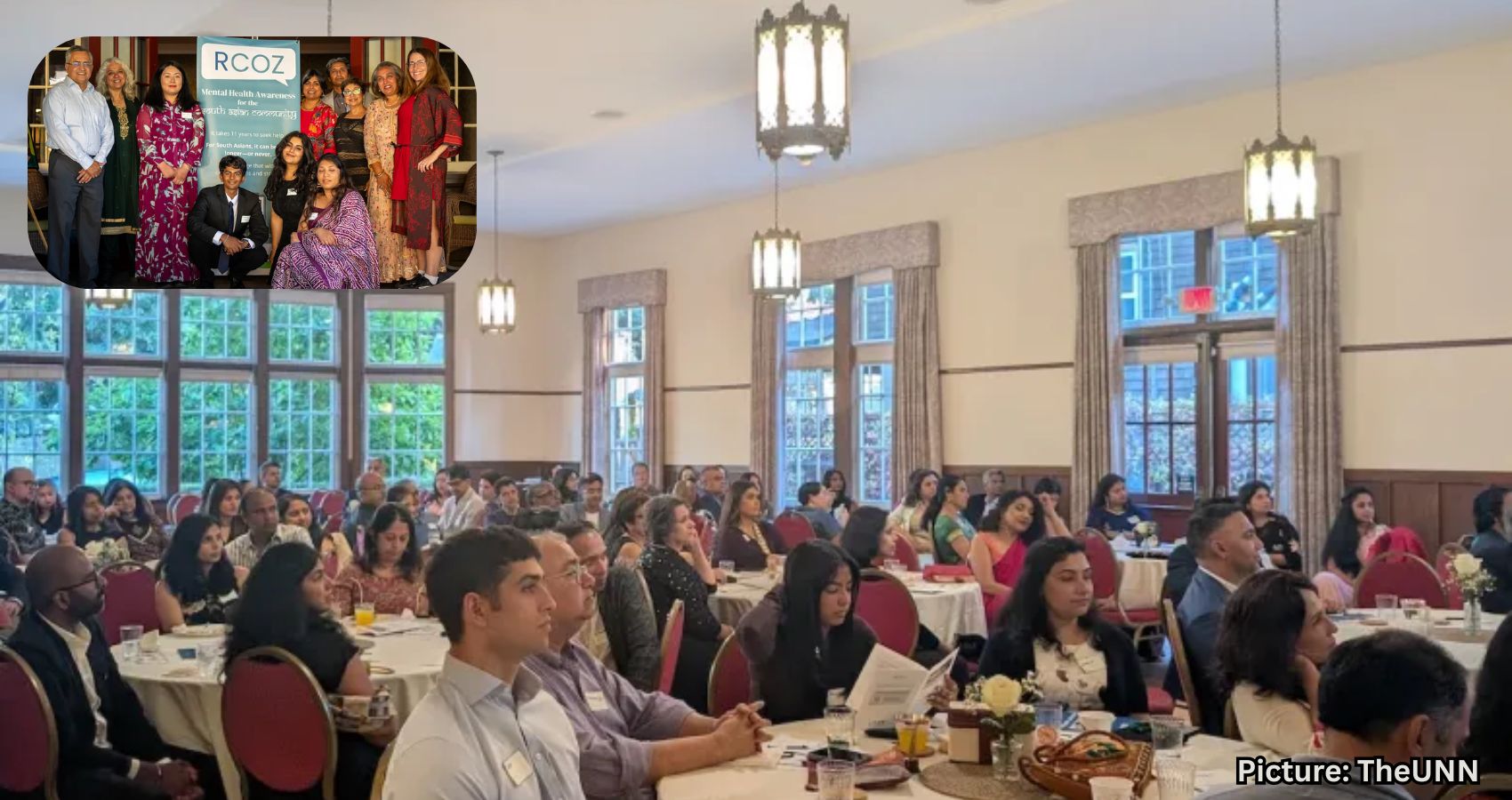
South Asian communities are breaking the silence on mental health at the second annual Rcoz gala, emphasizing the need for open conversations and support for those struggling.
For generations, South Asian communities have achieved remarkable success, yet many have inherited a culture of silence surrounding mental health issues. This unspoken burden was the focus of the second annual Rcoz gala, titled “Gametime for Mental Health,” held at the Women’s Club of Palo Alto on May 30th. The event served as a powerful reminder of the urgency of addressing mental health challenges within the community.
The Rcoz organization, founded by Roopali Rajvanshy, aims to confront this silence head-on. Rajvanshy emphasized the importance of seeking help, stating, “It won’t go away unless we get the right help.” After six months of preparation, the gala brought together a community eager to transition from silence to action, embodying the mission of Rcoz to foster healing and vulnerability, as noted by Sruti Ramnath, the Executive Director of the organization.
Dr. Seema Sehgal, a psychiatrist and board member of Rcoz, highlighted the cultural tendency to hide suffering, which often leads individuals to “wear silence like armor.” This silence creates significant barriers to care, barriers that Rcoz is determined to dismantle.
The consequences of this silence are profound. Shreyas, a Youth Ambassador for Rcoz, shared a staggering statistic: “It takes the average South Asian 11 years to seek help.” This delay often results in intervention only when situations reach a crisis point.
Dr. Apurva Bhatt, a psychiatrist at Stanford, noted that “less than 10% of the kids” she treats for serious conditions come to her before being “forced against their will to be sent into the hospital” during a crisis. For many families, discussions about mental health only occur after it is too late.
The evening featured keynote speaker Paraag Marathe, who is in his 25th year with the San Francisco 49ers and serves as President of 49ers Enterprises. Marathe shared a deeply personal story about his sister’s decade-long battle with depression and anorexia, which ultimately led to her death in 2005.
Marathe revealed that he struggled to find the words to express his feelings and often compartmentalized his emotions, immersing himself in work to avoid confronting the “shame and embarrassment” associated with his sister’s illness. He challenged the audience to recognize that a high-profile career is merely “what I do” and not “who I am.” He urged attendees to embrace their imperfections, asserting that they are what make us human. Marathe provided a roadmap for supporting others through empathy, active listening, and unwavering support, even in the face of rejection.
Rajvanshy founded Rcoz to provide the “language for pain” that was absent in her own upbringing. Through initiatives like the “Chalo Baat” (Let’s Talk) series, the organization creates safe spaces for honest conversations, where storytelling becomes a bridge to healing. These programs address critical issues, including teen suicide clusters and substance abuse.
Rajvanshy recounted a success story of a mother who, after attending a community dialogue, realized that mental health struggles “won’t go away unless we get the right help.” This realization allowed her to avert a crisis with her daughter.
The impact of Rcoz is particularly evident in the “High School Changemaker” program. For students like Shreyas, the program has “reshaped how I understood mental health” by allowing him to view his own depressive episodes through a “South Asian lens.” This perspective contextualizes the “pressure, guilt, and shame” as products of their unique heritage, empowering youth to become “flames of positive light and change” within their families.
This shift among the younger generation is prompting what Dr. Bhatt refers to as “intergenerational healing.” She has observed that when children successfully navigate treatment, their parents—who may have lived with untreated mental illness for years—find the courage to seek their own care. This reversal of intergenerational trauma allows entire family systems to flourish.
As the community transitions from “intervention to prevention,” Sruti emphasizes that Rcoz’s mission remains clear: to ensure that the next generation understands that their mental well-being matters.
Dr. Hari Nair, a psychiatrist and board member, reinforced that “asking for help is not a weakness but a sign of strength and the most loving thing a parent can do.” By breaking the silence and choosing to act, the community transforms “unspoken suffering” into a shared journey of strength and compassion. Many attendees, particularly South Asian men, expressed how much they resonated with Marathe’s story, challenging conventional notions of success within their community.
Reflecting on the event’s impact, Rajvanshy stated, “We had a wonderful evening and were genuinely touched by the response. If people left the gala reflecting on their own mental well-being or feeling more comfortable talking about it, then the evening accomplished exactly what we hoped it would.”
This initiative by Rcoz marks a significant step toward fostering an environment where mental health can be openly discussed and addressed, paving the way for a healthier future for South Asian communities.
According to India Currents.