
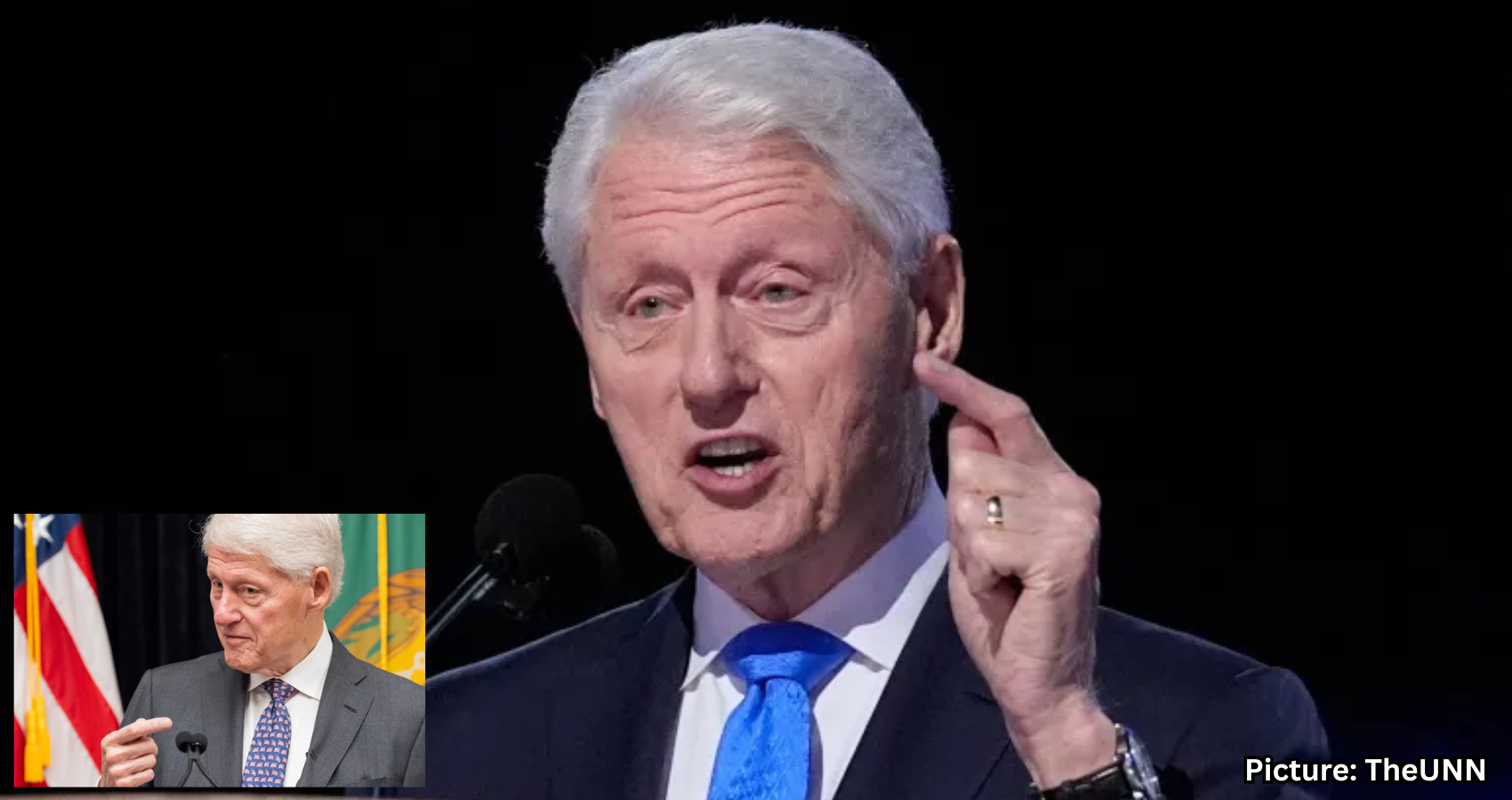
Former President Bill Clinton’s recent deposition in the House Oversight Committee’s investigation into Jeffrey Epstein raises significant questions about executive power and congressional precedent.
The House Oversight Committee has compelled former President Bill Clinton to testify as part of its investigation into Jeffrey Epstein, a move that could set a new precedent regarding the ability of Congress to summon former presidents. This unprecedented event took place in the snowy village of Chappaqua, New York, where Clinton testified under subpoena, marking a significant moment in congressional history.
Lawmakers have suggested that the committee’s ability to compel testimony from a former president could have lasting implications, particularly in future investigations involving other high-profile figures, including former President Donald Trump. According to congressional historians, this is the first instance of a congressional committee deposing a former president. The day prior, Hillary Clinton, the former First Lady and Secretary of State, also testified before the committee, further highlighting the unusual nature of these proceedings.
During her nearly six-hour closed-door testimony, Hillary Clinton stated, “I do not recall ever encountering Mr. Epstein. I never flew on his plane or visited his island, homes or offices.” This statement came in response to questions regarding her husband’s connections to Epstein, as lawmakers noted that Bill Clinton had previously acknowledged knowing Epstein and traveling with him on several occasions.
House Oversight Committee Chairman James Comer, a Republican from Kentucky, remarked that Hillary Clinton had referred to her husband more than a dozen times during her deposition. While there are no allegations of wrongdoing against either Clinton in relation to Epstein, the former president’s past associations have prompted scrutiny from lawmakers.
“It’s very difficult to get people in for these depositions of great power and great wealth,” Comer noted, emphasizing the challenges faced by the committee in securing the Clintons’ testimonies. The depositions took seven months to arrange, with the Clintons testifying at the Chappaqua Performing Arts Center, a venue chosen for its significance rather than a typical congressional setting.
Rep. Lauren Boebert, a Republican from Colorado, drew attention when she appeared to take a photo of Hillary Clinton during the deposition, later sharing it with conservative media outlets. Boebert defended her actions, stating, “I admire [Hillary Clinton’s] blue suit,” while critics like Rep. Yassamin Ansari, a Democrat from Arizona, accused lawmakers of prioritizing photo opportunities over serious inquiry.
After her deposition, Hillary Clinton expressed her surprise at the line of questioning, which included inquiries about conspiracy theories such as Pizzagate, a false narrative that emerged during the 2016 presidential campaign. She described the questions as “quite unusual,” reflecting the bizarre nature of some of the topics discussed during her testimony.
Rep. Nancy Mace, a Republican from North Carolina, characterized Hillary Clinton’s demeanor during her deposition as “unhinged,” expressing hope that Bill Clinton would be more composed during his own testimony. Meanwhile, Rep. Anna Paulina Luna, a Republican from Florida, speculated on the nature of Epstein’s operations, suggesting that they could have involved intelligence gathering, although she provided no evidence to support her claims.
One of the key areas of questioning for both Clintons focused on how Epstein leveraged his connections with powerful individuals to conceal his criminal activities. This inquiry has brought figures like Bill Clinton and Donald Trump into the spotlight, as both have been mentioned in previously released documents related to Epstein.
Even Donald Trump, who has faced his own scrutiny regarding Epstein, expressed some sympathy for Bill Clinton’s situation. “I don’t like seeing him deposed. But they certainly went after me a lot more than that,” Trump remarked. When asked about the Epstein files, he claimed ignorance, stating, “I don’t know anything about the Epstein files. I’ve been totally exonerated.”
Republicans on the Oversight Committee have echoed Trump’s sentiment, with Comer asserting that the evidence suggests Trump has been exonerated regarding any connections to Epstein. However, Democrats have raised concerns about the selective nature of the committee’s inquiries, questioning why Clinton was called to testify while Trump has not yet been summoned.
Rep. Robert Garcia, a Democrat from California, emphasized the implications of this new precedent, stating, “We now want President Trump to come in and to testify under oath in front of the Oversight Committee.” He further argued that the committee should also seek testimony from Trump’s wife, Melania Trump, given her past associations with Epstein.
The issue of separation of powers remains a critical aspect of the American constitutional framework. Historically, only a few presidents have testified before Congress, and none have been deposed as former presidents. The proceedings in Chappaqua could signal a shift in how congressional oversight is conducted, potentially leading to more frequent testimonies from former presidents in the future.
As the investigation into Epstein continues, the implications of the Clintons’ depositions may resonate throughout Congress and the White House for years to come, establishing a new standard for accountability among the nation’s highest officeholders.
According to Fox News, the ramifications of this unprecedented event are still unfolding, with both political and legal observers closely monitoring the situation.