
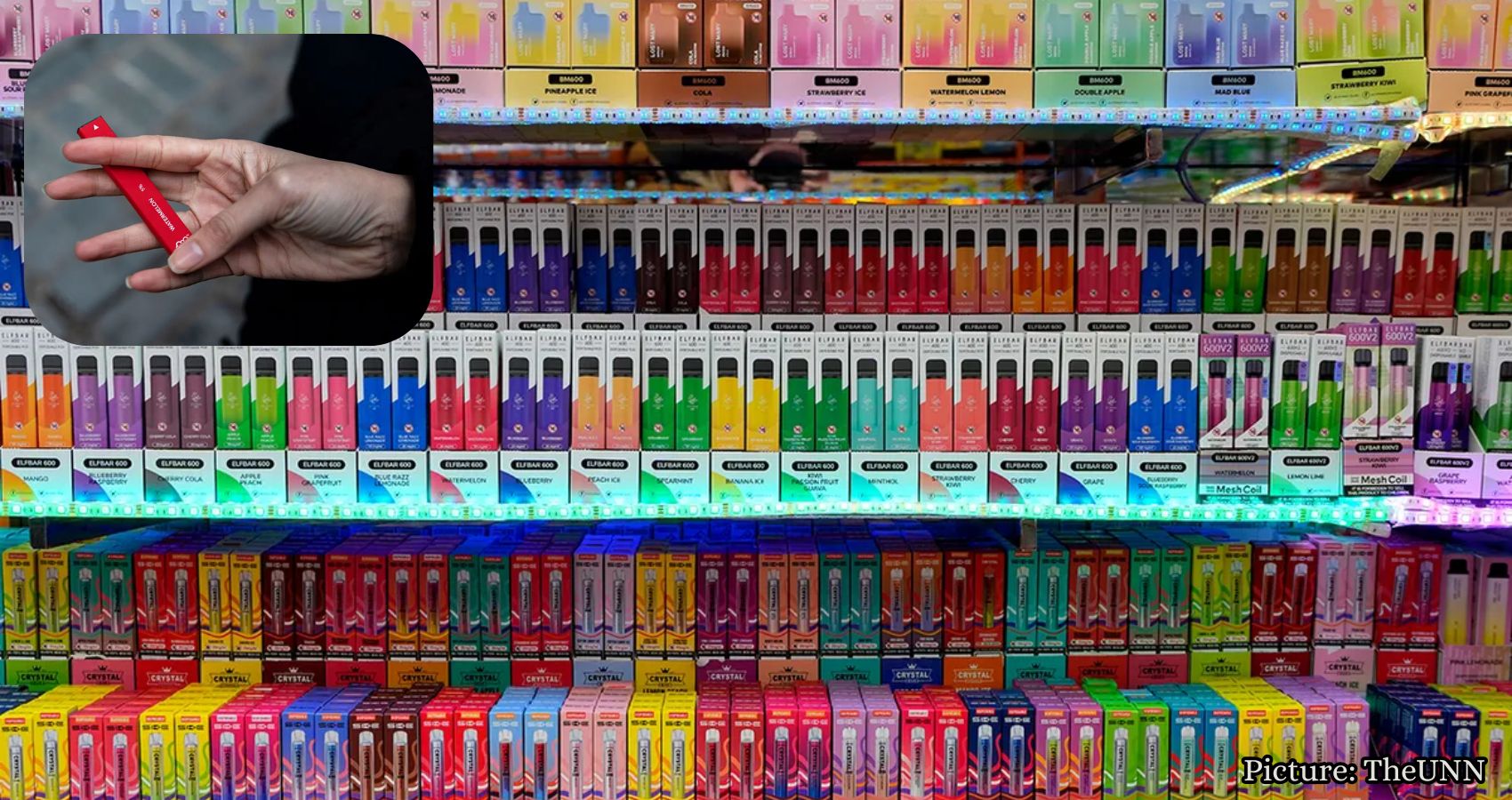
Former law enforcement official Edgar Domenech warns that illicit Chinese vape companies are exploiting legal loopholes by using an unregulated nicotine substitute to target youth with flavored disposable vapes.
Chinese organized crime groups are reportedly replacing traditional nicotine with 6-methyl nicotine in flavored disposable vapes to evade oversight from the Food and Drug Administration (FDA), according to Edgar Domenech, a former deputy director of the Bureau of Alcohol, Tobacco, Firearms and Explosives. Domenech has raised concerns about the implications of this practice, particularly regarding its impact on youth.
In an interview with Fox News Digital, Domenech explained that these illicit companies have discovered a way to exploit legal loopholes by simply altering the ingredients in their products. This tactic creates confusion and complicates enforcement efforts, leaving regulatory agencies unable to address the issue effectively.
6-methyl nicotine, also referred to as 6MN or “NIX,” is a synthetic compound marketed under various brand names, including Nixodine and Metatine. Some manufacturers argue that products containing 6-methyl nicotine fall outside the FDA’s jurisdiction. Domenech emphasized that while nicotine is a well-known addictive substance regulated by the FDA, the substitute being manufactured illegally in China remains largely unstudied and poses unknown risks.
“It’s a different type of substance,” he stated. “Now, all of a sudden, the FDA doesn’t have oversight, but it’s the same product. It’s a disposable vape product with flavors targeting our kids and our youth with unknown chemicals.”
Domenech pointed out that the organized crime groups are adept at staying ahead of law enforcement by changing product ingredients, which complicates efforts to combat the illicit trade. He noted that these companies maintain consistent branding, packaging, and flavors while altering just one ingredient, allowing them to profit from unsuspecting children.
“They’re putting these products side by side in these big shops because the packaging is all the same,” he said. “All they’ve done is changed one of the ingredients in the product.”
The former sheriff of New York City expressed concern that these companies are specifically targeting “our youngest, most vulnerable generation” with flavored disposable vapes that contain chemicals whose long-term health effects are still unknown.
“They’re targeting our youth with flavors,” he remarked. “Whether it’s fruity flavors, candy-type flavors, or dessert flavors, they’re enticing our kids to ingest these products with unknown consequences because we don’t know what’s in them to begin with.”
As youth vaping continues to rise, some schools have started installing bathroom sensors to detect vaping activity. Domenech noted that children as young as 11 years old are using these products.
He warned that the health implications of these products could lead to “unknown health and mental well-being issues down the line.” He firmly stated, “There is nothing healthy about the illegal disposable vapes that are flavored targeting our kids.”
A recent study from Duke University raised alarms about 6-methyl nicotine, suggesting it may be more potent than traditional nicotine, which raises concerns about its potential for increased addiction. Public patent records indicate that Geoff Habicht, CEO of Arizona-based Mi-Pod, is listed as an inventor on U.S. patents related to 6-methyl nicotine and its compounds.
Domenech emphasized the importance of raising awareness among lawmakers, health professionals, parents, and educational institutions to close regulatory gaps and prevent further youth exposure to these products. “Education is paramount for us to combat this issue,” he said. “We need to educate our policymakers, health professionals, and parents to understand that these products are illegal and contain unknown substances that can have serious health consequences.”
He called for clearer guidance for lawmakers and law enforcement to help them identify and seize these products effectively. “We need a concerted effort to educate our policymakers at the federal, state, and local levels because we need boots on the ground to understand what they can do legally in seizing these products,” he added.
Domenech described the companies involved as a “national security problem,” insisting that their products should be confiscated upon entry into the United States. “We’re losing a generation of our future, our future leaders to this product,” he concluded.
According to Fox News, the situation underscores the urgent need for comprehensive strategies to combat the rising tide of illicit vaping products targeting children.