
Finnish President Alexander Stubb credits former President Donald Trump for advocating peace talks in the Russia-Ukraine conflict while asserting that Finland is well-prepared for any potential threats from Moscow.
UNITED NATIONS — In a recent interview, Finnish President Alexander Stubb expressed his belief that former President Donald Trump has played a significant role in pushing for peace negotiations in the ongoing Russia-Ukraine war. Stubb emphasized that Finland is fully prepared to address any threats that may arise from Moscow.
As Ukrainian President Volodymyr Zelenskyy cautioned that Russia might extend its military actions beyond Ukraine, Stubb adopted a notably calmer perspective. He stated, “I think we’re certainly in a better place than we were before President Trump started,” during an on-camera discussion with Fox News Digital at the U.N. General Assembly in New York. Stubb noted that Trump has intensified efforts over the past year and a half to find a peaceful resolution, collaborating with negotiators such as Steve Witkoff and Jared Kushner.
Stubb, who has been actively involved in diplomatic efforts, mentioned that he and Norway’s prime minister have been working behind the scenes to facilitate communication among Ukraine, the United States, and European governments. “I think he’s really working hard and hopefully we’ll get a solution,” he added.
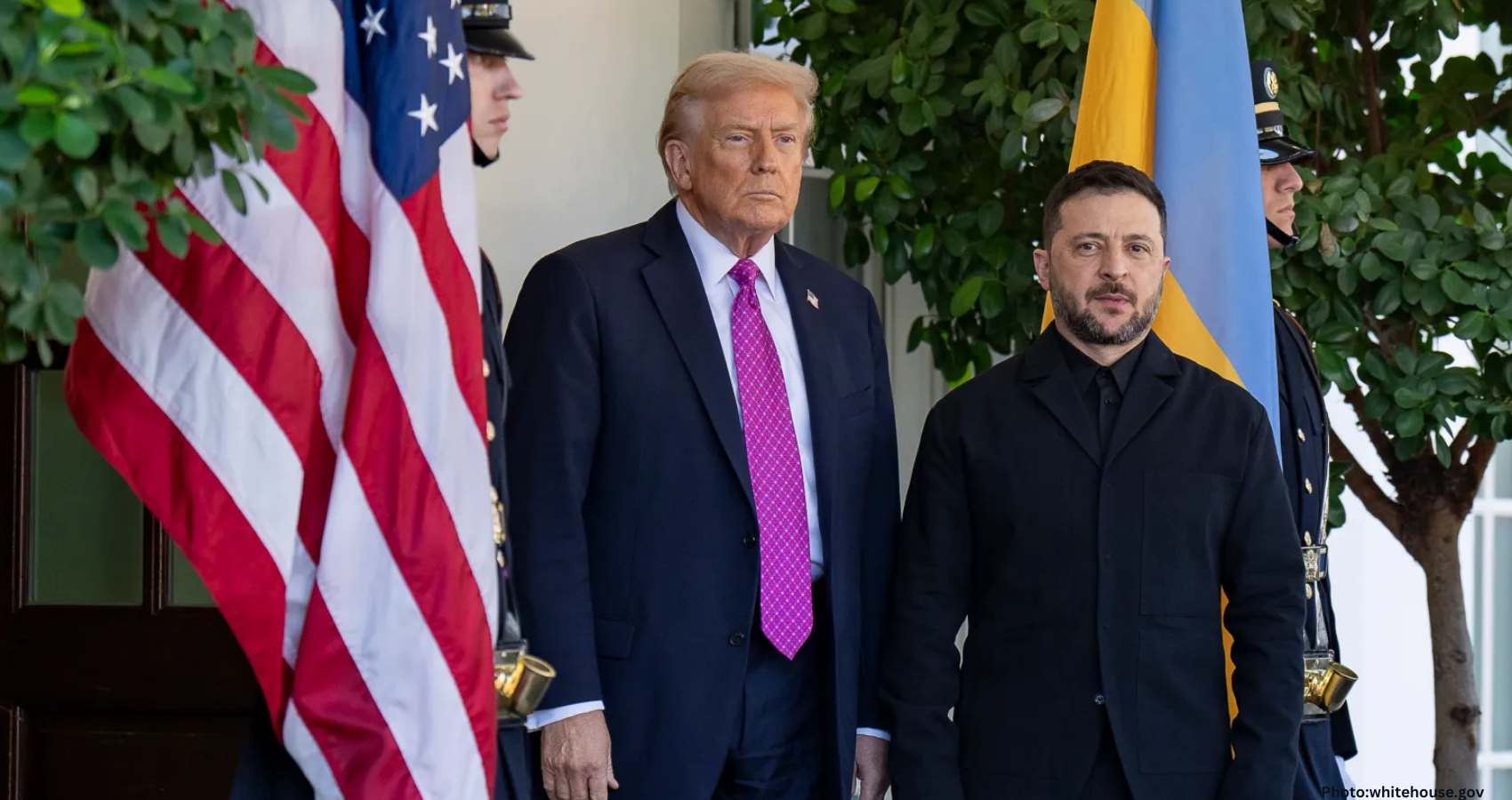
The interview took place during a week of intense diplomatic activity in New York, where discussions centered on the conflicts in Ukraine and the Middle East. Trump and Zelenskyy met during the U.N. General Assembly, as the U.S. sought to revive negotiations with Moscow. Following their meeting, Zelenskyy reiterated Ukraine’s commitment to peace and expressed gratitude to Trump for sending envoys to Kyiv after their discussions in Moscow.
When asked about the potential for Russian aggression against other European nations, Zelenskyy warned of a heightened risk of drone, missile, or land operations targeting countries bordering Russia or Belarus. He suggested that Russian President Vladimir Putin, unable to achieve his military objectives in Ukraine, might seek to destabilize other areas in Europe to pressure Western governments into reducing their support for Kyiv. Zelenskyy pointed to recent drone incursions and disruptions affecting several European nations, arguing that Moscow is already attempting to intimidate European societies.
In response to inquiries about how European countries should react to this growing threat, Zelenskyy offered a straightforward directive: “Respond. Always respond. It’s not about the war. If you don’t respond, Russians, they will go further.”
Contrasting Zelenskyy’s warnings, Stubb maintained a more composed outlook regarding the possibility of Russian attacks on Finland, which shares the longest border with Russia. “As commander-in-chief in Finland, I sit on all the relevant information and I just don’t see a factual basis for it,” he stated.
However, Stubb acknowledged that while Finland does not perceive an immediate threat of invasion, Moscow continues to target Europe through a broader “hybrid” campaign. He highlighted cyberattacks, sabotage, and damage to undersea cables in the Baltic Sea as part of this strategy. “We have to see this as a campaign,” he remarked, adding that Russia aims to intimidate Europe and instill fear.
Stubb’s approach to the situation was characteristically Finnish: “cool, calm and collected, take a sauna and a nice bath and deal with it.” He explained that Finland’s preparedness stems from decades of anticipating potential threats from its eastern neighbor. “We are calm because we are prepared,” he asserted.
Finland, with a population of 5.6 million, has invested in its military capabilities, including mandatory military service, a reserve force, and extensive civilian shelters. The Finnish Defence Forces estimate that the country can mobilize 280,000 personnel in times of conflict, with additional reservists available if needed. Recently, Finland announced the acquisition of 64 F-35A fighter jets to replace its aging F/A-18 Hornet fleet, further bolstering its defense capabilities.
Stubb humorously noted, “We don’t have them because we’re worried about Sweden. We have them because we see a security threat coming from Russia.” He emphasized that Finland’s military readiness, combined with its recent NATO membership, significantly reduces the likelihood of a direct Russian attack. Finland joined NATO as its 31st member on April 4, 2023, after abandoning its long-standing policy of military non-alignment in response to Russia’s full-scale invasion of Ukraine.
Stubb expressed confidence in Finland’s preparedness, stating, “We feel that we’re very prepared, and that gives us a strong enough deterrent that we don’t believe that Russia is going to test a country like Finland.” He also highlighted Finland’s role as a security provider within NATO.
During his address at the U.N. General Assembly on September 22, Stubb advocated for continued support for Ukraine, referring to the “Coalition of the Willing” as “particularly close to my heart.” He stressed the coalition’s commitment to achieving a “just and lasting peace in Ukraine in accordance with the U.N. Charter.”
Additionally, Stubb called on SpaceX owner Elon Musk to extend Starlink coverage to enable Ukrainian forces to utilize the satellite network against Russian ballistic missile launchers, arguing that such support could enhance Ukraine’s defensive capabilities.
Stubb also addressed the interconnected nature of global security challenges, stating that conflicts involving Russia and Iran cannot be viewed in isolation. He alleged that Moscow provides intelligence to Tehran, which has been used against U.S. military bases in the Gulf, while Iranian weapons have been supplied to Russia for use in Ukraine.
“We’re going in this merry-go-round where every bit of the conflict is linked to another,” Stubb remarked. “The sooner we can end both, the better.” He echoed Trump’s call for international cooperation to prevent Iran from acquiring nuclear weapons, emphasizing the need for a unified response to the proliferation of conflicts worldwide.
For Stubb, the current global security landscape presents a complex challenge, requiring diplomatic efforts to address multiple crises simultaneously. “It’s not a zero-sum game,” he concluded. “We have to deal with a multiplicity of conflicts right now, unfortunately.” According to Fox News, Stubb’s remarks reflect a nuanced understanding of the geopolitical landscape as Finland navigates its security strategy amid evolving threats.