
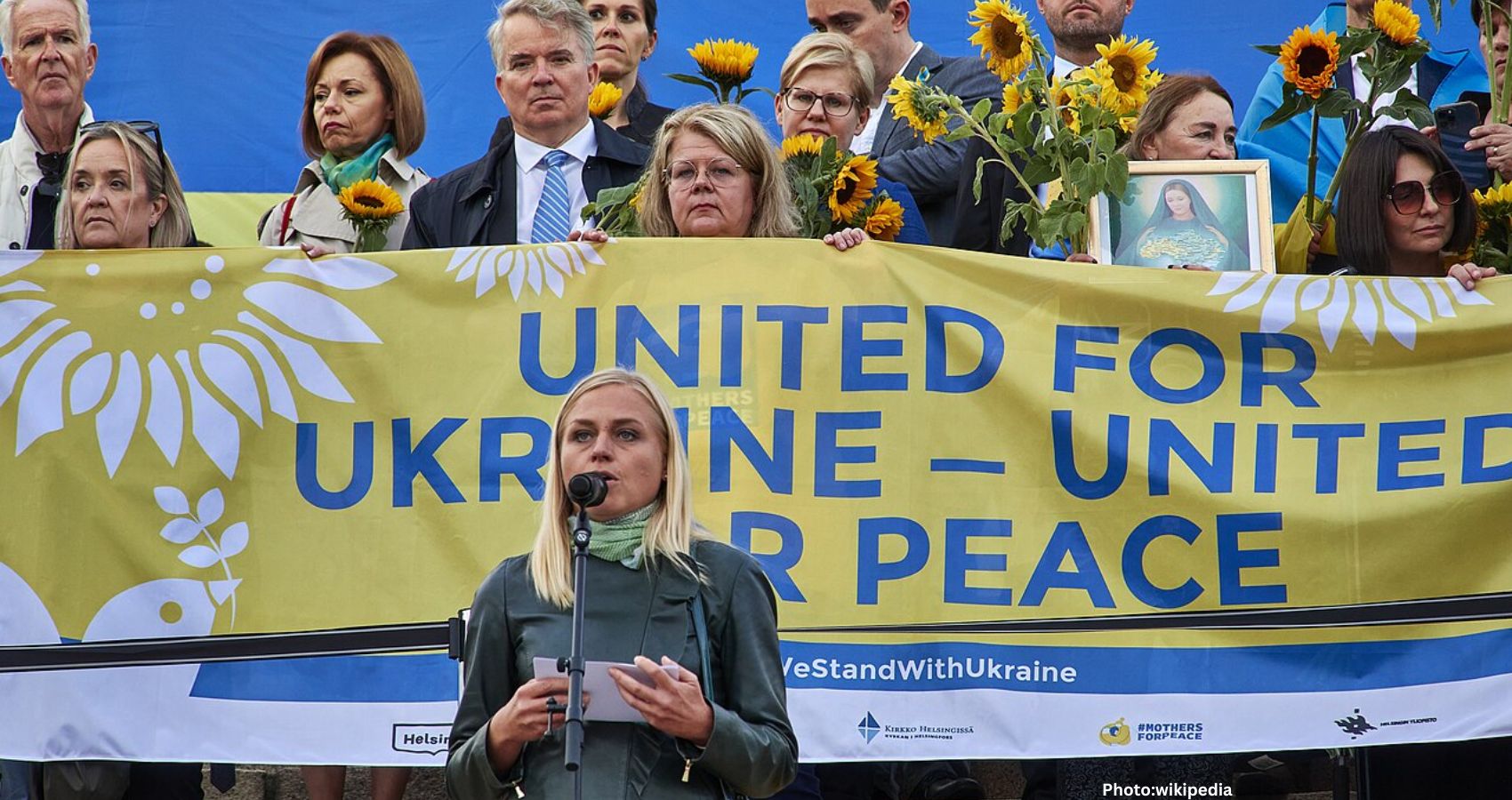
Finnish Foreign Minister Elina Valtonen asserts that Ukraine has gained significant leverage over Russia as negotiations are reconsidered amid Kyiv’s military advancements.
Finnish Foreign Minister Elina Valtonen has stated that Ukraine is currently in a position of strength against Russia, as Moscow has resumed discussions about potential negotiations following Kyiv’s recent military successes.
In an exclusive interview with Fox News Digital at the United Nations headquarters in New York, Valtonen emphasized that Ukraine has significantly bolstered its military, political, and diplomatic standing in recent months. This shift in dynamics, she argues, presents a crucial opportunity for advancing peace talks.
“Ukraine certainly is now holding the cards,” Valtonen remarked. “They have strengthened themselves immensely over the course of the past three, four months, both militarily and politically, diplomatically. And I think this opens a great window of opportunity for actually advancing the peace talks.”
Valtonen’s comments come on the heels of reports indicating that Ukraine’s top military commander announced the recapture of over 600 square kilometers (approximately 230 square miles) of territory in 2026. This marks a significant change after years of slow Russian territorial gains. Additionally, renewed diplomatic efforts have surfaced, including Ukrainian President Volodymyr Zelenskyy’s expressed willingness to halt fighting along current lines as a precursor to talks, while Russian President Vladimir Putin has publicly dismissed the idea of a direct meeting for the time being.
Finland shares an extensive border of approximately 820 miles with Russia, positioning it as one of NATO’s most strategically vulnerable members. Valtonen pointed out that Moscow has shown little inclination to make concessions, asserting that the onus for ending the war lies squarely with the Kremlin.
“So far, Russia hasn’t been willing to make any concessions, and essentially Russia could end the war today if they wanted to, because it was their war in the first place,” she stated. “So I’m hopeful that this could be the right time to relaunch those talks.”
Efforts to negotiate peace remain stalled due to a fundamental divide that has persisted throughout the conflict: Ukraine demands a ceasefire and negotiations without ceding territory, while Russia insists on maintaining control over occupied Ukrainian regions. In early June, Putin remarked that there was “no point” in meeting with Zelenskyy at that time, reiterating Moscow’s broader war objectives.
When asked about U.S.-led initiatives to negotiate an end to the conflict, Valtonen commended Washington’s involvement but underscored that Ukraine must ultimately decide whether to accept any concessions, particularly regarding territorial integrity.
“I think the U.S. involvement in this entire process has been a very good one, and it’s important that the U.S. stays engaged, because at the end of the day, it’s about freedom, it’s the future of not only Europe, but also of global peace,” she explained.
Valtonen also stressed the necessity for Europe to be involved in the negotiations, given that Russia’s aggression directly impacts the continent’s security landscape. She asserted that any serious discussions would require Russia’s commitment to a full ceasefire.
“First and foremost, we would need Russia at the table willing to end the war,” Valtonen said. “And that would need to happen through a full ceasefire, because only that would open the possibility for true negotiations.”
Additionally, Valtonen acknowledged former President Donald Trump’s role in urging European allies to increase their defense spending, noting that this pressure has positively influenced NATO’s balance after years of inequity. Finland has also taken significant steps to enhance its defense capabilities, planning to raise its defense spending to 3.2% of GDP by 2030, up from 2.5% in 2025.
During a recent Senate Foreign Relations Committee hearing, Secretary of State Marco Rubio praised Finland and Sweden for their contributions to NATO, highlighting their advanced defense industries and technologies. He described them as “extraordinary partners” in strengthening the alliance.
Valtonen emphasized that Finland’s approach to security is deeply influenced by its historical experiences with Russia, particularly its lengthy border with the country.
“Finland obviously has taken the Russian threat extremely seriously because we have the longest border with them,” she noted. “We certainly cherish our status as the happiest country in the world, i.e., democracy, the rule of law, and human rights, which we hold dear as values over anything that Russia could offer.”
Reflecting on Finland’s history during World War II, when the Soviet Union invaded, Valtonen underscored the importance of deterrence in maintaining national security.
“The last time the Soviet Union, i.e., Russia, tried to invade us was during the Second World War,” she recalled. “Happily, we were able to fend them off, but of course at a massive cost to society. For us, it has been clear that if we invest in our deterrence, then that’s a signal to Russia — do not come here.”
On the topic of Iran, Valtonen clarified that Finnish President Alexander Stubb’s earlier comments, which suggested that the conflict was not a NATO issue, should not imply that Europe is disengaging from the crisis.
“I don’t think our president meant that this has nothing to do with European countries or NATO allies,” she stated. “I think what he probably meant more is that NATO obviously is not directly involved as an organization, which is true.”
Her remarks followed a weekend of escalated tensions in the Iran conflict, with Tehran launching missiles at Israel and Israel retaliating against military targets in Iran. This escalation occurs amid ongoing efforts by the U.S. and its allies to prevent Iran from becoming a nuclear power and to address threats to Israel and regional shipping.
Valtonen noted that Finland has participated in efforts led by France and the United Kingdom to ensure the safety of the Strait of Hormuz, a vital global energy route.
“It’s so important that such straits are not weaponized by any country around the world,” she asserted.
When questioned about European countries’ responses to U.S. requests for military support during the Iran crisis, Valtonen explained that while Finland does not host U.S. bases, many European allies have been supportive of Washington’s requests.
“Finland has been helping the U.S. through so many ways,” she said. “We don’t have any U.S. bases in Finland, so there’s nothing we can shut down. But having said this, the vast majority of European countries have said yes to everything that the U.S. has asked during the past couple of months when this war effort has been ongoing.”
Valtonen concluded by emphasizing the commitment of NATO allies to assist the U.S., demonstrating their willingness to support Washington even when the alliance is not formally involved in the conflict.
Her insights reflect the ongoing complexities of international diplomacy and the evolving landscape of security in Europe and beyond, as nations navigate the challenges posed by both Russia and Iran.
According to Reuters, Valtonen’s remarks underscore the critical role of diplomatic engagement in addressing global security concerns.