
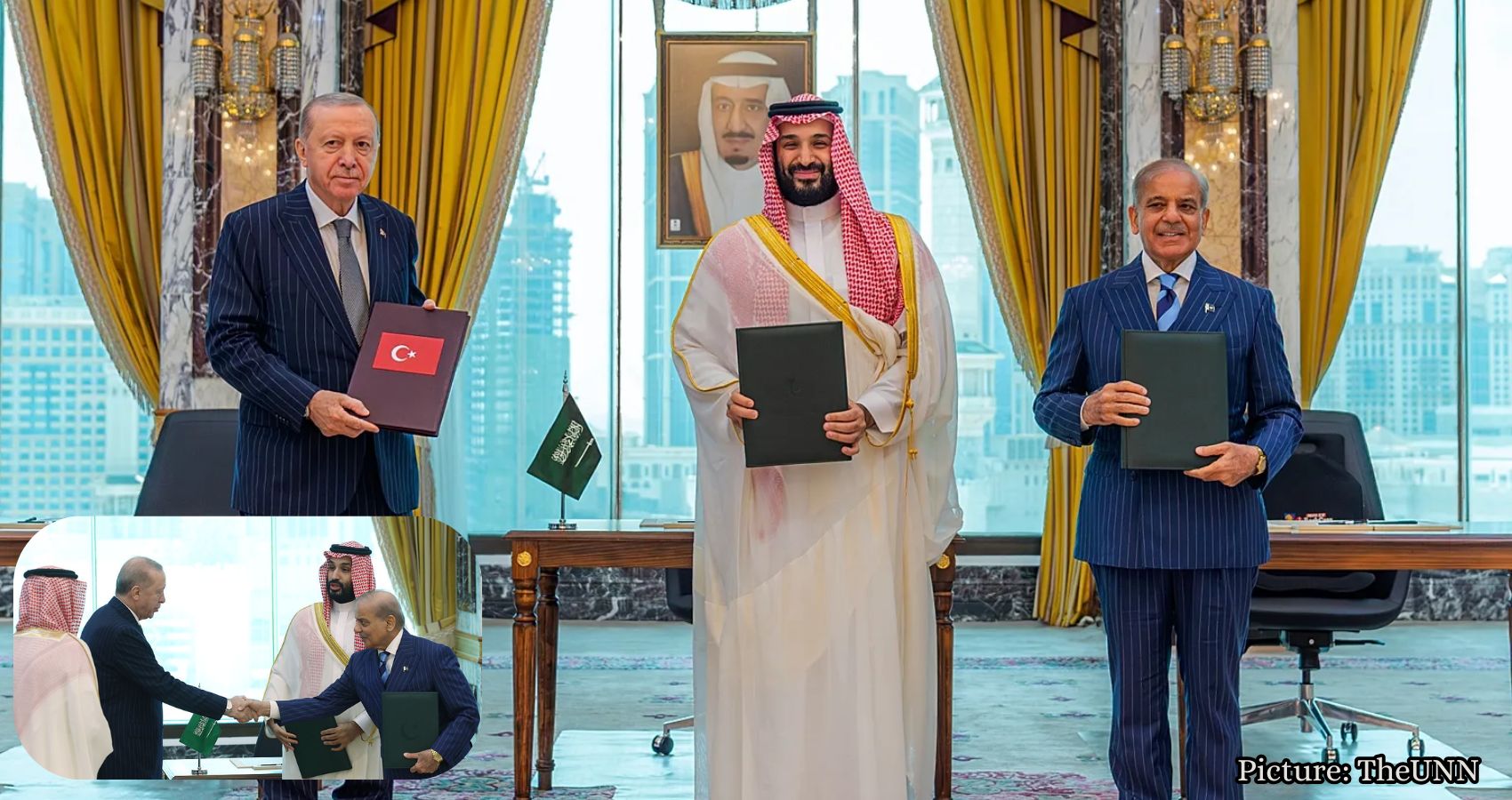
Turkish President Recep Tayyip Erdogan has arrived in Saudi Arabia to discuss a trilateral defense agreement with Saudi Arabia and Pakistan amid rising geopolitical tensions in the Middle East.
Turkish President Recep Tayyip Erdogan arrived in Jeddah, Saudi Arabia, on Friday, where he is expected to engage in discussions regarding a trilateral defense agreement involving Turkey, Saudi Arabia, and Pakistan. This anticipated pact comes at a time of heightened geopolitical tensions in the Middle East, particularly following the recent US-Iran conflict and ongoing security concerns in the region.
Saudi state television channel Al Ekhbariya confirmed Erdogan’s arrival in the Red Sea port city, where the focus of discussions is expected to be on expanding defense and military cooperation among the three nations.
While officials have not disclosed specific details about the proposed agreement, it is perceived as a strategic move to enhance military coordination between Ankara, Riyadh, and Islamabad amid increasing instability across the region. The anticipated agreement follows a series of security developments, including concerns over attacks by Iran-backed groups and continued diplomatic efforts aimed at reducing tensions in the Middle East.
In a related development, Pakistan Prime Minister Shehbaz Sharif is also in Saudi Arabia for a three-day visit, accompanied by senior officials, including Field Marshal and Chief of Army Staff Asim Munir and Deputy Prime Minister and Foreign Minister Ishaq Dar. According to the Prime Minister’s Office in Pakistan, Sharif is expected to hold talks with Saudi Crown Prince Mohammed bin Salman to strengthen bilateral ties and discuss regional developments. This visit coincides with ongoing diplomatic efforts between Pakistan and Qatar concerning the US-Iran tensions.
Separately, Bahrain has condemned an attack by Iran-backed Houthi rebels on civilians and civilian infrastructure in Saudi Arabia’s Najran province, labeling it a “dangerous escalation.” Bahrain’s foreign ministry reported that indiscriminate projectiles injured several civilians and reaffirmed its support for Saudi Arabia’s efforts to safeguard its national security and critical infrastructure. The ministry also urged the international community to hold the Houthis accountable and to curb their access to funding and weapons.
In light of these developments, Saudi Arabia is reportedly on alert for possible future attacks. According to CNN, citing a Saudi official, Riyadh is preparing for the potential of coordinated attacks targeting energy facilities, airports, and ports by Iraqi militias and Iran-backed Houthis. The official noted that intelligence shared by Saudi Arabia, the United States, and regional partners suggested that such attacks could occur in the near future. Saudi authorities have stated they will take all necessary measures to protect the country’s security while continuing diplomatic efforts to de-escalate tensions.
Meanwhile, Israeli forces have withdrawn from the Qalandiya refugee camp and the nearby Kafr Aqab area after a two-day military operation, according to Al Jazeera. The Jerusalem governorate reported that more than 50 Palestinians were injured during the operation, and over 70 individuals were detained. It also claimed that several commercial establishments were demolished and homes were damaged, although these figures have not been independently verified.
In Najran, Saudi military officials reported that more than 10 civilians, including a four-year-old child, were injured due to shelling near the Yemeni border. Military spokesman Turki al-Malki accused the Iran-backed Houthis of indiscriminately targeting civilian areas, describing the attacks as a violation of international humanitarian law. The Houthis claimed they had targeted Saudi-backed forces in Yemen but did not immediately comment on the reported civilian casualties within Saudi Arabia.
As the situation continues to evolve, the trilateral discussions among Turkey, Saudi Arabia, and Pakistan highlight the complex dynamics at play in the region, with security and military cooperation taking center stage amid ongoing tensions.
According to AFP, the developments underscore the urgent need for diplomatic efforts to address the escalating conflicts and security challenges in the Middle East.