
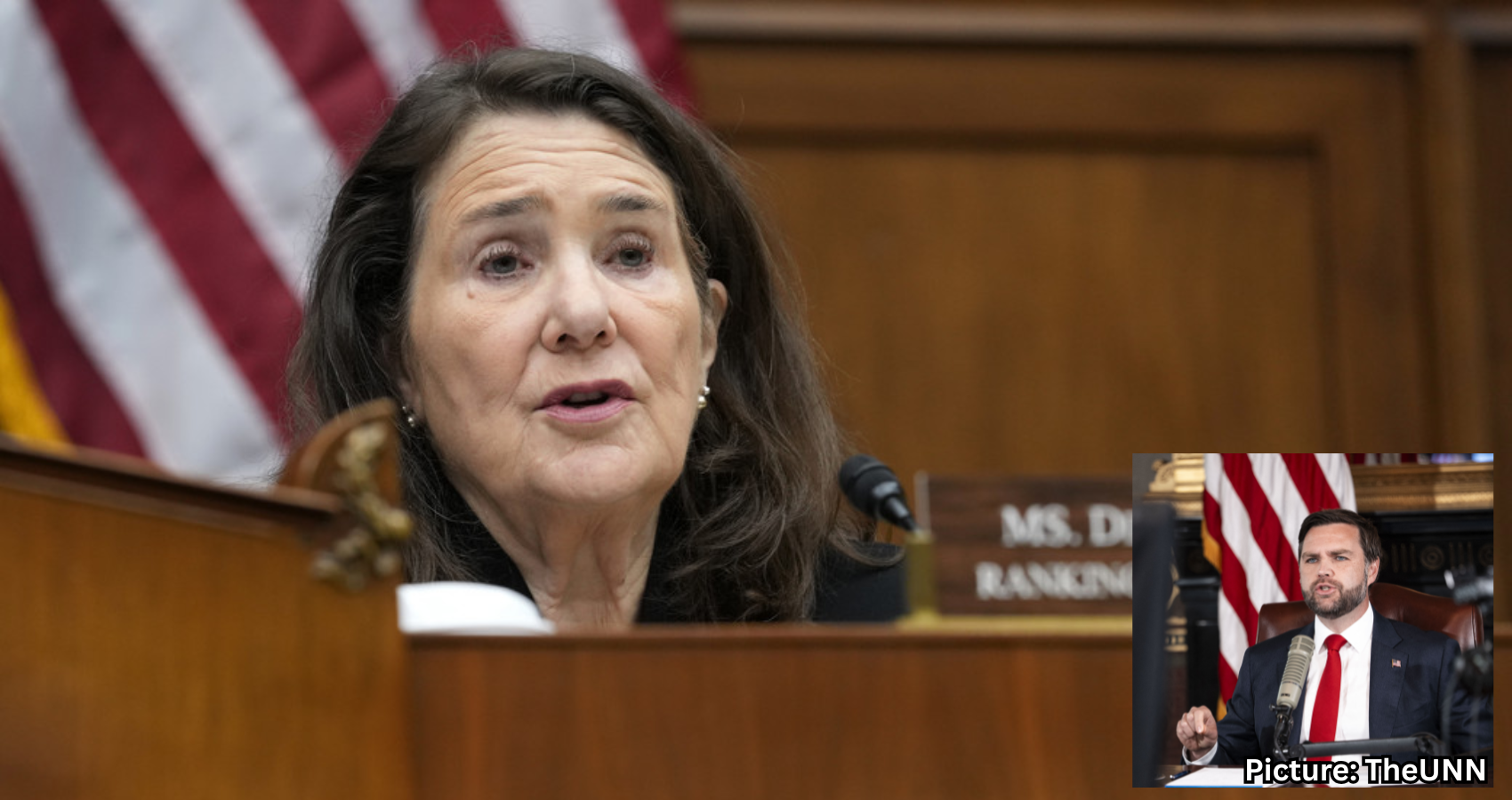
Real-time voter data from President Trump’s State of the Union address revealed a partisan divide, with Democrats showing less enthusiasm for his remarks on drug cartels and fentanyl compared to Republicans and Independents.
During President Donald Trump’s recent State of the Union address, real-time voter data indicated a significant partisan split in reactions to his comments about drug cartels and fentanyl. While Republican and Independent voters responded positively to Trump’s remarks, Democrats displayed notably less enthusiasm.
Trump emphasized his administration’s efforts to combat drug cartels, stating, “For years, large swaths of territory in our region, including large parts of Mexico, really large parts of Mexico, have been controlled by murderous drug cartels. That’s why I designated these cartels as foreign terrorist organizations, and I declared illicit fentanyl as a weapon of mass destruction.” His comments were met with applause, particularly from Republican lawmakers.
A panel assembled by polling group Maslansky & Partners, which included 29 Democrats, 30 Independents, and 40 Republicans, tracked real-time reactions during the address. The data showed that Democrats’ enthusiasm dipped slightly below baseline levels when Trump began discussing his aggressive foreign policy stance, particularly regarding drug cartels in Central and South America. This included references to his administration’s bombing campaigns against these organizations, which have reportedly involved operations in the open ocean off the South American coastline and in the eastern Pacific.
In contrast, Republicans and Independents exhibited a much stronger favorable reaction to Trump’s assertions about the actions taken against drug cartels and the illegal fentanyl trade. The president also highlighted the recent U.S. assistance in capturing drug kingpin “El Mencho,” the leader of the Jalisco New Generation Cartel (CJNG), who was killed earlier this month in a military operation in Mexico. Although the operation was conducted by Mexican forces, U.S. efforts were instrumental in paving the way for El Mencho’s downfall.
On his first day in office, Trump signed an executive order directing the State Department to designate several cartels and international criminal groups as “foreign terrorist organizations” (FTOs). This designation allows for military-grade surveillance and “material support” prosecutions against these groups. The CJNG, while less known than other cartels like MS-13, was among those designated as an FTO by the Trump administration.
Following the executive order, Attorney General Pam Bondi issued a memorandum to Department of Justice employees, announcing a “fundamental change in mindset and approach” toward cartels and transnational criminal organizations, shifting to a policy of “total elimination.”
Throughout 2025 and 2026, the Trump administration engaged in an aggressive bombing campaign targeting cartel boats, alongside non-lethal maritime drug interdiction efforts. In early 2026, Venezuelan President Nicolás Maduro was captured by U.S. forces and extradited to New York on charges of drug trafficking and narco-terrorism, with Trump labeling him a “kingpin of a vast criminal network.”
The recent violence and the capture of El Mencho have raised concerns for American tourists in Mexico. White House Press Secretary Karoline Leavitt stated that the State Department has been receiving “hundreds of calls a day” from Americans seeking travel support and advice. She reassured the public, saying, “We are unaware of any reports of any Americans being hurt, kidnapped, or killed, and the Mexican drug cartels know not to lay a finger on a single American or they will pay severe consequences under this president – and they already are.”
As the political landscape continues to evolve, the differing reactions from voters underscore the challenges faced by the Trump administration in garnering bipartisan support for its policies on drug cartels and fentanyl.
According to Fox News, the partisan divide in enthusiasm highlights the complexities of addressing drug-related issues in the current political climate.