
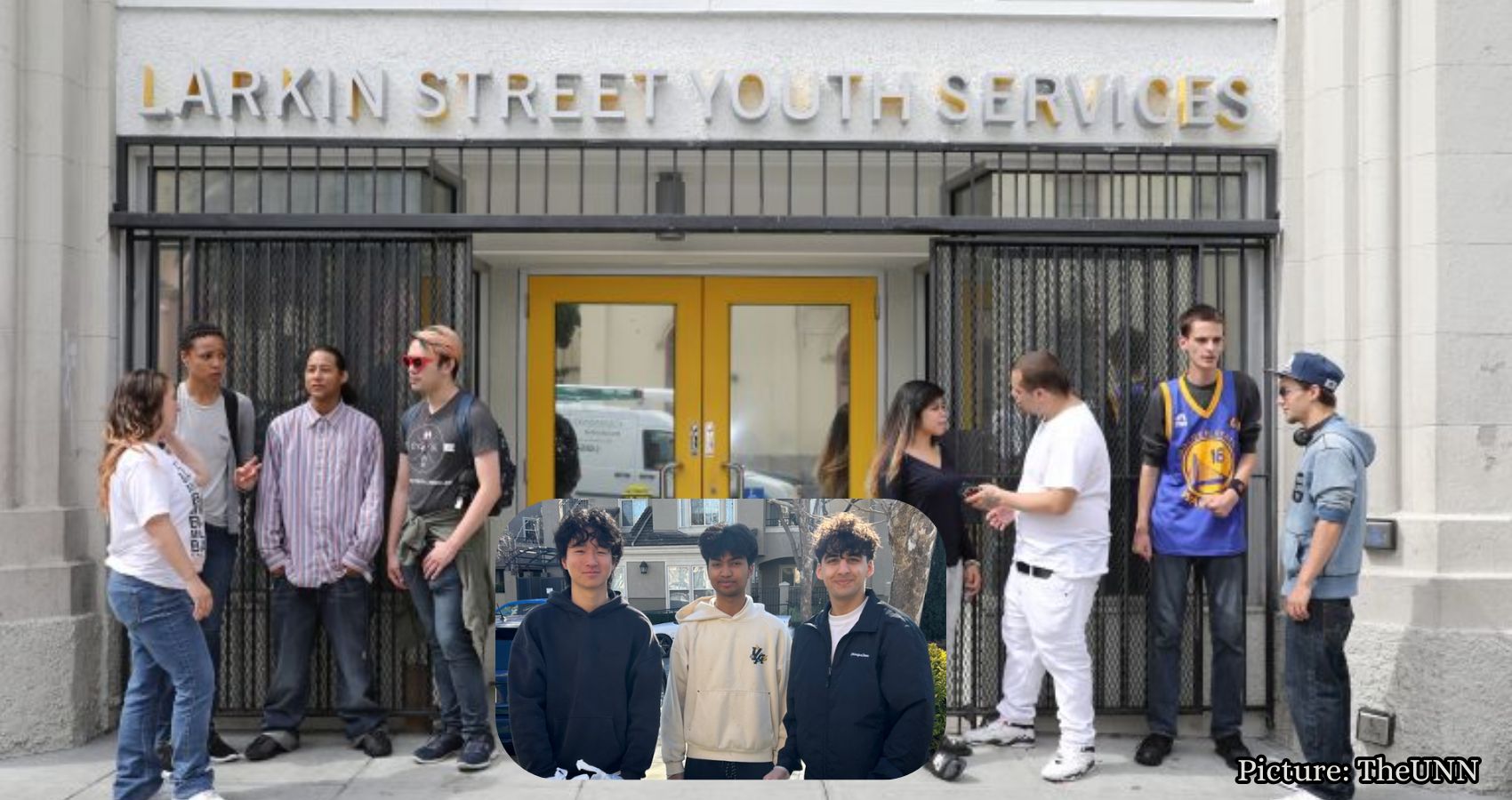
Bay Area teen Manan Dua develops FCHome, an app designed to connect homeless and at-risk youth with essential resources, addressing the barriers they face in accessing help.
When young people called the Santa Clara County Youth Crisis Line, Monta Vista High School senior Manan Dua, a volunteer at the Crisis Line, noticed a troubling trend. Many callers were not inquiring whether help was available; instead, they were asking where to find it and how to get there.
These questions lingered in Dua’s mind. If resources existed but young people struggled to navigate the system to access them, he questioned their effectiveness. This realization led to the creation of FCHome, an innovative app that connects homeless and at-risk youth with shelters, food, healthcare, essential supplies, and free transportation.
Youth homelessness is often perceived as a problem of limited resources. However, for many young people, the barriers are more fundamental: knowing where to turn, understanding eligibility requirements, and figuring out how to access available assistance.
Since its inception, FCHome has evolved beyond just an app into a broader community initiative. The project secured first place in California’s 18th Congressional District during the Congressional App Challenge and has raised over $7,000 for community outreach efforts, including food distribution and transit passes.
In an interview, Dua shared the experiences that inspired FCHome, the challenges he faced in building the initiative, and his aspirations for making resources more accessible to the youth who need them most.
Dua introduced himself, stating, “My name is Manan Dua, and I’m a senior at Monta Vista High School in Cupertino. I’ve lived here my entire life, and both this city and the Bay Area have given me a lot over the years, from a strong community to real support when I’ve needed it. What I want to do now is return some of that by spending my time on the problems that affect people here.”
When asked about the inspiration behind FCHome, Dua recounted his two years of volunteering on the Santa Clara County Youth Crisis Line. He spoke with many young adults facing homelessness and mental health crises. One conversation particularly resonated with him. A caller named Marcus had recently aged out of the foster care system and felt lost. He asked Dua two critical questions: whether the Bill Wilson Center would accept him and, if so, how he could get there. Dua had no answers for him and redirected him to another hotline, which ultimately provided no assistance.
Reflecting on the questions young callers posed, Dua found that approximately 43 percent were about locating resources, while 39 percent were about how to reach them. This insight led him to develop a centralized platform that would outline eligibility requirements and provide free transportation to shelters, ultimately giving birth to FCHome.
Dua explained his choice to leverage technology in addressing this issue. “The decision followed from what I was seeing on the crisis line. The young people calling in already had phones, even if modest ones, through programs such as Lifeline. Printed resource guides, on the other hand, get lost easily, go out of date, and take far too long to distribute. A phone-based platform reaches people right away, and it lets us keep shelter listings and eligibility requirements in one place and up to date.”
From a user’s perspective, FCHome is designed to be straightforward. After creating an account, users select an age category—either Youth (ages 12–17) or transitional-age youth (TAY, ages 18–24)—and are directed to a homepage organized into four resource areas: shelters, food, health, and supplies. The listings adjust based on the selected age category, as some shelters cater exclusively to one group. The homepage also features a daily check-in for users to indicate their feelings and a private journal for personal reflection.
When users find a suitable resource, they can select it on the map and choose from directions, a contact number, or a free bus pass. To access the bus pass, users enter a unique code, which is then reviewed by a staff member to prevent misuse. Currently, FCHome collaborates with seven transit agencies to ensure that users’ locations do not limit their access to resources.
What sets FCHome apart is that it is the only platform specifically designed for this age group and the only one offering free transportation. To date, FCHome has served 750 users across three states, distributed approximately 1,700 bus passes, and partnered with around ten shelters and service organizations. Most existing platforms cater to older adults and often fail to indicate who qualifies for services or how to access them. In Dua’s view, a resource that a young person cannot reach or qualify for is not truly a resource.
Reflecting on impactful moments, Dua recalled Marcus’s story. After their initial call, Marcus reached out again to inform Dua that the other hotline had not been able to assist him. Dua took it upon himself to verify that the Bill Wilson Center would accept Marcus, but the remaining hurdle was transportation. With no available options, Marcus walked two hours to reach the shelter. This experience inspired Dua to create FCHome.
When the app was finally launched, Marcus became its first user. Dua recalls the relief in Marcus’s voice, a moment that has meant more to him than any award or recognition the project has received since.
Dua also discussed outreach efforts at Ohlone Court Apartments, a low-income housing community. He wanted the benefits of FCHome to extend beyond young people who reached out through the crisis line, so he partnered with CityTeam San Jose to conduct food distributions. Over ten weeks, they distributed thousands of pounds of food and engaged with the community, bringing 27 new users onto the app, each equipped with a transit code for future needs.
Dua introduced the concept of anticipatory housing action, which tracks real-time indicators such as unemployment claims, eviction filings, and utility shutoffs. When these indicators cross a defined threshold, assistance is automatically initiated, extending support to those identified without requiring prior enrollment.
Despite his success, Dua faced significant challenges while building FCHome, particularly in the technical realm. Lacking programming experience, he taught himself the necessary skills informally. Recognizing the need for assistance, he sought out developers in his community who shared his vision. To his surprise, several volunteered their time, enabling the app’s release a month ahead of schedule.
Looking ahead, Dua has ambitious plans for FCHome, aiming to expand its reach across all fifty states, starting with Oregon, Washington, and New York. He also intends to advocate for the anticipatory housing action model at city council meetings throughout the Bay Area and beyond.
Internationally, FCHome recently concluded an awareness campaign in India to raise funds for an Indian division of the initiative, focusing on direct, in-person support for homeless youth.
Ultimately, Dua hopes readers understand that the obstacles facing young people are often smaller than they appear. Many challenges boil down to something as simple as a bus fare or an unclear eligibility rule, which can determine whether someone remains in crisis or finds the help they need. He encourages readers to contribute in any way they can, reminding them that homelessness, while seemingly out of place in the Bay Area, often goes unnoticed.
According to India Currents, Dua’s work exemplifies how technology can be harnessed to create meaningful change in the lives of vulnerable populations.