
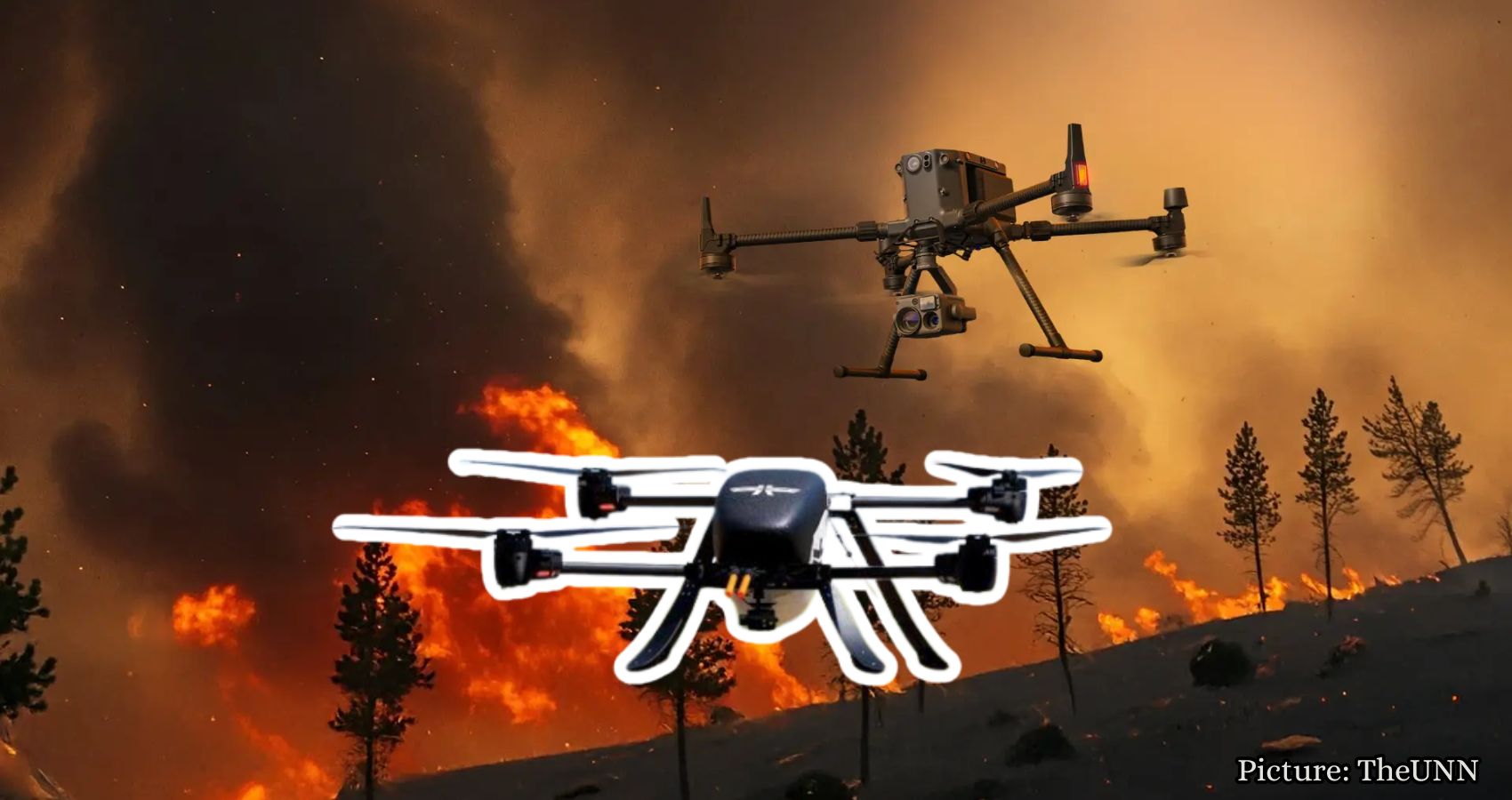
CAL FIRE is testing autonomous firefighting drones developed by Seneca, while XPRIZE finalists are exploring innovative technologies to combat wildfires in remote areas.
As wildfires continue to pose a significant threat, a new generation of AI-powered firefighting drones is emerging to help mitigate the risks associated with these devastating events. CAL FIRE recently conducted tests of Seneca’s autonomous suppression drones in California, while teams competing in the $11 million XPRIZE Wildfire competition faced challenges in Alaska during June 2026.
Wildfires can escalate rapidly, often starting from a small ignition in remote terrain before firefighters can reach the site. The introduction of AI firefighting drones aims to reduce this response time by detecting fires early and applying suppressant before they grow uncontrollable. According to NOAA, human-caused climate change is contributing to larger and more severe wildfires in California and the western United States, which has resulted in longer wildfire seasons.
On July 15, CAL FIRE collaborated with the nonprofit FireWERX and engineers from Seneca to conduct a field test of autonomous firefighting drones. Five drones participated in the demonstration, showcasing the potential of this technology to assist firefighters who typically rely on backpack pumps and hand tools to combat small vegetation fires.
Seneca’s drones are designed to respond quickly once crews identify a potential fire. The aircraft are equipped with onboard sensors that utilize AI and computer vision to locate fires and deliver aerated Class A foam to targeted areas. The system can deploy four to six drones simultaneously, with a suppression capacity ranging from 500 to 1,000 pounds per trip.
While the payload capabilities of these drones may seem impressive, they do not match the capacity of larger airtankers. CAL FIRE operates over 70 fixed-wing and rotary-wing aircraft, which can reach many remote fires within approximately 20 minutes. However, smaller drones like Seneca’s can be transported by utility vehicles and positioned near high-risk areas, making them valuable for early attack, nighttime operations, and challenging terrain.
In December 2025, San Bernardino County Fire tested an earlier version of Seneca’s Argo-1 system, which was described as semi-autonomous and utilized thermal tracking for precise targeting during early wildfire responses. It is important to note that while these drones can autonomously handle significant portions of their flight and targeting processes, they still operate under human supervision. For future deployments, Seneca plans for a single pilot to oversee multiple aircraft.
In Alaska, a different firefighting system faced its own set of challenges during the XPRIZE finals testing. Three finalist teams were tasked with using autonomous technology to detect and suppress early-stage fires without human intervention. One of the finalists, German company Dryad Networks, combines its Silvanet detection network with a drone system called Silvaguard. Silvanet employs solar-powered environmental sensors placed in forests to monitor combustion gases and particulates associated with the initial stages of a fire.
Once Silvanet detects a potential fire, a Silvaguard observation drone can launch automatically. This drone utilizes infrared and optical imaging to locate the source and confirm whether a fire is present. A separate suppression drone can then be deployed to respond to the confirmed location. Dryad claims its suppression drone can carry up to 100 liters of fire suppressant, equivalent to approximately 26 gallons. In a demonstration in November 2025, Dryad successfully detected and extinguished a controlled fire in under 12 minutes without human involvement.
During the XPRIZE finals in Alaska, Dryad’s sensors detected a small fire and triggered an autonomous response, with the Silvaguard system locating and suppressing the fire effectively. While controlled tests demonstrate the technology’s capabilities, real-world fire operations will present a more significant challenge.
In Colorado, the Aspen Fire Protection District has signed a five-year, multimillion-dollar agreement with Seneca for a five-aircraft Seneca Strike Team and a mobile operations base. This system is expected to have a capacity of approximately 500 gallons of finished foam per sortie, with one pilot able to oversee multiple aircraft due to the system’s autonomous features. Seneca plans to deliver the system during the summer of 2026, marking a significant step from demonstration to real-world deployment.
Firefighting drones could eventually complement existing technologies used for early fire detection. CAL FIRE collaborates with UC San Diego’s ALERTCalifornia program, which operates over 1,200 cameras and sensor arrays. As of February 2026, this program reported detecting more than 1,200 fires during its first season, often beating the first 911 report by over 30% of the time.
Additionally, Google’s FireSat project, which employs specialized satellites and AI to identify wildfires earlier, has made progress. The Earth Fire Alliance launched its first three operational FireSat satellites on July 7, 2026, with plans to provide operational data to early adopters at least twice daily by the fourth quarter of 2026.
As these technologies develop, they could work in tandem to enhance wildfire response efforts. Drones stationed in wildfire-prone areas may provide local fire agencies with an additional means to respond during the earliest stages of a fire. However, it is essential to recognize their limitations, including smaller payloads compared to major firefighting aircraft and performance dependencies on weather and terrain.
Moreover, the transition from demonstration to operational use for autonomous firefighting technology is still underway. Residents in wildfire-prone areas should continue to rely on official emergency alerts and evacuation instructions, ensuring they have a plan in place for quick departures if conditions worsen.
The promise of these drones lies in their ability to act swiftly. If they can reach a remote ignition while it is still small, firefighters may gain a crucial opportunity to control it before it escalates. The focus on those critical first minutes is what makes this technology particularly intriguing. While drones will not replace large airtankers or the expertise of seasoned firefighters, they may provide an essential advantage by delivering suppression to remote fires more rapidly.
As the technology continues to evolve, the real test will come when these aircraft face unpredictable conditions in active fire scenarios. Fire agencies will need to establish clear protocols for coordinating autonomous systems with existing personnel in the air and on the ground. Only then will the true value of this innovative technology be revealed.
For those living in wildfire-prone areas, the prospect of having autonomous firefighting drones nearby may offer a sense of security. Community members are encouraged to share their thoughts on this emerging technology by reaching out to us at Cyberguy.com.
According to Source Name.