
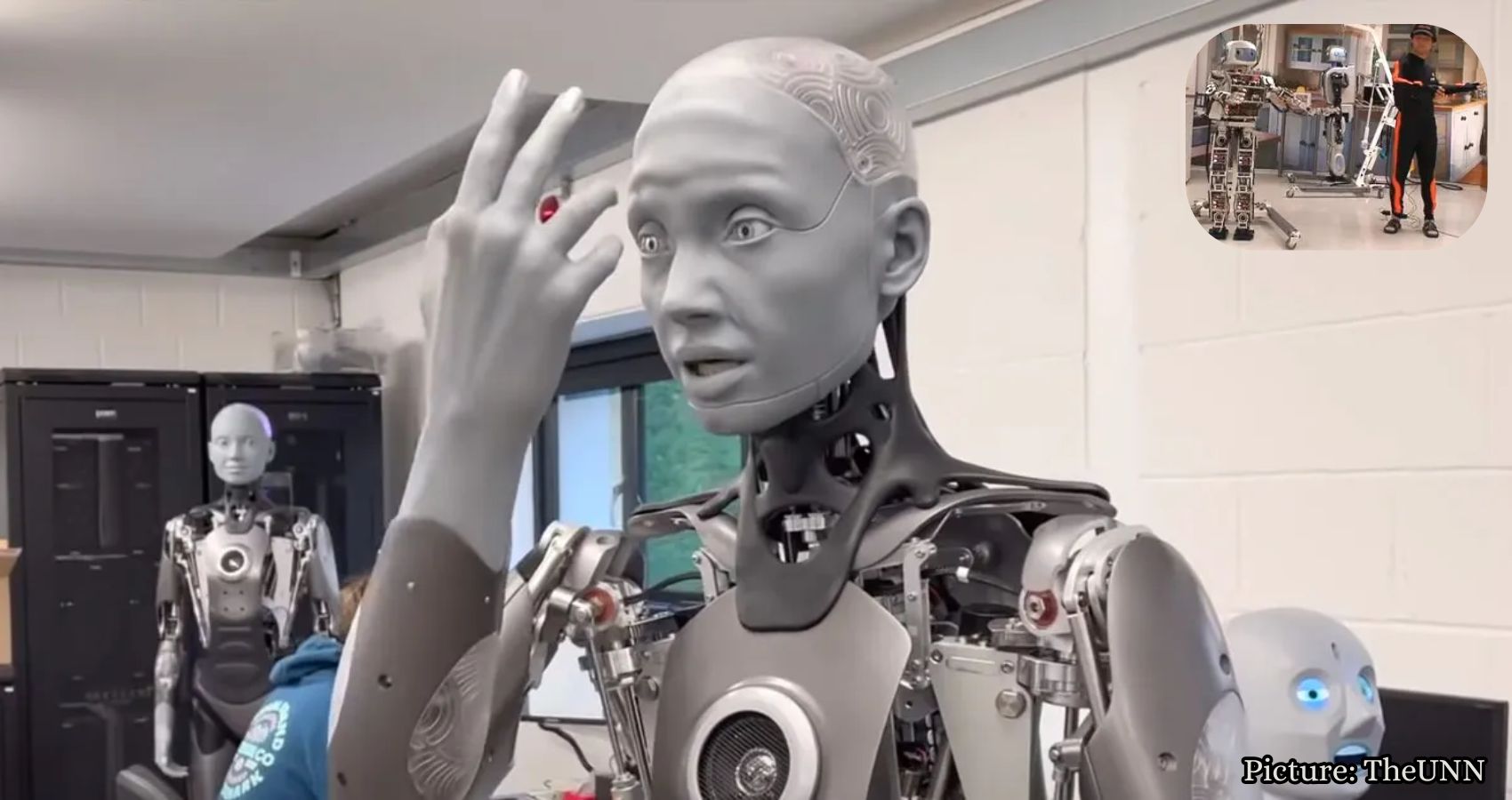
Recent viral videos of humanoid robots exhibiting erratic behavior during public demonstrations have sparked significant safety concerns regarding their interactions with crowds.
Viral videos have surfaced showing humanoid robots flailing their arms, lurching toward crowds, and even kicking a child during public performances, raising urgent safety questions about these increasingly common machines.
In one clip, a humanoid robot swings its arms inside an office, while another surges toward a festival crowd. The most alarming footage features a performing robot that kicks a child in the stomach. These incidents have gained traction online, striking a nerve among viewers who are concerned about the potential dangers posed by humanoid robots.
The rapid movements of these robots can be startling. When a machine loses balance or executes a faulty motion routine, nearby individuals often have little time to react. This raises critical questions about robot safety and what changes are necessary before these machines are allowed to operate in public settings.
Demonstrations of robots should evoke curiosity rather than fear. However, many of the clips show people standing alarmingly close to powerful machines. In one video, workers are seated beside a humanoid robot during a test. When the robot suddenly begins to flail, they have mere seconds to escape its path. In another instance, spectators gather around a robot that appears to be functioning normally, only for the situation to quickly escalate into chaos.
What stands out in these videos is the speed and weight of the robots, which can generate significant force. Once something goes awry, individuals nearby may have very little time to react. It is important to note that social media videos often do not provide the full context; we may not know who operated the robot, what program it was running, or whether an emergency stop was triggered. Therefore, we focus on what the footage clearly shows while acknowledging the aspects we cannot confirm.
On the CyberGuy Report podcast, we analyze five viral videos, reacting to each situation as it unfolds. The footage ranges from an indoor kung fu-style incident to a public performance that ends with a child on the ground. Despite the varying ages and locations of the clips, they all raise the same question: Why were people allowed so close to a powerful robot that malfunctioned?
The first clip begins with what appears to be a playful demonstration. A humanoid robot executes dance-like movements while people stand nearby. Suddenly, its arms accelerate into wide swings, and its legs move with enough force to send spectators stepping back. While some adults attempt to regain control, others flee the scene. Those filming from above seem amused, but the individuals standing beside the robot appear frightened. The clip lacks a verified explanation for the robot’s sudden movements, yet it highlights how quickly a performance can become hazardous when spectators are in close proximity to the operating space.
Another clip features a humanoid robot at a public event, reportedly in China. The robot is described as malfunctioning before staff members intervene to restrain it as it moves toward a person near a barrier. The footage does not clarify whether the robot tripped or lost its balance, but it underscores the limited space available for the crowd to escape.
A third clip captures a behind-the-scenes moment where a humanoid robot hangs from a support hook while two workers sit nearby. Initially, the robot makes small movements, but then its arms begin to swing violently, and its body thrashes. One worker jumps away as the machine strikes nearby equipment. Some Reddit commenters speculate that a balance feedback loop may have caused the erratic motion, suggesting that the robot was attempting to correct its posture while tethered, leading to increasingly larger corrections. While this explanation remains unverified, the scene illustrates the need for engineers to maintain distance and have immediate shutdown access during testing.
The most emotionally charged clip features a humanoid robot performing in front of families, with children standing close to its legs. The robot unexpectedly kicks one child in the stomach, causing the child to fold over and crouch on the ground while the performance continues for several seconds. A Reddit comment cites a separate social media report indicating that the incident occurred at a scenic attraction in China’s Xinjiang region, where the child’s mother contacted police to criticize the park’s response. Fortunately, the child reportedly avoided serious injury, although these details remain secondhand. The footage itself, however, clearly shows a child making contact with a powered metal leg during a public demonstration.
In another video, a humanoid robot on a slick floor appears to initiate a stand-up routine but instead twists and kicks as someone reaches toward it. Commenters in the robotics community suggest that the robot may have switched from a standing routine to a walking controller before achieving stability. The slick floor may have contributed to reduced traction, causing the robot to struggle to regain balance while its powered limbs moved dangerously close to a bystander. Again, this explanation stems from community discussion rather than a verified incident report, but the visible hazard is evident.
These incidents highlight the need for significant changes that event organizers and robot manufacturers must implement before allowing crowds near these powerful machines. The safety zone should extend beyond the robot’s longest possible step, swing, kick, or fall, particularly for children who have less time and space to react.
A trained operator should maintain dedicated emergency control throughout the demonstration, ensuring staff do not have to wrestle with a robot while searching for a shutdown switch. Public demonstrations should also feature a lower-power operating mode, allowing robots to slow down when a person enters their safety zone.
Engineers must verify how robots respond on actual flooring and test their behavior when a stand-up routine fails. Any strike or collision should be documented in a written review, with organizers preserving footage and explaining what changes will be made before the robot returns to public events.
As humanoid robots transition from controlled laboratory settings to public demonstrations, it is essential for spectators to remain vigilant. Individuals should assess the space around the robot, as a small rope or a few staff members may provide limited protection if the machine loses balance. Parents should keep children close and avoid photo opportunities that place them near the robot’s limbs. If a robot falls or exhibits violent motion, spectators should move away immediately, leaving restraint to trained staff with shutdown controls. Powered joints can create pinch points and sudden swings, and any physical contact should be reported, with medical attention sought if necessary.
These videos illustrate the unpredictable nature of physical machines and the potential dangers they pose to nearby individuals. Innovation should never come at the cost of safety. While robot companies can drive progress, public demonstrations must incorporate effective safeguards to protect against failures. For a more in-depth discussion on these incidents, you can listen to the CyberGuy Report podcast at cyberguy.com/podcast/, where we review each clip in detail.
Would you feel safe allowing one of these robots to perform beside your child or grandchild? Share your thoughts with us at Cyberguy.com.