
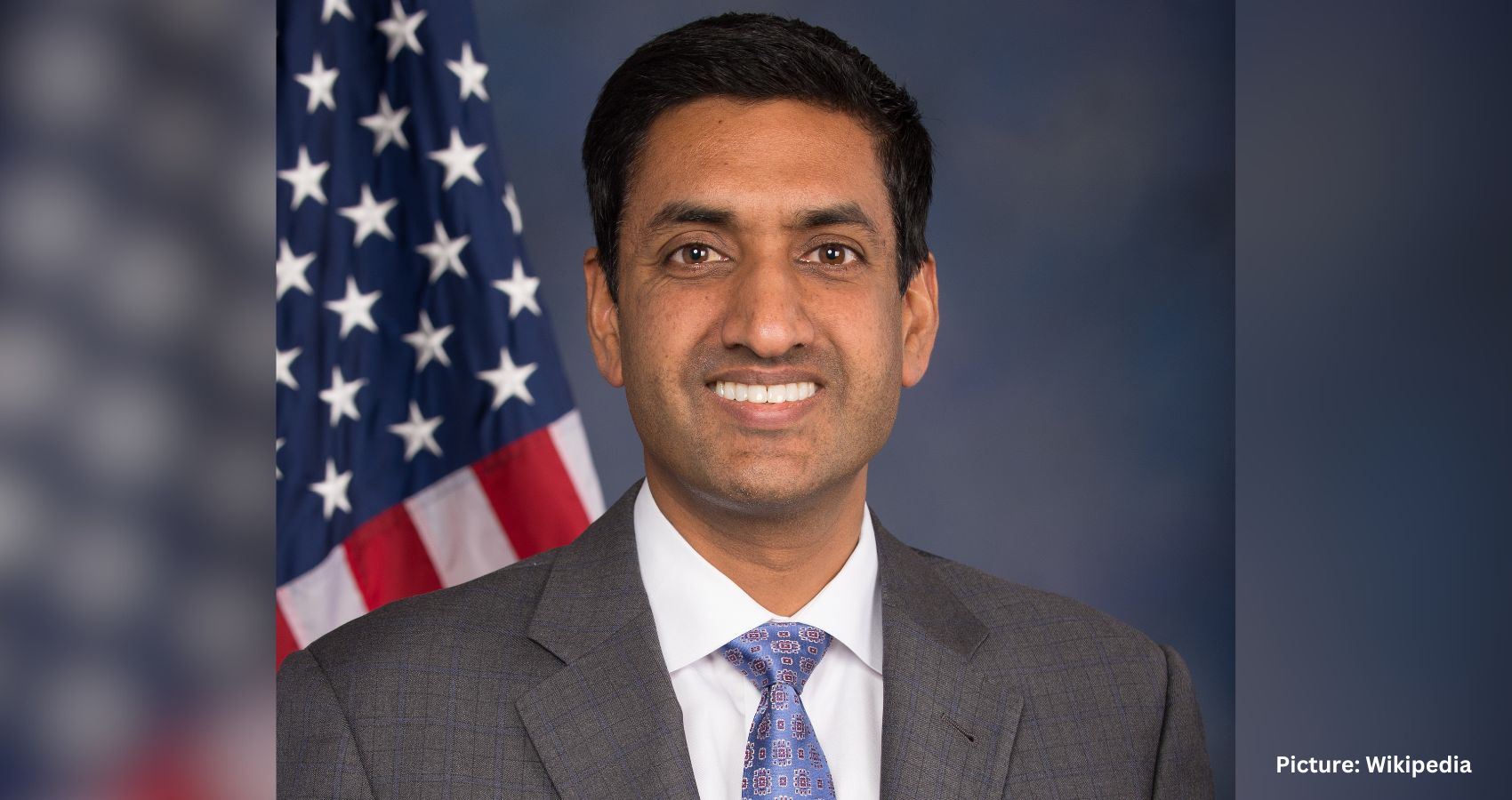
Rep. Ro Khanna has proposed a potential third impeachment of Donald Trump if Democrats regain Congress, emphasizing accountability and the importance of constitutional principles.
Representative Ro Khanna (D-Calif.) has suggested that if Democrats regain control of Congress in the upcoming midterm elections, they should consider pursuing a third impeachment of former President Donald Trump. During an appearance on NBC News’s “Meet the Press” on Sunday, Khanna articulated his views on the necessity of impeachment as a means of reinforcing accountability within the executive branch and upholding constitutional values.
Khanna stated, “Impeachment says that you can’t get into an illegal war in Iran without constitutional approval.” He emphasized that the impeachment process serves as a critical mechanism to prevent executive overreach, particularly concerning actions such as the unilateral firing of federal employees or engaging in corrupt dealings with foreign governments. For Khanna, impeachment is fundamentally about maintaining checks on presidential power.
The impeachment process in the United States is a constitutional provision designed to hold high-ranking officials, including the President, accountable for misconduct. The House of Representatives is responsible for initiating the process, which involves drafting articles of impeachment that must be voted upon. If the articles pass, they are sent to the Senate for a trial, where a two-thirds majority is required for removal from office.
Trump has faced impeachment twice during his presidency: first in December 2019 over allegations of abuse of power and obstruction of Congress, and again in January 2021 for incitement of insurrection following the Capitol riot. These historical precedents illustrate the contentious nature of impeachment in contemporary American politics.
In addition to his impeachment advocacy, Khanna criticized Trump’s foreign policy, particularly regarding Iran. He suggested that the U.S. should accept Iran’s recent peace offer to reopen the Strait of Hormuz, a vital maritime passage that has faced disruptions, contributing to rising gas prices. Khanna proposed that the U.S. could engage in negotiations without fully conceding to all of Iran’s demands, emphasizing that a commitment to avoid regime change is paramount. “In my view, the biggest thing that we need to give the Iranians is an ironclad commitment that we will not have a regime-change war,” he stated.
However, Trump rejected the Iranian peace proposal on Saturday. Iranian Foreign Minister Abbas Araghchi indicated that Tehran is awaiting an official response from the U.S. through mediators, affirming that Iran is prepared to resume military action if the U.S. escalates hostilities following the midterms.
The prospect of a third impeachment remains speculative, yet it reflects ongoing tensions within U.S. politics regarding accountability and oversight of presidential actions. House Minority Leader Hakeem Jeffries (D-N.Y.) has stated that if Democrats regain control of the House, they will evaluate potential actions, including impeachment, to ensure presidential accountability.
Conversely, some Republican lawmakers, including Representative Jim Jordan (R-Ohio), have predicted that Democrats will pursue impeachment not as a legitimate exercise of oversight but as a strategy for political retaliation. In a recent interview, Jordan asserted that a third impeachment would lack substantive justification and would be aimed at targeting political opponents.
Jordan elaborated that Democrats might also investigate Trump’s family and various cabinet members, suggesting that the political landscape could become increasingly contentious if Democrats regain authority in the House. He named several officials, including FBI Director Kash Patel and Attorney General Todd Blanche, as potential subjects of scrutiny.
The discussion surrounding a potential third impeachment underscores the polarized nature of U.S. politics as the midterm elections approach. With control of Congress potentially at stake, both parties are preparing for a volatile legislative environment. Khanna’s call for accountability raises questions about the ethical responsibilities of elected officials and the mechanisms available to uphold constitutional norms.
As the midterm elections draw near, the implications of these discussions for both domestic policy and international relations will continue to unfold. The current trajectory indicates a willingness among some Democratic leaders to confront perceived violations of constitutional values, regardless of the possible political fallout.
The ongoing debate surrounding impeachment highlights not only the complexities of the U.S. political system but also the broader implications for governance. As both parties gear up for the elections, the potential for heightened scrutiny and accountability measures looms large, reflecting a critical moment in the ongoing evolution of American democracy, according to GlobalNet News.