
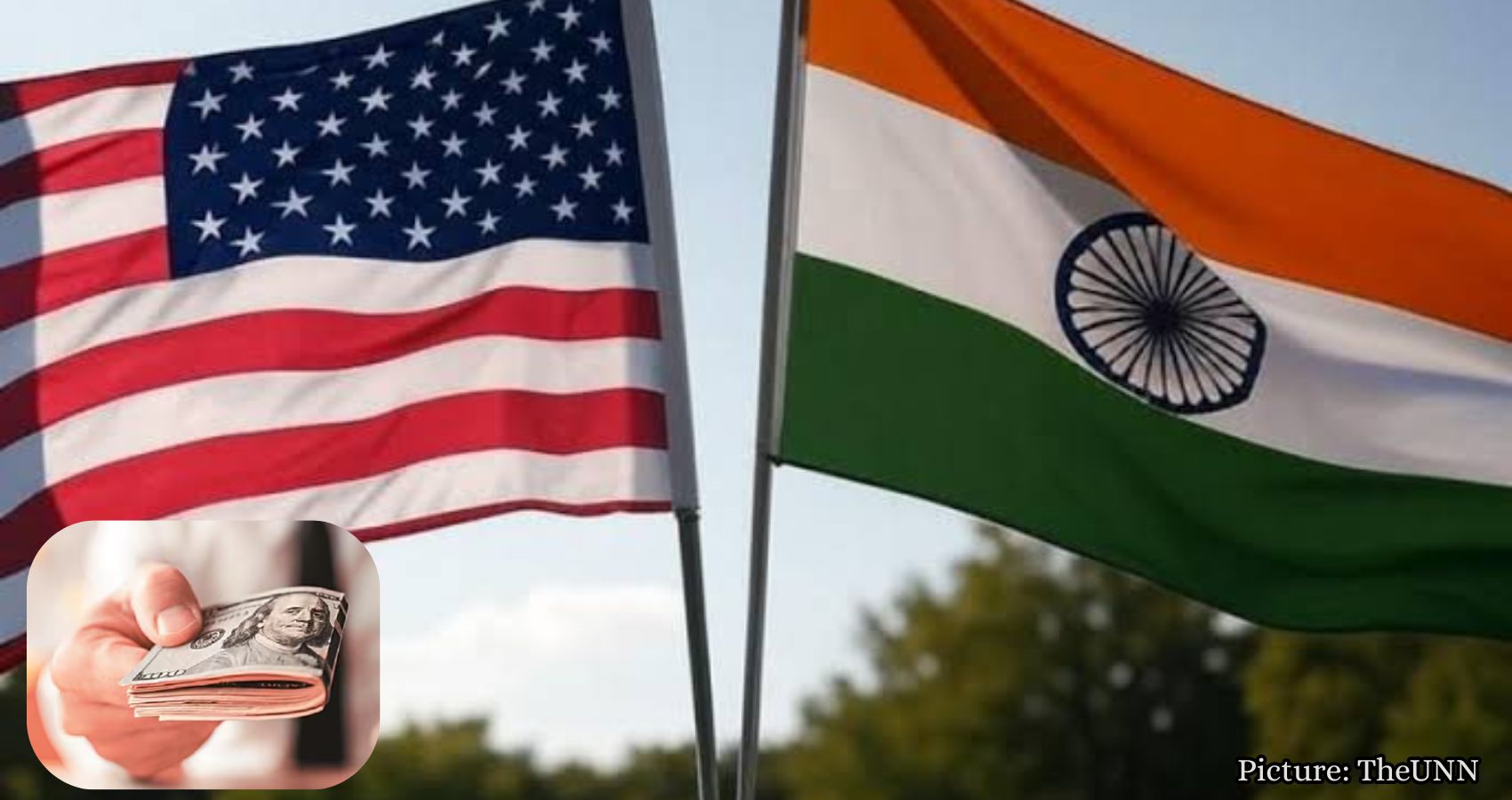
India received $150.7 billion in remittances in 2025, with the United States as the largest source, according to a report by the International Fund for Agricultural Development.
India has emerged as the world’s largest recipient of remittances, receiving an estimated $150.7 billion in 2025. This influx of funds from migrants and members of the Indian diaspora plays a crucial role in supporting millions of families, particularly in rural communities, according to a recent report by the International Fund for Agricultural Development (IFAD).
The United States has been identified as the largest source of these remittances, accounting for 27.7% of India’s total inward remittances in the fiscal year 2023-24, as reported by the Reserve Bank of India (RBI). This figure marks a significant increase from 23.4% in 2020-21 and 22.9% in 2016-17. It is important to note that the $150.7 billion figure represents total remittance inflows to India from all countries, while the RBI data specifically highlights the contribution from the United States.
According to the IFAD report titled “Sending Money Home 2026: Beyond Remittances: From Lifeline to Resilience – One Family at a Time,” India remains the top recipient of remittances globally, followed by Mexico, which received $64.4 billion, the Philippines at $41.6 billion, Egypt at $41.5 billion, and Pakistan at $40.5 billion. Collectively, these five countries accounted for nearly 47% of the total recorded remittance inflows, which reached $338.7 billion.
India’s remittance inflows have seen substantial growth over the past decade, increasing from approximately $63 billion in 2016 to the current $150.7 billion in 2025. Notably, India accounted for around 39% of all remittances received in the Asia-Pacific region in 2025.
Remittances play a vital role in the financial stability of Indian families, particularly in managing everyday expenses and navigating periods of economic uncertainty. The IFAD report highlights that these funds are often used to cover essential needs such as food, healthcare, education, housing, and utilities. Additionally, families may allocate part of their remittance income to enhance their homes, support agricultural productivity, finance education, or invest in small businesses.
For many households facing unstable income or unexpected expenses, remittances provide a reliable source of support. The regularity of these funds helps families maintain consumption levels and reduces their reliance on costly borrowing options.
IFAD emphasizes that remittances are private family resources, distinct from official development assistance, foreign direct investment, or humanitarian aid. While they are crucial for family support, the report cautions that remittances cannot substitute for public investment, social protection, or climate finance.
Rural communities in India also benefit significantly from remittance inflows. IFAD estimates that $233 billion, or 32% of all remittance inflows to low- and middle-income countries, reached rural areas in 2025. This figure is considered indicative, as remittance data typically does not specify whether recipients reside in rural or urban settings. The report further estimates that remittance-receiving households invest approximately $22 billion annually in rural agrifood systems, surpassing the total global official development assistance allocated to agriculture.
In Southern Asia, which includes India, about $112 billion in remittances reached rural areas in 2025. This region received a total of approximately $384.9 billion in remittances, accounting for 53% of global inflows to the countries covered by the report.
IFAD notes that while roughly three-quarters of remittances are directed toward immediate needs—such as food, shelter, and utilities—the remaining quarter, amounting to over $180 billion annually, is often allocated for longer-term purposes. These can include healthcare, education, housing, savings, and investments in income-generating activities.
This distinction is particularly significant for Indian households, as remittances can serve both as immediate support and as a means of building long-term financial resilience. Families can utilize these funds to save, manage risks, and invest in more sustainable livelihoods when appropriate financial services and economic opportunities are available.
The United States’ role in India’s remittance landscape has become increasingly prominent. According to the RBI, the US accounted for 27.7% of India’s inward remittances in 2023-24, surpassing other major sources such as the United Arab Emirates (19.2%), the United Kingdom (10.8%), Saudi Arabia (6.7%), and Singapore (6.6%). This upward trend in the US share—from 22.9% in 2016-17 to 27.7% in 2023-24—reflects the growing importance of advanced economies in India’s remittance flows.
However, it is essential to clarify that the RBI’s source-country data does not provide an official total for US-to-India remittances for the calendar year 2025. Therefore, the $150.7 billion figure should be attributed to India’s total remittance receipts rather than solely to the United States.
On a global scale, remittances to low- and middle-income countries reached $728.6 billion in 2025, nearly doubling from $375.6 billion in 2016. IFAD reports that approximately 220 million migrants and diaspora members support around 1.1 billion relatives back home, connecting about 1.3 billion people worldwide through remittance flows.
Remittances have proven to be resilient during economic shocks, disasters, and conflicts. For instance, during the COVID-19 pandemic, remittance flows remained stable as migrants prioritized support for their families. The scale of these remittance flows underscores the ongoing economic significance of India’s global diaspora.
As India continues to receive $150.7 billion in remittances, these funds remain a critical source of household support. The United States retains its position as the largest identified source of remittances in the latest RBI data. The broader implications of remittances extend beyond household consumption, impacting education, healthcare, housing, savings, agriculture, and small businesses. IFAD emphasizes the importance of ensuring that families have safe, affordable, and accessible transfer options while expanding their opportunities to save, insure, invest, and build resilient livelihoods, according to IFAD.