
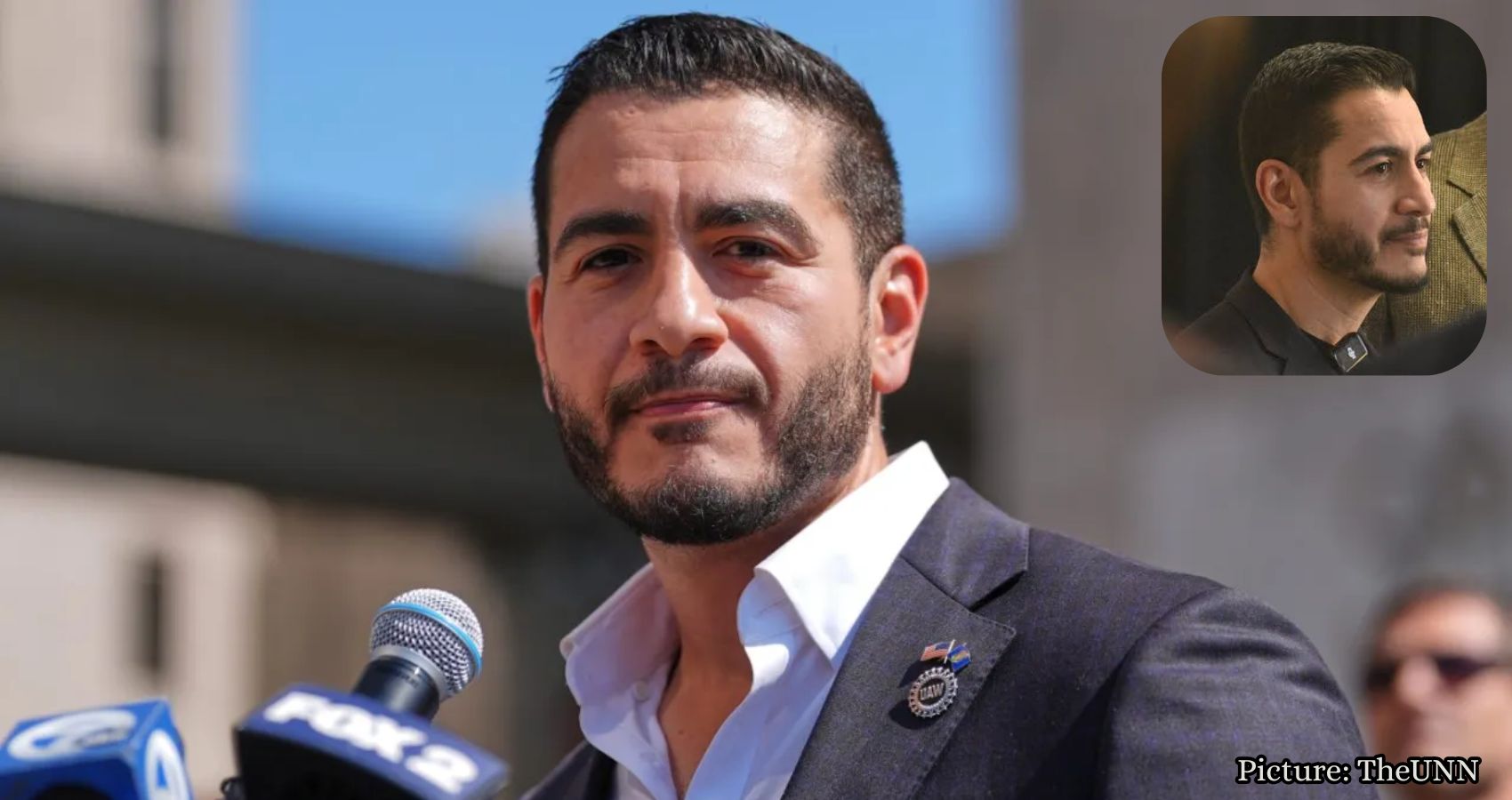
Michigan Democratic Senate nominee Abdul El-Sayed faced tough questions regarding his ties to Hasan Piker, views on Israel, and campaign financing after Republican opponent Mike Rogers skipped a scheduled debate.
Michigan Democratic Senate nominee Abdul El-Sayed confronted a series of pointed questions during a debate on Tuesday, focusing on his connections to controversial streamer Hasan Piker, his stance on Israel, campaign funding, and his associations with socialist groups. This discussion arose after his Republican opponent, Mike Rogers, opted not to attend the debate in Detroit.
El-Sayed’s responses came during a nearly hour-long session moderated by Roop Raj, where he faced inquiries from both the audience and the moderator. Rogers declined to participate earlier that day, citing concerns over Raj’s perceived bias. According to FOX 2, both candidates were invited to the debate on August 5, shortly after Michigan’s primary, with El-Sayed accepting the invitation promptly while Rogers formally declined on the day of the debate.
During the debate, Raj pressed El-Sayed on whether he could “completely, 100%” disavow Piker’s controversial comments. This inquiry followed El-Sayed’s evasive responses regarding Piker during a recent appearance on CBS News’ “Face the Nation.” El-Sayed responded affirmatively, stating, “Absolutely,” and specifically condemned Piker’s remarks about Jewish Americans.
“When Hasan made these comments about Jewish Americans and Jewish Michiganders, I disavowed them entirely,” El-Sayed asserted, emphasizing his disagreement with many of Piker’s statements, including those related to 9/11.
Despite distancing himself from Piker’s rhetoric, El-Sayed defended his decision to engage with the streamer, arguing that dialogue does not equate to endorsement. He expressed a desire to provide Piker’s substantial following with “a pathway back into our politics.”
When pressed about U.S. recognition of Israel as a Jewish state, El-Sayed refrained from giving a straightforward yes-or-no answer. Instead, he articulated his belief in “equal rights to peace, dignity, and self-determination for Palestinians and Jewish Israelis alike.” He critiqued the framing of the question, suggesting it favored the current status quo, which he described as “a deeply unstable, deeply violent equilibrium.”
El-Sayed also accused Rogers of attempting to turn the election into a “culture war” centered on his ethnicity and Muslim faith. This accusation arose as he sidestepped a direct question regarding whether he would return campaign contributions from individuals associated with the Council on American-Islamic Relations (CAIR).
Reports indicate that El-Sayed’s campaign has received over $115,000 from at least 41 individuals linked to CAIR, an organization that has faced scrutiny over alleged ties to Hamas and was named an unindicted co-conspirator in a 2007 terrorism-financing case. CAIR has been designated a terrorist organization by the United Arab Emirates and labeled as such in Florida and Texas.
In defense of CAIR, El-Sayed characterized it as a civil rights organization and accused Rogers of trying to make the election about his skin color and religious practices. He criticized Rogers for his own campaign financing, suggesting that the Republican candidate is beholden to corporate interests.
El-Sayed also challenged Rogers on his attendance at American-Israel Public Affairs Committee (AIPAC) fundraisers, stating, “I believe in an America that is big enough for all of us: Mike Rogers, Donald Trump, JD Vance.” He argued that some individuals believe that differences in faith or heritage somehow diminish one’s American identity.
In response to questions about his relationship with the Democratic Socialists of America (DSA), El-Sayed clarified, “I’m not a part of the organization.” He defended his views on capitalism, asserting that corporate consolidation, rather than government regulation, poses a greater threat to free markets. “We don’t live in capitalism. We live in corporatism,” he stated, adding that one does not need to identify as a socialist to advocate for healthcare or infrastructure improvements.
El-Sayed has consistently rejected the socialist label, identifying himself as a capitalist. Although the DSA did not endorse his Senate campaign, some prominent democratic socialists have supported or been affiliated with his candidacy. Reports indicate that El-Sayed participated in six events organized by DSA chapters between 2017 and 2020, including a 2019 fundraiser where he served as a keynote speaker. Despite this, he told the Wall Street Journal in July that he was “not technically or practically DSA.”
The candidates are scheduled to meet again on October 8 in Grand Rapids and on October 21 in Detroit ahead of the November general election, where these discussions are likely to continue.
According to FOX News, the debate highlighted the ongoing tensions surrounding El-Sayed’s affiliations and the broader implications for his campaign.