
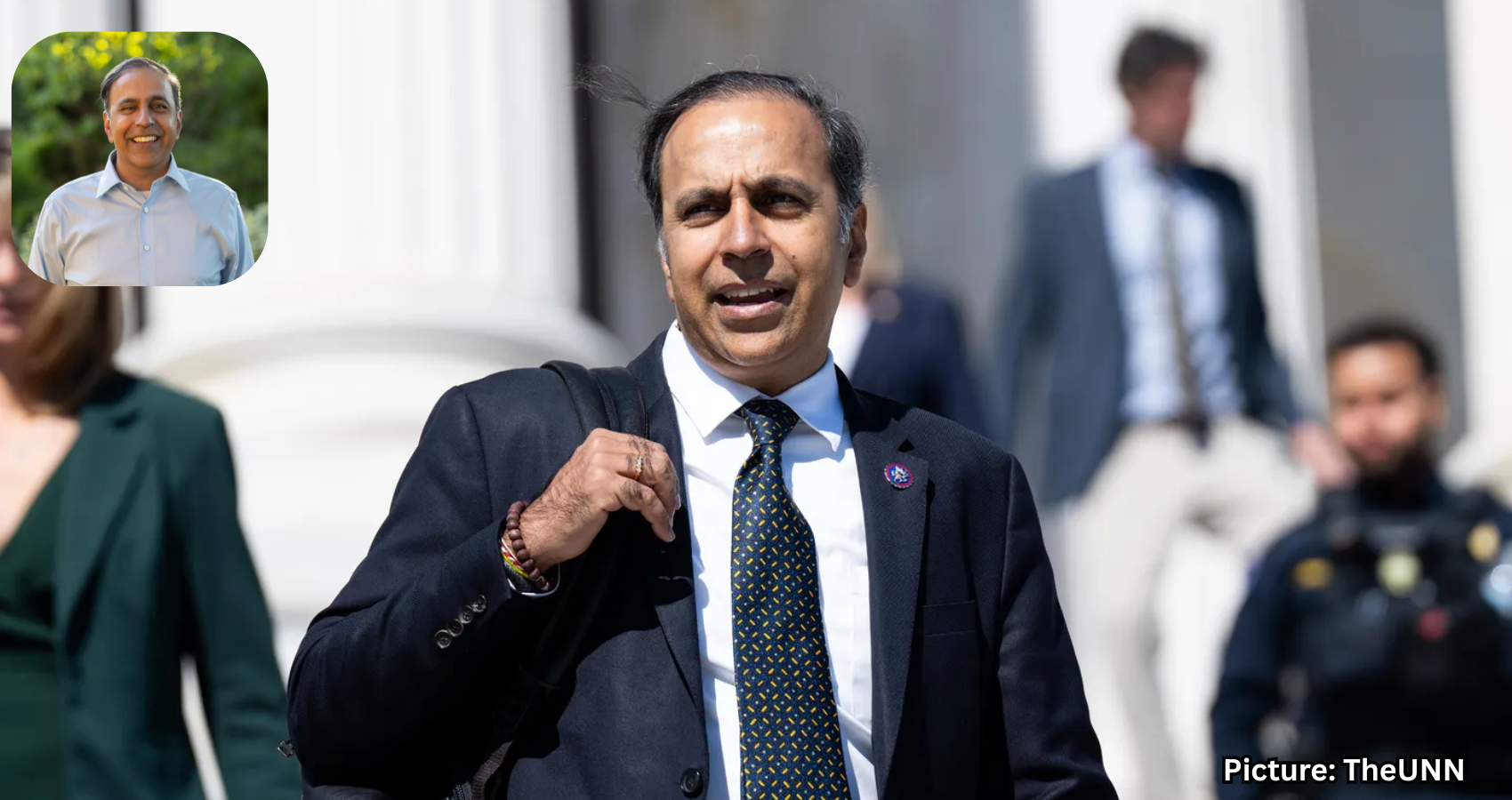
U.S. Rep. Raja Krishnamoorthi has condemned Texas Republican nominee Bo French for remarks deemed xenophobic towards South Asian students at the University of Texas, highlighting a troubling trend of discrimination.
U.S. Representative Raja Krishnamoorthi has publicly condemned Bo French, the Republican nominee for the Texas Railroad Commission, over social media posts that targeted a group of University of Texas students celebrating their football team’s victory. Krishnamoorthi characterized French’s remarks as “xenophobic” and indicative of a larger trend of attacks against South Asian Americans.
French faced backlash after he shared a photo on X (formerly Twitter) depicting a diverse group of students celebrating the Longhorns’ victory over Ohio State University. Alongside the image, he wrote, “I heard UT graduation this year looked like this. I didn’t believe it. The problem is now obviously far worse than anyone imagined,” as reported by FOX 4 News.
In a subsequent post, French reiterated his views, stating that social media was revealing “how many Americans have been displaced by foreigners,” which further fueled criticism against him.
Krishnamoorthi, a Democrat representing Illinois, defended the South Asian students and criticized French for his focus on their appearance. “Bo, you don’t know America. Your xenophobic hate toward South Asian students is disgraceful and part of a broader rise in attacks targeting South Asian Americans across the country,” he stated.
He continued, “These young people were cheering for their university, and you chose to demonize them based solely on how they look. South Asian Americans are as American as anyone, and this kind of hatred has no place in our politics or our country.”
The incident has sparked condemnation from both sides of the political aisle. U.S. Senator John Cornyn, a Republican from Texas, criticized French’s remarks and questioned whether other Republican leaders would also denounce what he described as intolerance and racism.
In response, French accused Cornyn and other Republicans of allowing Texas institutions to be overtaken by “illegal aliens and foreign nationals.”
French’s Democratic opponent, Texas state Representative Jon Rosenthal, also condemned the post, arguing that French’s focus was misplaced, as he emphasized the students’ skin color rather than their enthusiasm for the university’s football team.
Other Texas Republicans have joined in the criticism. State Representative Jared Patterson described French’s comments as racist, asserting that there is nothing conservative about viewing young Texans at a college football game through the lens of their skin color.
This controversy arises amid a broader national conversation concerning immigration, race, and the increasing South Asian population in Texas. Notably, the photo shared by French depicted students at a football game, not a graduation ceremony, contradicting his initial characterization.
French has a history of making inflammatory comments. Last year, he faced criticism for posting a poll asking followers which group posed a greater threat to America, Jews or Muslims. Following that incident, then-Lieutenant Governor Dan Patrick called for French’s resignation, but French apologized and chose not to step down.
For South Asian Americans, this latest dispute has brought renewed attention to how the community is represented in political discourse. Krishnamoorthi’s response framed the incident as part of a broader concern regarding attacks directed at South Asian Americans based on their appearance or perceived foreignness.
The controversy is likely to persist as a political issue, particularly as Texas Republicans navigate the complexities of immigration rhetoric and the treatment of increasingly diverse communities within the state. The implications of this incident may resonate beyond Texas, reflecting a national dialogue on race and identity in America.
According to FOX 4 News, the ongoing discourse surrounding this incident underscores the importance of addressing xenophobia and fostering inclusivity in political conversations.