
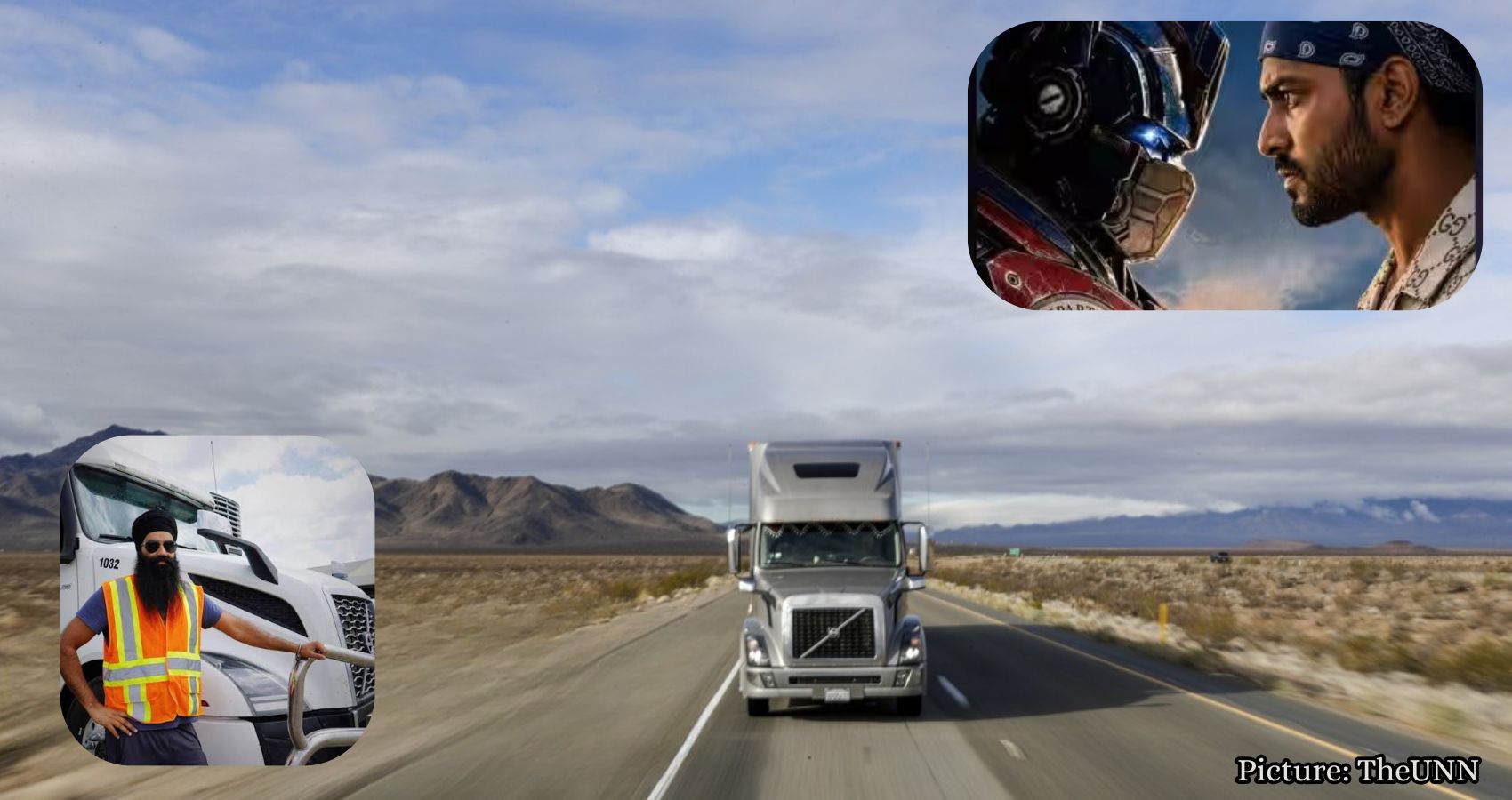
Asian Americans Advancing Justice raises concerns over a newly established DHS hotline aimed at reporting Commercial Driver’s License fraud, fearing it may lead to racial profiling of Sikh and South Asian truckers.
Asian Americans Advancing Justice | AAJC has expressed serious concerns regarding a recent initiative by the Department of Homeland Security (DHS) aimed at reporting Commercial Driver’s License (CDL) fraud. The DHS announced the launch of a hotline on September 9, framing it as a federal crackdown on unqualified foreign drivers operating semi-trucks on American highways.
In an official press release, DHS Secretary Markwayne Mullin stated, “Too many American lives have been lost or permanently changed because illegal aliens who have no business being on our roads have been granted CDLs. ICE and our federal partners, including the Department of Transportation, will be cracking down on CDL fraud so that not one more American life is lost to a reckless illegal alien behind the wheel of a semi-truck. You can help save American lives and make our roads safer by dialing ICE’s new CDL fraud tipline today.”
DHS highlighted several enforcement actions involving commercial vehicle drivers, including incidents involving individuals from India, Haiti, Kyrgyzstan, and Uzbekistan. Among the cited cases were arrests connected to drug smuggling and fatal traffic collisions across multiple states.
The hotline is part of broader federal enforcement actions, including Joint Task Force Crossroads of America, Operation Highway Shield, and joint federal investigations targeting CDL training schools.
In response to the DHS initiative, AAJC raised alarms about the potential for racial profiling. The civil rights advocacy group noted that the promotional campaign coincided with the 25th anniversary of 9/11. They argued that government materials targeting so-called “illegal aliens on American roads” invoke damaging stereotypes that disproportionately affect Sikh, South Asian, immigrant, Muslim, Arab, and Middle Eastern communities.
Advocates emphasized that ordinary citizens lack the means to ascertain a driver’s immigration status or licensing history. As a result, public hotlines may invite reports driven by assumptions based on appearance, accent, name, religion, or ethnicity.
Sim Singh Attariwala, Director of the Anti-Hate Program at AAJC, stated, “This is not just about immigrant truck drivers. When the government encourages people to report on others based on assumptions about who belongs, everyone on the road becomes more vulnerable to profiling and escalations of hate-fueled violence. Sikh Americans, Asian Americans, Latinos, Muslims, Arabs, and other communities that have long been targeted by bias may face the greatest impact. Congress must hold federal agencies accountable when they normalize suspicion instead of protecting civil rights and public safety.”
AAJC warned that the current rhetoric echoes the widespread discrimination, profiling, and hate crimes experienced by Sikh Americans and other minority groups in the aftermath of 9/11. The organization reported that anti-Sikh hate crimes have been on the rise and experienced a sharp spike following political rhetoric targeting Sikh truckers in 2025.
In light of these developments, AAJC is calling on Congress to investigate DHS initiatives that encourage profiling and to examine whether the Department of Justice has effectively responded to harassment, discrimination, and hate targeting immigrant communities in the United States.
According to Asian Americans Advancing Justice, the implications of the DHS hotline extend beyond the trucking industry, raising significant concerns about civil rights and public safety.